OICR-41103 as a chemical probe for the DCAF1 WD40 domain
Serah W. Kimani, Mahmoud Noureldin, Brian Wilson, Laurent Hoffer, Stuart R. Green, Magdalena M. Szewczyk, Héctor González-Álvarez, Mohammed Mohammed, Manuel Chan, Chiara Krausser, Alice Shi Ming Li, Taraneh Hajian, Sarah Tucker, Dhananjay Joshi, Punit Saraon, Brigitte Thériault

TL;DR
OICR-41103 is a new chemical probe that targets the DCAF1 protein, offering potential for cancer and HIV treatments.
Contribution
Development of OICR-41103, a potent and selective small molecule probe for the DCAF1 WDR domain.
Findings
OICR-41103 binds to the DCAF1 WDR domain and displaces the HIV Vpr protein in biochemical and cellular assays.
The co-crystal structure of DCAF1 with OICR-41103 reveals its binding mode, aiding in PROTAC design.
OICR-41103 is a promising tool for targeted protein degradation and antiviral therapy.
Abstract
Human DCAF1 is a multidomain protein that plays a critical role in protein homeostasis. Its WDR domain functions as a substrate recruitment module for RING-type CRL4 and HECT family EDVP E3 ubiquitin ligases, enabling the ubiquitination and proteasomal degradation of specific substrates. DCAF1’s activity has been implicated in cell proliferation and is documented to promote tumorigenesis. Additionally, the DCAF1 WDR domain is hijacked by lentiviral accessory proteins to induce the degradation of host antiviral factors, such as SAMHD1 and UNG2. These diverse roles make DCAF1 an attractive target for therapeutic development in oncology and antiviral strategies. It is also a promising candidate for use in targeted protein degradation. We previously reported a novel ligand, OICR-8268, that targets the DCAF1 WDR domain. In this study, we present the development of OICR-41103, a potent,…
Genes, proteins, chemicals, diseases, species, mutations and cell lines named across the full text — each resolved to its canonical identifier and authoritative record.
Click any figure to enlarge with its caption.
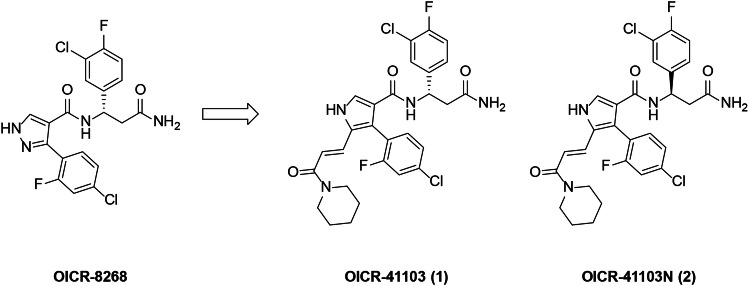 Figure 1
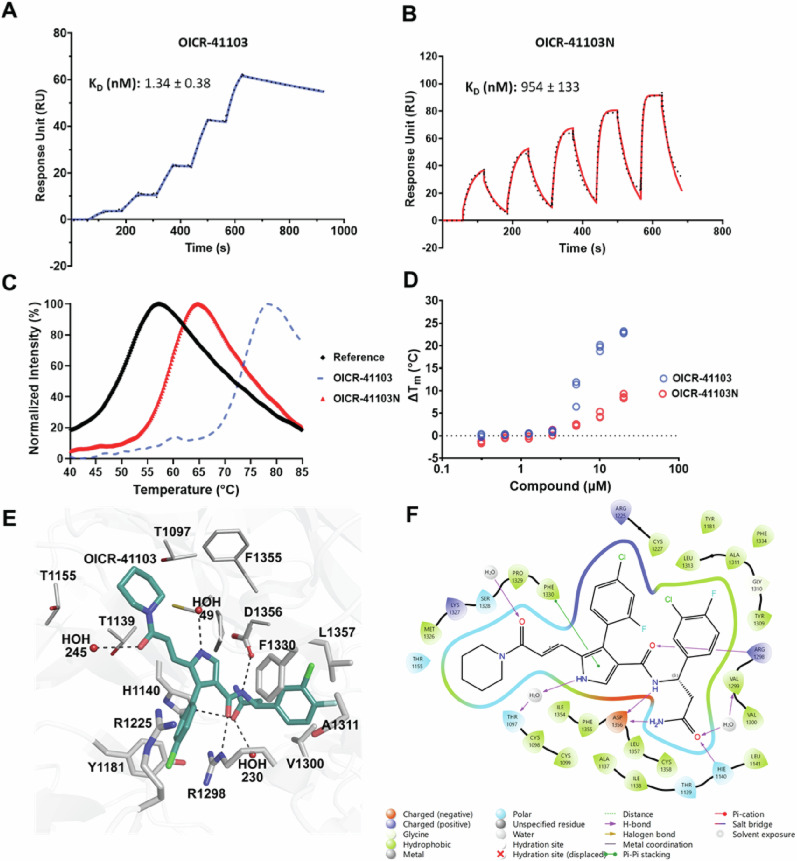 Figure 2
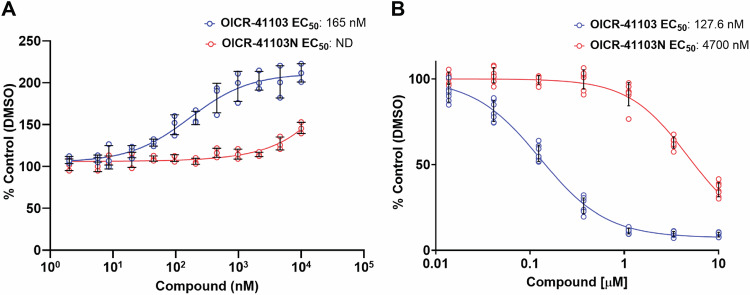 Figure 3
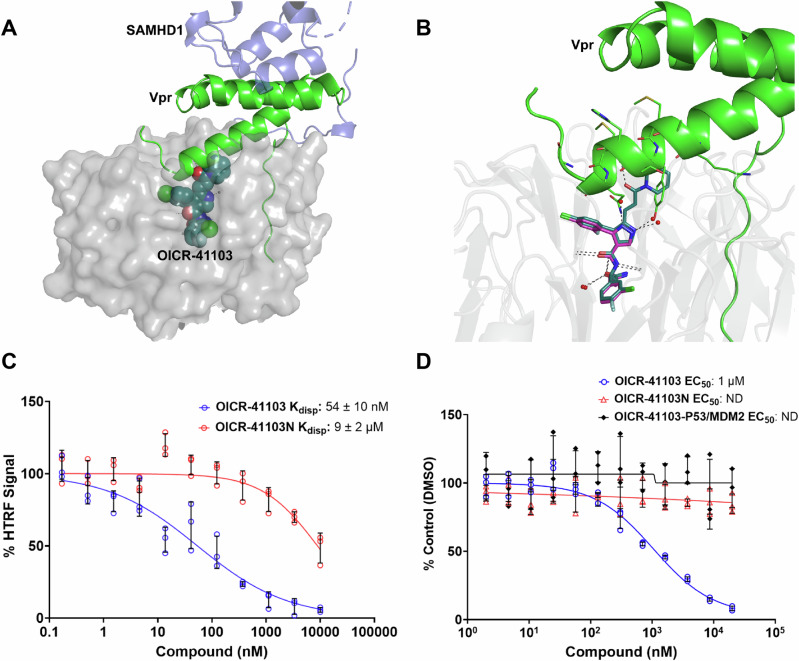 Figure 4
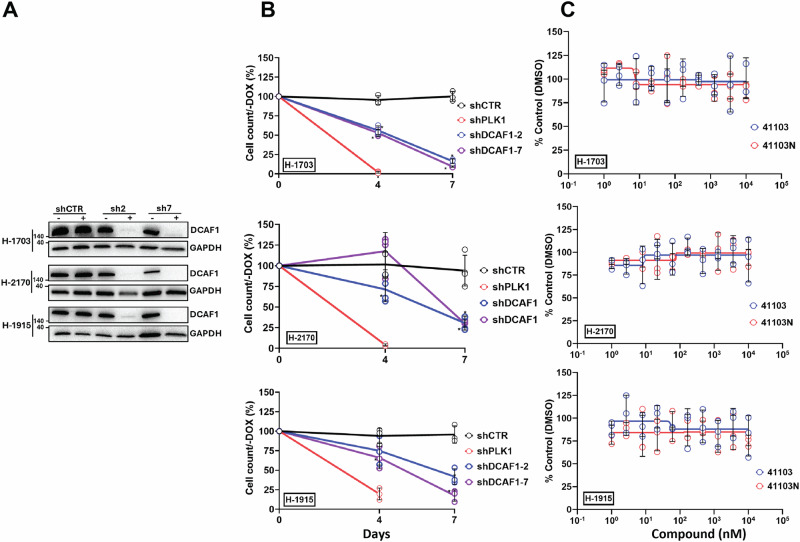 Figure 5
Peer Reviews
No public reviews on file for this paper yet. If you reviewed it on a platform where reviews are public (OpenReview, ICLR, NeurIPS, ICML), you can paste yours below so the community can read it here.
Videos
No videos yet. Explain this paper in a talk, walkthrough, or lecture? Add one.
Taxonomy
TopicsProtein Degradation and Inhibitors · Ubiquitin and proteasome pathways · Peptidase Inhibition and Analysis