Retrospective exploratory dual-center analysis of temporary transvenous cardiac pacing in cardiogenic shock
Clemens Walter von Musil, Valentina Riederer, Leonhard Pilsbacher, Carina Maria Paulus, Severin Rudinger, Sophia Bodlee, Jonas Gmeiner, Julius Fischer, Julius Steffen, Sven Peterß, Stefan Kääb, Moritz Sinner, Korbinian Lackermair, Martin Orban, Steffen Massberg, Clemens Scherer

TL;DR
This study explores the use of temporary cardiac pacing in patients with cardiogenic shock, focusing on treatment patterns, complications, and risk factors.
Contribution
The study provides new insights into the use of temporary transvenous pacing in cardiogenic shock patients across different subgroups.
Findings
Right Coronary Artery lesions increase the likelihood of TTP in AMI-CS patients.
Age and myocarditis are associated with TTP use in non-AMI-CS patients.
TTP complications occurred in 12% of cases, with 3.3% classified as severe.
Abstract
Temporary transvenous cardiac pacing (TTP) is commonly used to manage hemodynamically compromising, drug-refractory brady- and tachyarrhythmias in the intensive care setting. Despite previous studies analyzing TTP treatment, data on its use in patients with cardiogenic shock (CS) remain limited. This retrospective exploratory analysis aimed to investigate the utilization of TTP in patients experiencing CS, with a particular focus on treatment characteristics, complication rates, predictive factors, and outcomes across different subgroups. We retrospectively included registry data from 184 patients who underwent TTP therapy from 1561 cases of CS treated at the Intensive Care Units (ICUs) of two university hospitals in Germany between 2010 and 2023. Bradycardia due to acute myocardial infarction was the primary indication for TTP implantation in patients with CS. The median duration of…
Genes, proteins, chemicals, diseases, species, mutations and cell lines named across the full text — each resolved to its canonical identifier and authoritative record.
Click any figure to enlarge with its caption.
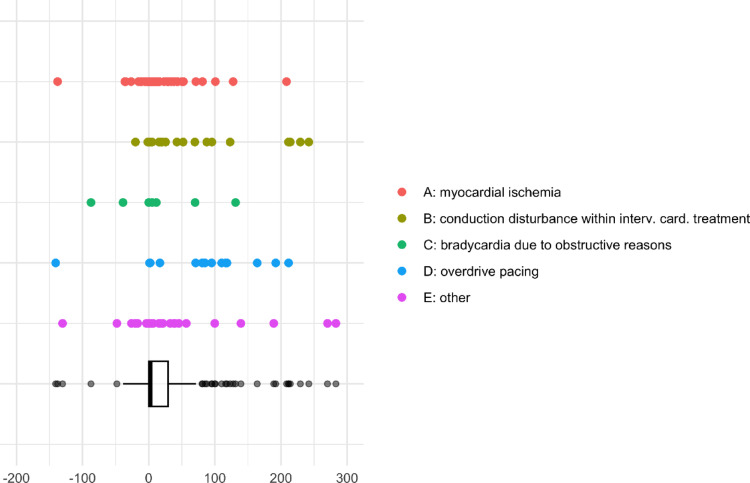 Figure 1
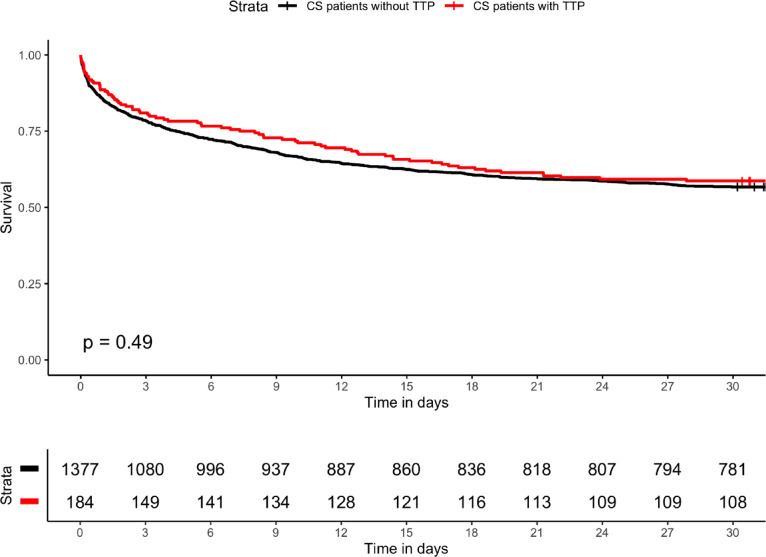 Figure 2
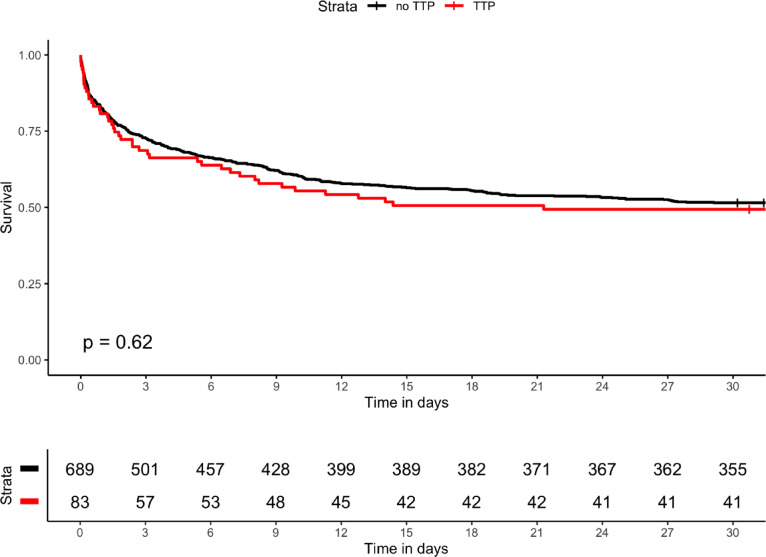 Figure 3
Peer Reviews
No public reviews on file for this paper yet. If you reviewed it on a platform where reviews are public (OpenReview, ICLR, NeurIPS, ICML), you can paste yours below so the community can read it here.
Videos
No videos yet. Explain this paper in a talk, walkthrough, or lecture? Add one.
Taxonomy
TopicsCardiac pacing and defibrillation studies · Mechanical Circulatory Support Devices · Cardiac Structural Anomalies and Repair