Development of Monoclonal Antibodies for Identifying Plant-Parasitic Nematodes
M. Bogale, E. Sampson, W. Hu, A. Baniya, S. Mishra, K. Kwon, H. D. Lopez-Nicora, P. DiGennaro

TL;DR
This paper introduces a new method using monoclonal antibodies to better identify and understand plant-parasitic nematodes and their pathogenic traits.
Contribution
A novel approach using single-cell RNA-seq to generate monoclonal antibodies for nematode identification and pathotype discrimination.
Findings
Monoclonal antibodies can be generated from mice immunized with nematode antigens for identification.
Two mAbs were synthesized and shown to be specific using ELISA.
mAbs may help distinguish pathotype groups and reveal factors contributing to nematode virulence.
Abstract
Currently available nematode identification techniques rely on visual microscopic examination of their morphology and limited molecular assays. These methods generally serve their purpose of enumerating nematode genera and informing management recommendations. However, when identifying variations in pathogenicity or virulence within nematode populations and species – which is crucial for specific plant-parasitic nematode management recommendations – these methods are insufficient. Here, we demonstrate that nucleotide sequence information for tens of thousands of monoclonal antibodies (mAbs) can be generated for identification purposes using a single-cell RNA-seq of mature B cells obtained from mice immunized with nematode antigens. We also provide proof of concept by synthesizing two of these mAbs in vitro and demonstrate specificity using ELISA. Since mAbs can bind to a variety of…
Genes, proteins, chemicals, diseases, species, mutations and cell lines named across the full text — each resolved to its canonical identifier and authoritative record.
Click any figure to enlarge with its caption.
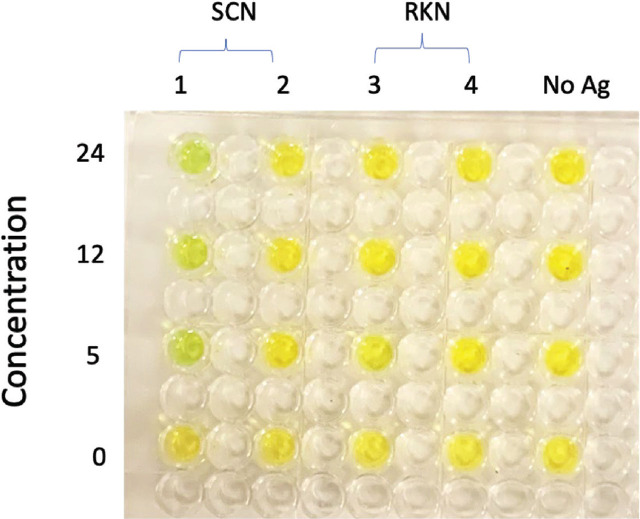 Figure 1
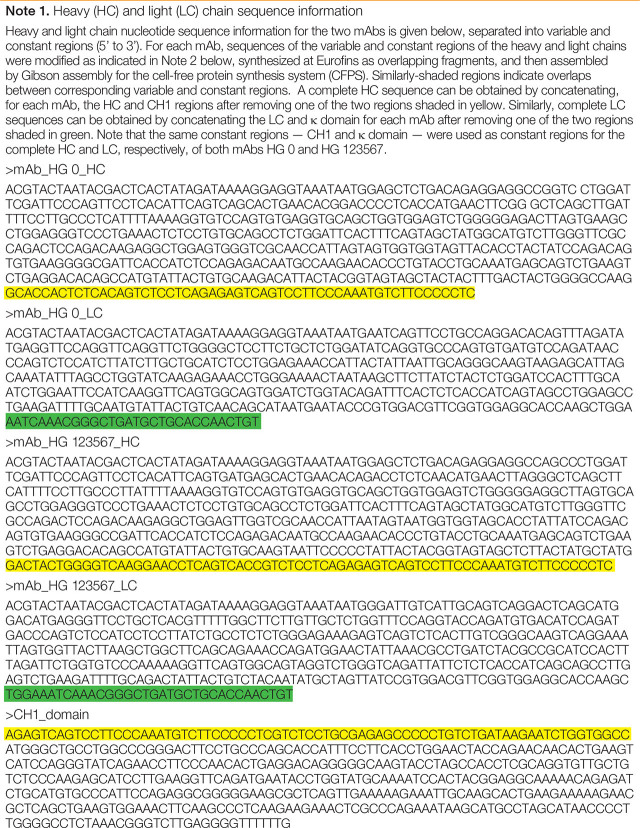 Figure 2
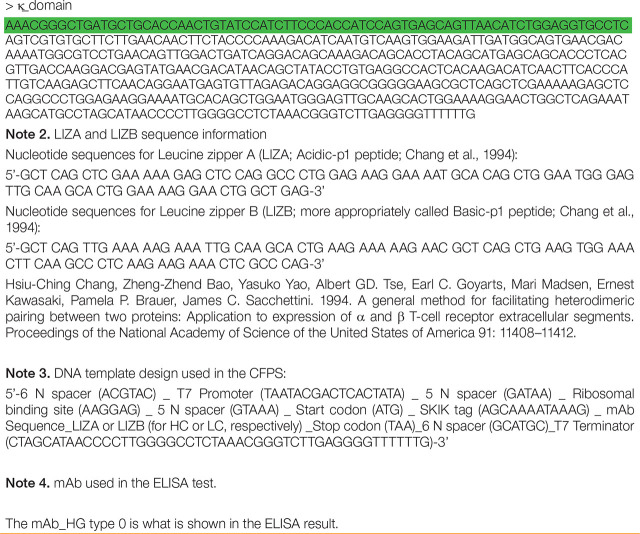 Figure 3
Peer Reviews
No public reviews on file for this paper yet. If you reviewed it on a platform where reviews are public (OpenReview, ICLR, NeurIPS, ICML), you can paste yours below so the community can read it here.
Videos
No videos yet. Explain this paper in a talk, walkthrough, or lecture? Add one.
Taxonomy
TopicsNematode management and characterization studies · Parasitic Diseases Research and Treatment · Insect symbiosis and bacterial influences