Desymmetrization of Bisallylic Amides: A Catalytic Enantioselective Diastereoselective Chlorocyclization Strategy
Yi Yi, Ankush Chakraborty, Xinliang Ding, Arvind Jaganathan, Neil Heberer, Babak Borhan

TL;DR
A new catalytic method efficiently creates chiral compounds with three adjacent centers using chlorocyclization of bisallylic amides.
Contribution
A catalytic strategy for enantioselective and diastereoselective chlorocyclization of bisallylic amides is introduced.
Findings
Chlorinated oxazines with three contiguous chiral centers were synthesized in high yields.
The method achieved up to 99% enantioselectivity and high diastereoselectivity.
N-chlorophthalimide was used effectively as the chlorinating reagent.
Abstract
(DHQD)2PHAL-catalyzed diastereoselective and enantioselective chlorocyclization reactions of bisallylic amides were achieved with N-chlorophthalimide (NCP) as the chlorinating reagent. A series of chlorinated oxazines bearing three contiguous chiral centers were obtained in high yields (up to 99%), high diastereoselectivity and excellent enantioselectivity (up to 99% ee).
Genes, proteins, chemicals, diseases, species, mutations and cell lines named across the full text — each resolved to its canonical identifier and authoritative record.
Click any figure to enlarge with its caption.
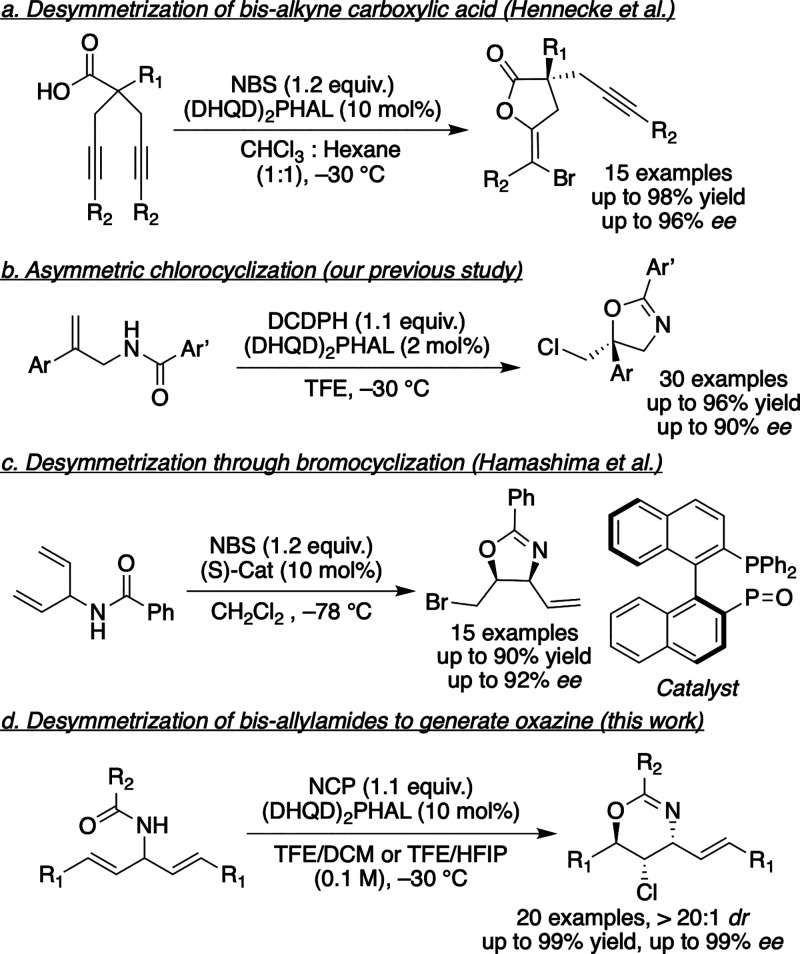 Figure 1
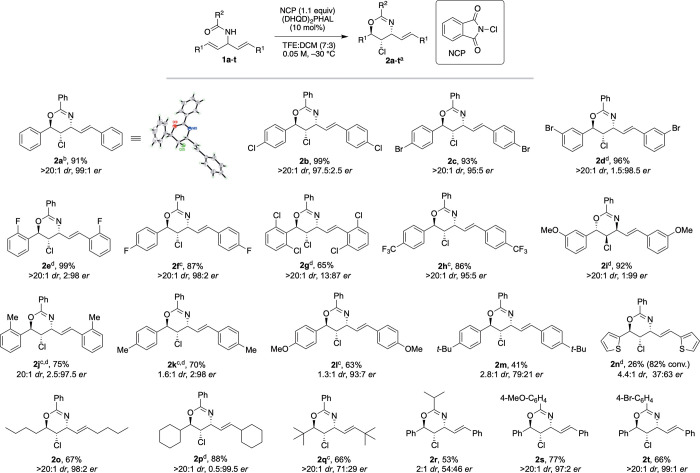 Figure 2
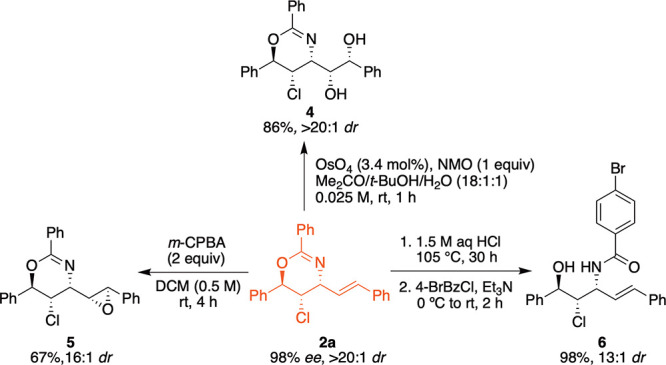 Figure 3
 Figure 4
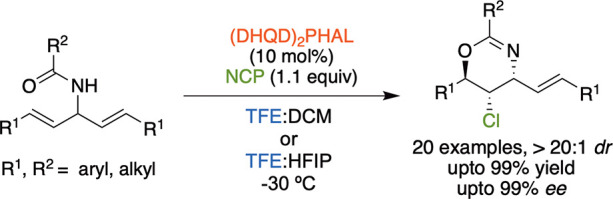 Figure 5
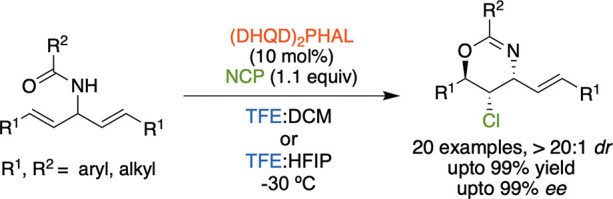 Figure 6
Peer Reviews
No public reviews on file for this paper yet. If you reviewed it on a platform where reviews are public (OpenReview, ICLR, NeurIPS, ICML), you can paste yours below so the community can read it here.
Videos
No videos yet. Explain this paper in a talk, walkthrough, or lecture? Add one.
Taxonomy
TopicsVanadium and Halogenation Chemistry · Oxidative Organic Chemistry Reactions · Alkaloids: synthesis and pharmacology