Utilizing ChatGPT-3.5 to Assist Ophthalmologists in Clinical Decision-making
Samir Cayenne, Natalia Penaloza, Anne C. Chan, M.I. Tahashilder, Rodney C. Guiseppi, Touka Banaee

TL;DR
This study shows that ChatGPT-3.5 can help ophthalmologists by suggesting possible diagnoses based on patient symptoms, but it is not a substitute for clinical judgment.
Contribution
The study evaluates ChatGPT-3.5's ability to generate differential diagnoses in ophthalmology using clinical vignettes and compares accuracy with additional patient risk factors.
Findings
ChatGPT-3.5 correctly diagnosed 51 out of 100 cases as the first differential diagnosis.
Neuro-ophthalmology cases showed significantly improved accuracy with additional patient risk factors.
31 out of 100 cases were not included in the differential diagnosis list at all.
Abstract
ChatGPT-3.5 has the potential to assist ophthalmologists by generating a differential diagnosis based on patient presentation. One hundred ocular pathologies were tested. Each pathology had two signs and two symptoms prompted into ChatGPT-3.5 through a clinical vignette template to generate a list of four preferentially ordered differential diagnoses, denoted as Method A. Thirty of the original 100 pathologies were further subcategorized into three groups of 10: cornea, retina, and neuro-ophthalmology. To assess whether additional clinical information affected the accuracy of results, these subcategories were again prompted into ChatGPT-3.5 with the same previous two signs and symptoms, along with additional risk factors of age, sex, and past medical history, denoted as Method B. A one-tailed Wilcoxon signed-rank test was performed to compare the accuracy between Methods A and B across…
Genes, proteins, chemicals, diseases, species, mutations and cell lines named across the full text — each resolved to its canonical identifier and authoritative record.
Click any figure to enlarge with its caption.
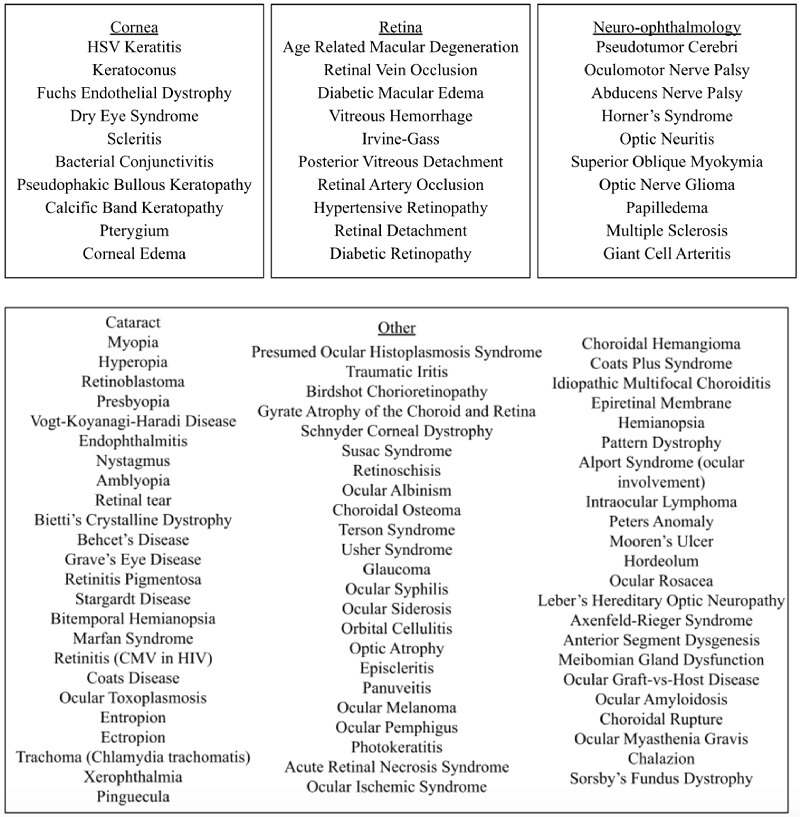 Figure 1
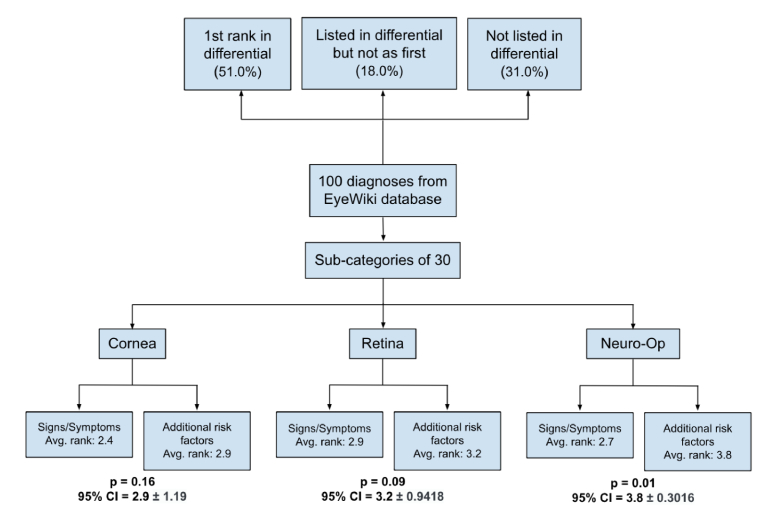 Figure 2
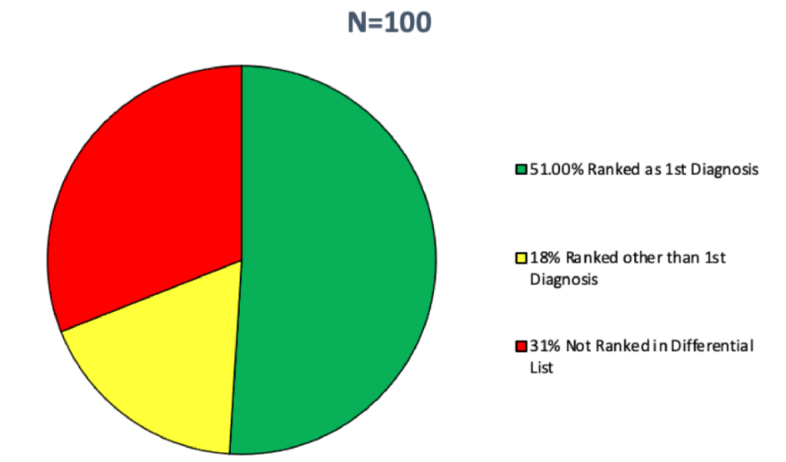 Figure 3
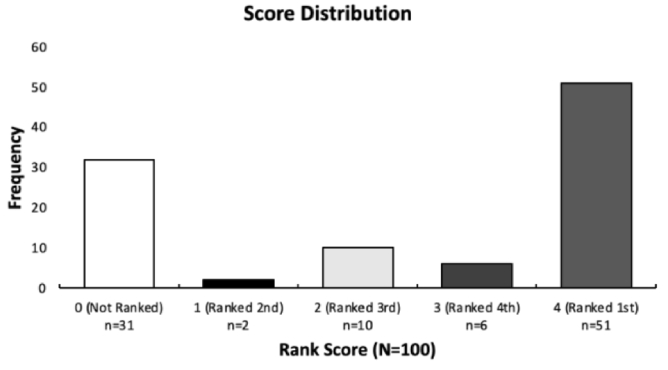 Figure 4
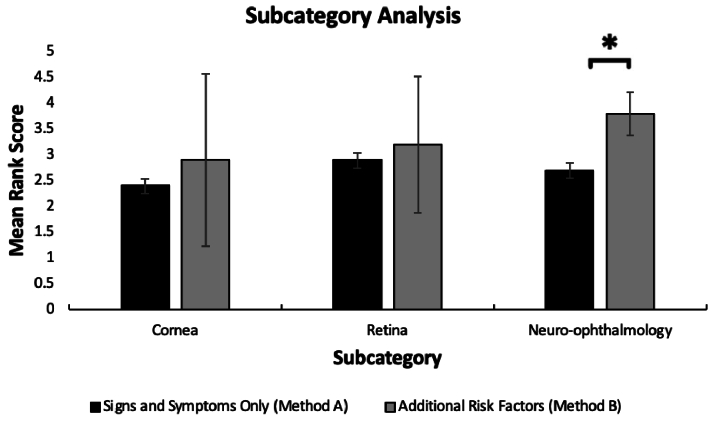 Figure 5
Peer Reviews
No public reviews on file for this paper yet. If you reviewed it on a platform where reviews are public (OpenReview, ICLR, NeurIPS, ICML), you can paste yours below so the community can read it here.
Videos
No videos yet. Explain this paper in a talk, walkthrough, or lecture? Add one.
Taxonomy
TopicsArtificial Intelligence in Healthcare and Education · Healthcare cost, quality, practices · Cardiac, Anesthesia and Surgical Outcomes