Intramolecular Versus Intermolecular Bonding in Drug Gemcitabine and Nucleobases: A Computational Study
Natarajan Sathiyamoorthy Venkataramanan, Ambigapathy Suvitha, Ryoji Sahara

TL;DR
This study uses computational methods to analyze how gemcitabine interacts with nucleobases, focusing on the strength and nature of the bonds formed.
Contribution
The paper provides new insights into the relative strength of intermolecular versus intramolecular bonds in gemcitabine–nucleobase complexes.
Findings
Intermolecular hydrogen bonds in gemcitabine–nucleobase complexes are stronger than intramolecular bonds.
Gemcitabine–guanine complexes show the highest binding energy, while gemcitabine–thymine complexes show the lowest.
Electrostatic attraction is the main contributor to complex stability, with dispersion playing a minor role.
Abstract
The adsorption of the drug gemcitabine on nucleobases was investigated using a dispersion-corrected density functional theory (DFT) study. The planar structure of complexes is more stable than those with stacked and buckle-angled configurations. The complexes were found to possess at least two intermolecular hydrogen bonds. The binding energy and interaction energy are both negative, with the highest values observed for the gemcitabine–guanine and the lowest in the gemcitabine–thymine complex. The complex formation was found to be an enthalpy-driven process. Pyrimidine nucleobases have a lower enthalpy of formation than purine nucleobases. The computed HOMA and NICS values on the gemcitabine–nucleobase complexes show a substantial increase compared to the pristine nucleobases. An MESP analysis of the complexes shows a directional interaction and electron density shift between the…
Genes, proteins, chemicals, diseases, species, mutations and cell lines named across the full text — each resolved to its canonical identifier and authoritative record.
Click any figure to enlarge with its caption.
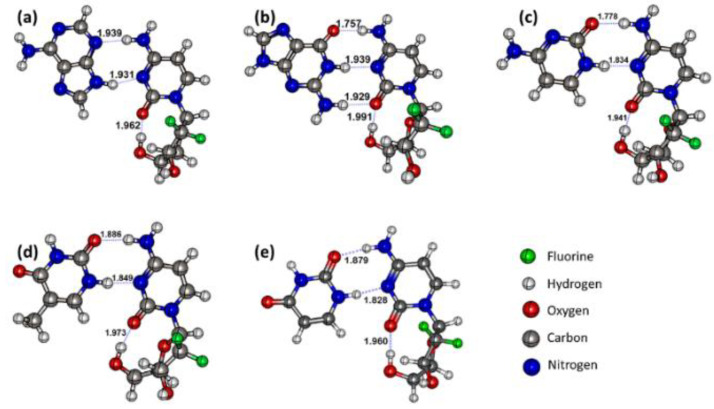 Figure 1
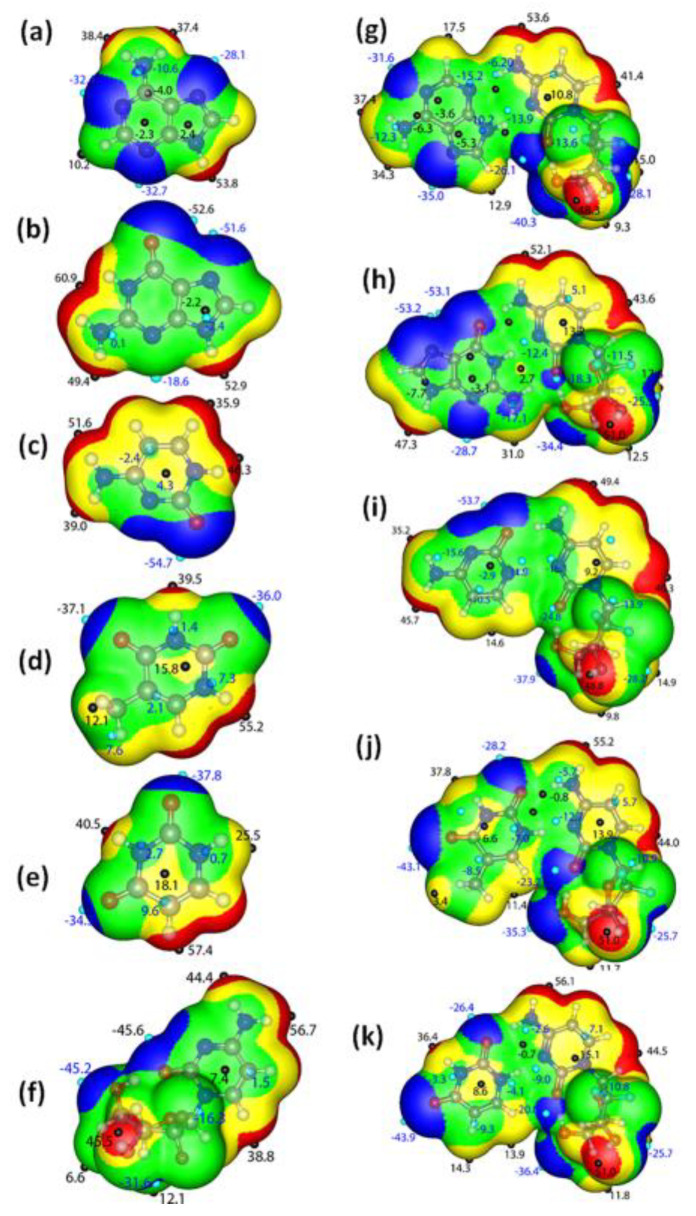 Figure 2
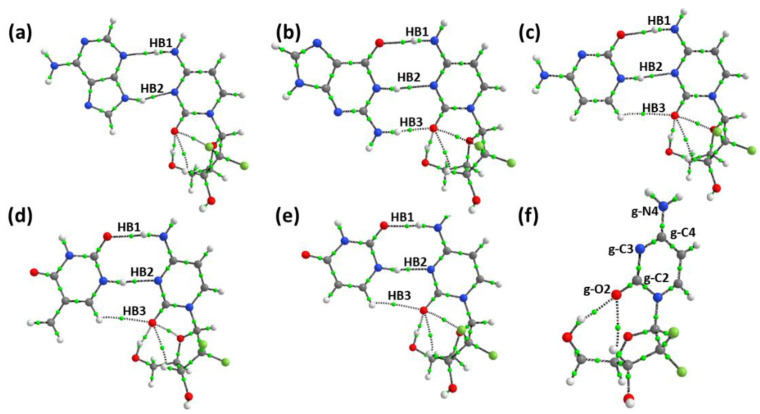 Figure 3
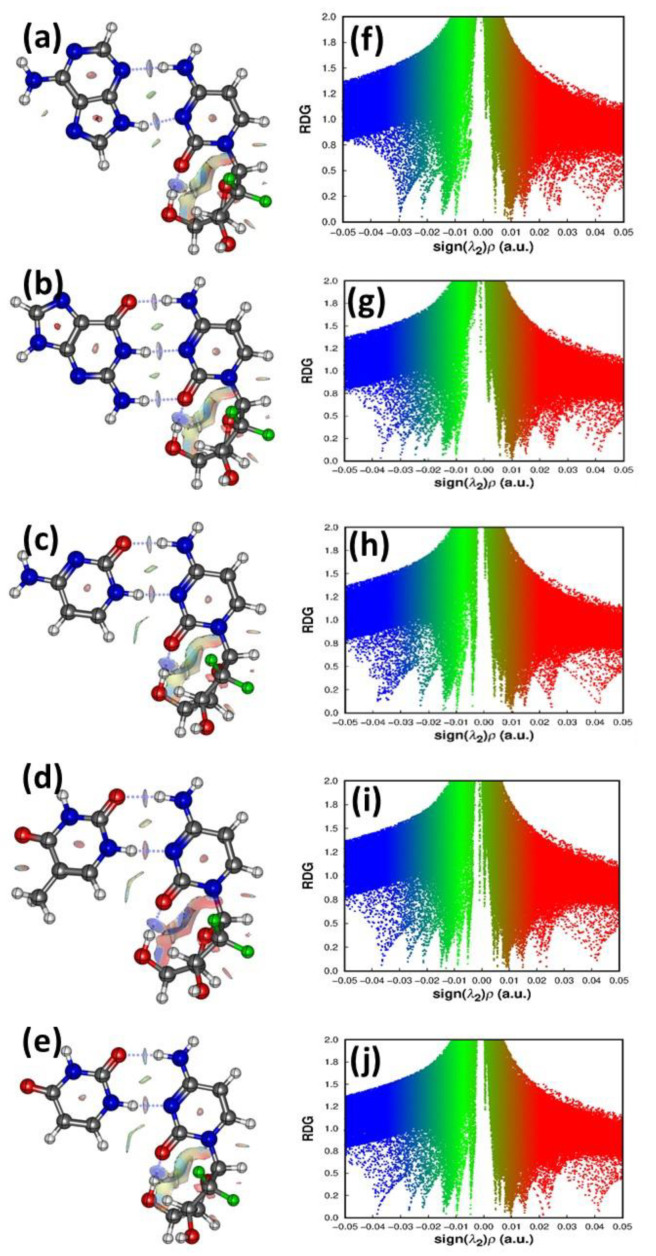 Figure 4
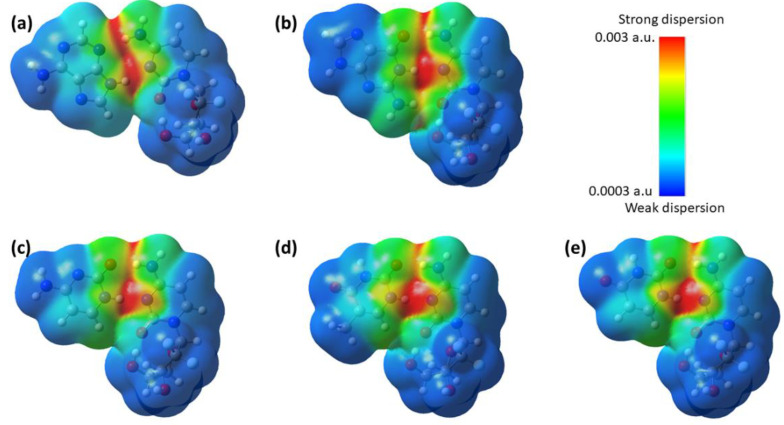 Figure 5
Peer Reviews
No public reviews on file for this paper yet. If you reviewed it on a platform where reviews are public (OpenReview, ICLR, NeurIPS, ICML), you can paste yours below so the community can read it here.
Videos
No videos yet. Explain this paper in a talk, walkthrough, or lecture? Add one.
Taxonomy
TopicsDNA and Nucleic Acid Chemistry · Metal complexes synthesis and properties · Chemical Reaction Mechanisms