Bilateral Sylvian fissure lipomas with angiomatous component: A case report
Mireille M. de Vries, Nadine Oosterhof, Carine Martins Jarnalo, Marjolein Dremmen, Janet de Beukelaar, Nienke Katier

TL;DR
This paper reports a rare case of bilateral lipomas in the Sylvian fissure of a 28-year-old woman, discovered during a routine MRI for headache.
Contribution
The novelty lies in the first reported case of bilateral Sylvian fissure lipomas with an angiomatous component.
Findings
MRI revealed bilateral extra-axial perisylvian lesions consistent with lipomas.
The case highlights the importance of recognizing this rare condition for accurate diagnosis and management.
Abstract
Sylvian fissure lipomas are rare congenital malformations, with few cases reported in the literature. We present the case of a 28-year-old woman who consulted a neurologist for headache during pregnancy. Brain magnetic resonance imaging (MRI) showed bilateral extra-axial perisylvian lesions as an incidental finding. The MRI characteristics led to the diagnosis of bilateral Sylvian fissure lipomas with angiomatous component. To our knowledge, no previous cases of bilateral Sylvian fissure lipomas have been reported. This article provides an overview of the literature on Sylvian fissure lipomas, including their prevalence, pathophysiology, differential diagnosis, and management, to aid in their timely recognition and appropriate evaluation.
Genes, proteins, chemicals, diseases, species, mutations and cell lines named across the full text — each resolved to its canonical identifier and authoritative record.
Click any figure to enlarge with its caption.
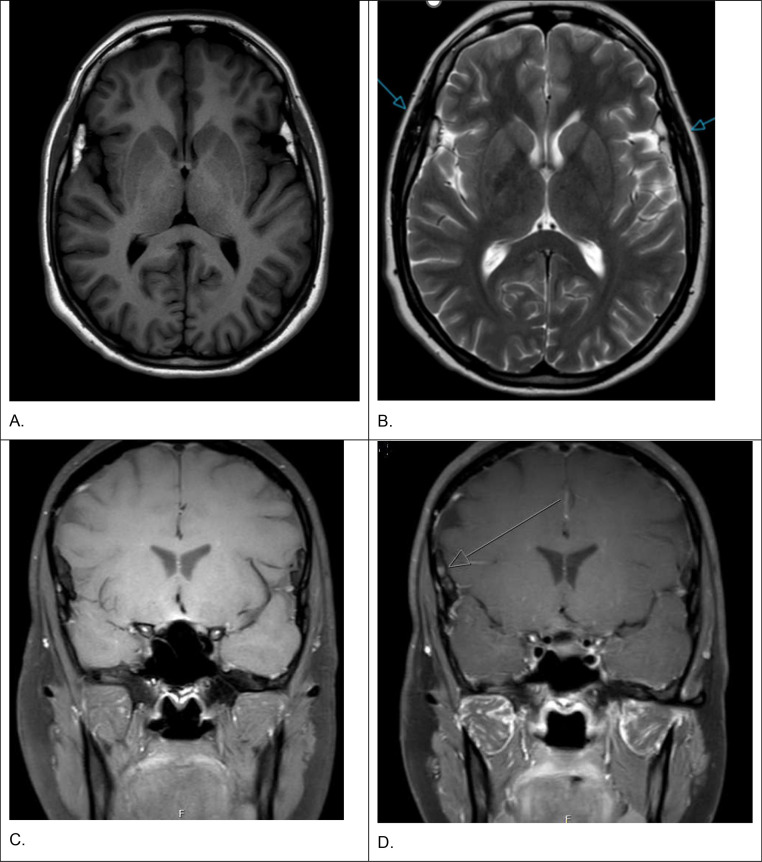 Figure 1
Peer Reviews
No public reviews on file for this paper yet. If you reviewed it on a platform where reviews are public (OpenReview, ICLR, NeurIPS, ICML), you can paste yours below so the community can read it here.
Videos
No videos yet. Explain this paper in a talk, walkthrough, or lecture? Add one.
Taxonomy
TopicsTeratomas and Epidermoid Cysts · Cerebrospinal fluid and hydrocephalus · Spinal Dysraphism and Malformations