Unveiling the genomic architecture of multidrug-resistant Pseudomonas sp. RTCS2 isolated from spoiled Solanum lycopersicum L
Shubhajit Shaw, Rittick Mondal, Pankaj Mandal, Avijit Mandal, Ritwik Acharya, Dipanjan Das, Sujan Ch. Paul, Arka Pratim Chakraborty, Debnirmalya Gangopadhyay, Amit Kumar Mandal

TL;DR
This paper presents the draft genome of a Pseudomonas sp. RTCS2 bacterium isolated from spoiled tomatoes in India, revealing its potential to resist antimicrobials.
Contribution
The study provides the first genomic characterization of Pseudomonas sp. RTCS2, identifying antimicrobial resistance genes.
Findings
The genome of Pseudomonas sp. RTCS2 is 5,526,005 bp with a 62.9% G + C content.
Antimicrobial resistance genes adeF, vanH, and vanT were identified in the genome.
The bacterium shows pathogenic potential due to the presence of resistance genes.
Abstract
Here, we report the draft genome of Pseudomonas sp. RTCS2, a gram-negative rod-shaped bacterium associated with tomato spoilage, isolated from Raiganj University, India (25.6071° N; 88.1306° E). The 5,526,005 bp genome with a 62.9% G + C content harbors antimicrobial resistance genes (adeF, vanH, and vanT), highlighting its pathogenic potential.
Genes, proteins, chemicals, diseases, species, mutations and cell lines named across the full text — each resolved to its canonical identifier and authoritative record.
Click any figure to enlarge with its caption.
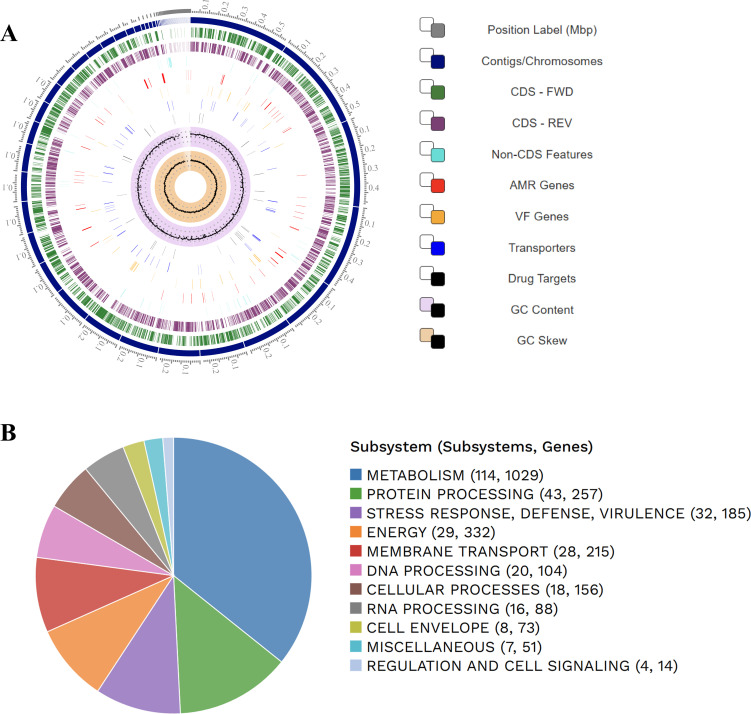 Figure 1
Peer Reviews
No public reviews on file for this paper yet. If you reviewed it on a platform where reviews are public (OpenReview, ICLR, NeurIPS, ICML), you can paste yours below so the community can read it here.
Videos
No videos yet. Explain this paper in a talk, walkthrough, or lecture? Add one.
Taxonomy
TopicsPlant Pathogenic Bacteria Studies · Genomics and Phylogenetic Studies · Plant-Microbe Interactions and Immunity