A Case of Cryoglobulinemic Nephritis That Responded to Rituximab Monotherapy
Kumiko Fujieda, Akihito Tanaka, Kayaho Maeda, Takaya Ozeki, Kazuhiro Furuhashi, Shoichi Maruyama

TL;DR
A 65-year-old woman with cryoglobulinemic nephritis showed improvement after being treated with rituximab alone.
Contribution
This case demonstrates the potential effectiveness of rituximab monotherapy in treating cryoglobulinemic nephritis.
Findings
Rituximab treatment led to decreased serum creatinine and urinary protein levels.
Complement lowering was suppressed following rituximab therapy.
The patient's condition improved without additional therapies.
Abstract
The patient was a 65-year-old woman with ascites effusion and portal hypertension of unknown cause for the past three years, who was followed up with diuretics. Subsequently, the patient developed abdominal distention and worsening leg edema, and the laboratory test results revealed positive antinuclear antibodies, mild renal impairment, and abnormal urinalysis. After renal biopsy and laboratory tests, the patient was diagnosed with cryoglobulinemic nephritis. She was treated with rituximab monotherapy, which resulted in decreased serum creatinine and urinary protein levels and suppression of complement lowering. Thus, rituximab treatment may be effective for cryoglobulinemic nephritis.
Genes, proteins, chemicals, diseases, species, mutations and cell lines named across the full text — each resolved to its canonical identifier and authoritative record.
Click any figure to enlarge with its caption.
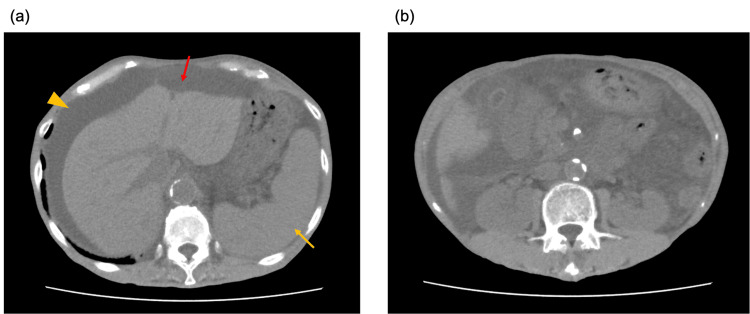 Figure 1
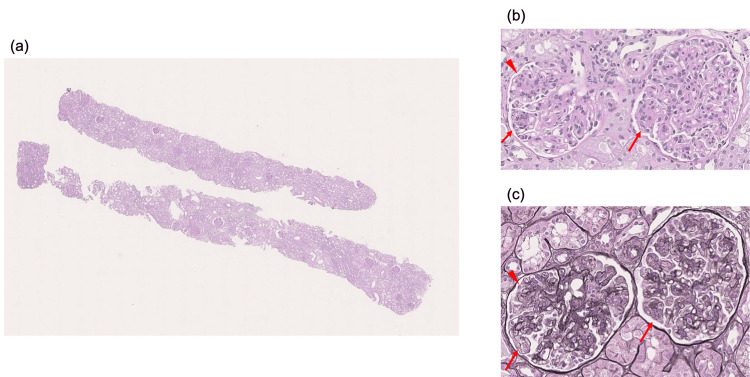 Figure 2
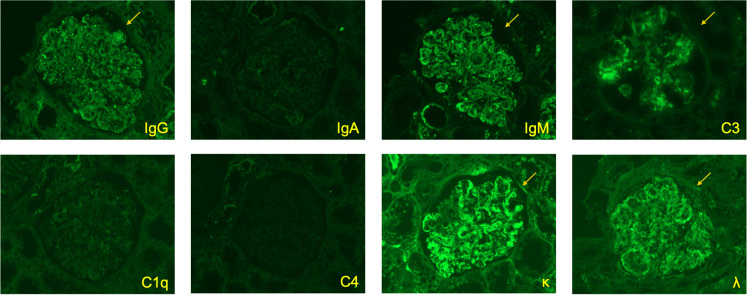 Figure 3
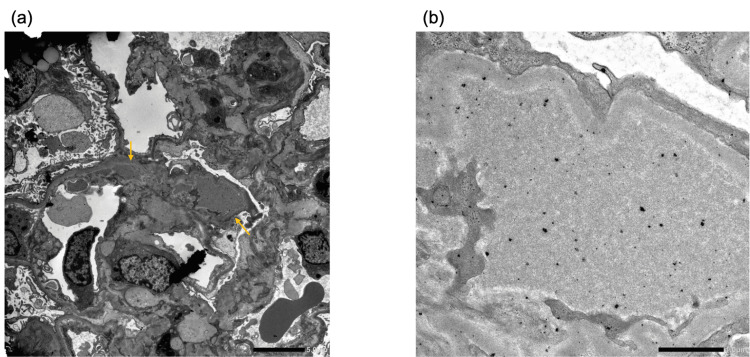 Figure 4
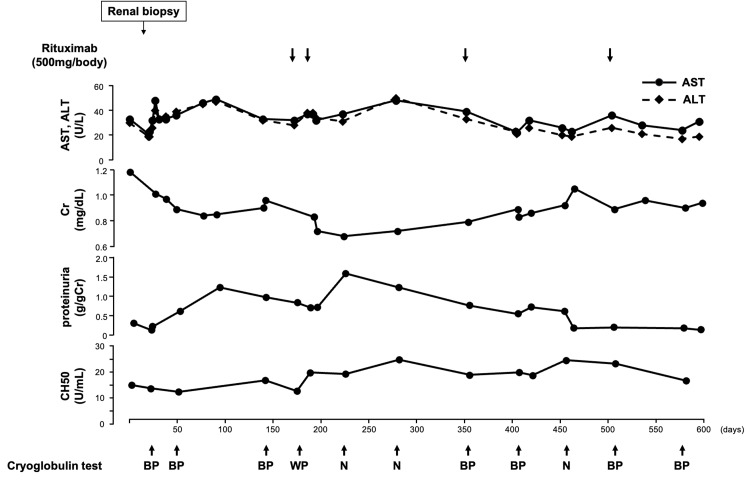 Figure 5
Peer Reviews
No public reviews on file for this paper yet. If you reviewed it on a platform where reviews are public (OpenReview, ICLR, NeurIPS, ICML), you can paste yours below so the community can read it here.
Videos
No videos yet. Explain this paper in a talk, walkthrough, or lecture? Add one.
Taxonomy
TopicsAmyloidosis: Diagnosis, Treatment, Outcomes · Renal Diseases and Glomerulopathies · Hepatitis C virus research