Building a Medicinal Chemistry Framework for Bioorthogonal Probes
Markus Staudt, Jonathan C. T. Carlson

TL;DR
This paper explores how to create better fluorescent probes by studying interactions between tetrazine and proteins.
Contribution
The study introduces a new method for optimizing bioorthogonal probes through tetrazine-protein interactome screening.
Findings
Screening the tetrazine-protein interactome reveals key interactions for probe performance.
Balancing reactivity and specificity is crucial for high-performance fluorescent probes.
Abstract
Screening the tetrazine-protein interactome finds the balance needed for high-performance fluorescent probes.
Genes, proteins, chemicals, diseases, species, mutations and cell lines named across the full text — each resolved to its canonical identifier and authoritative record.
Click any figure to enlarge with its caption.
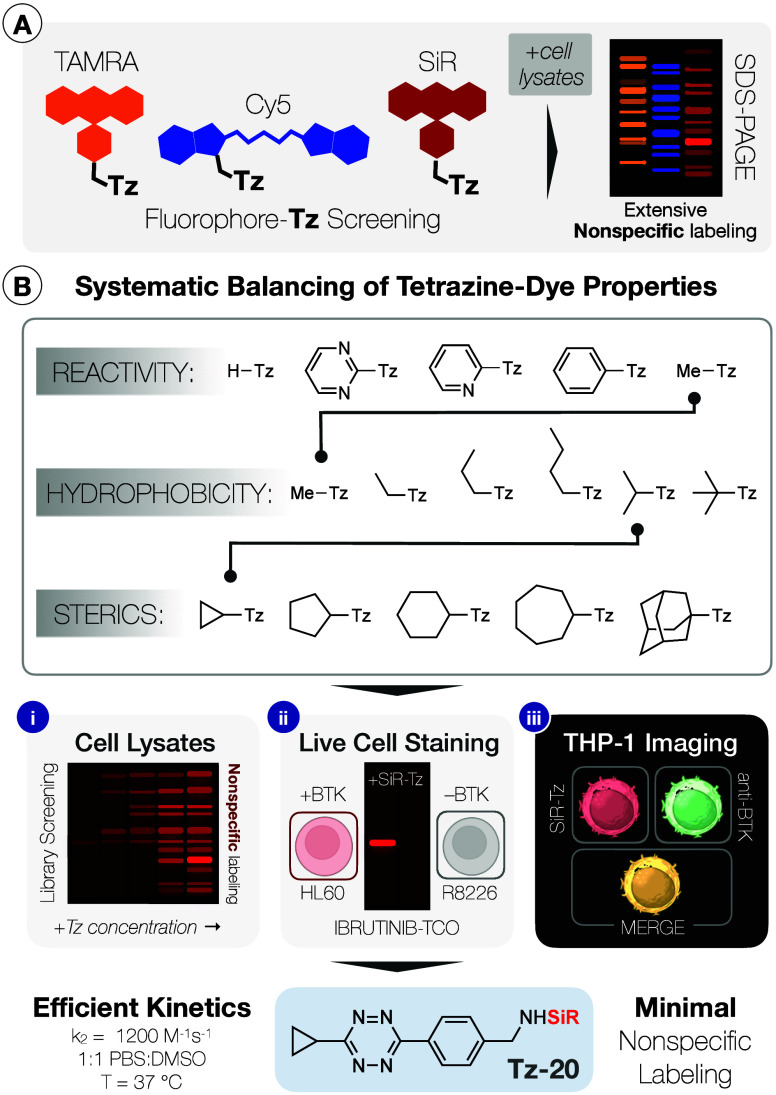 Figure 1
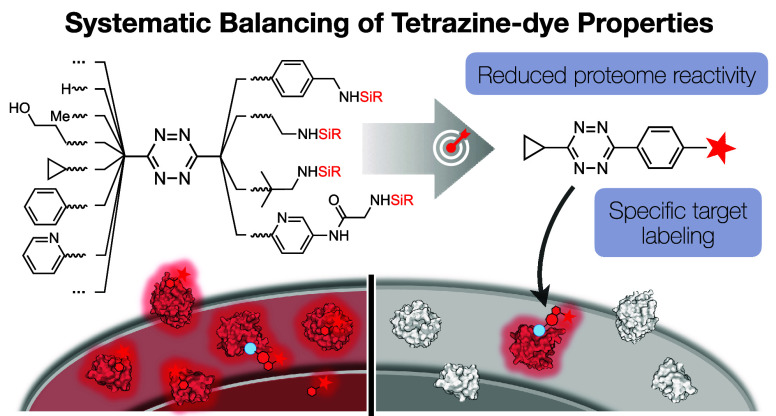 Figure 2
Peer Reviews
No public reviews on file for this paper yet. If you reviewed it on a platform where reviews are public (OpenReview, ICLR, NeurIPS, ICML), you can paste yours below so the community can read it here.
Videos
No videos yet. Explain this paper in a talk, walkthrough, or lecture? Add one.
Taxonomy
TopicsMonoclonal and Polyclonal Antibodies Research · Click Chemistry and Applications · Chemical Synthesis and Analysis
The task assigned to a bioorthogonal probe bears a striking resemblance to that of an irreversible inhibitor: safely traverse an entire ecosystem of biochemical distractions to arrive at a covalent connection in exactly the right niche. Avoid inhospitable, metabolically hazardous terrain; resist lingering in a myriad of tempting biological nooks and crannies. Prevent a spring-loaded connectorbe it protein-targeting or click-reactivefrom succumbing to the effective molarities of the functional groups encountered along the way.
Tuning the tropism of a complex molecular scaffold to achieve these objectives is the essential work of medicinal chemistry, with ongoing innovations driving active progress in covalent drug discovery.? As we move from an era of bioorthogonal proofs of concept to one of complex multifunctional applications in vivo, developing a systematic approach to “bioorthogonal MedChem” will be essential to making the leap to high performance tools. In this issue of ACS Central Science, Park, Kim, Lee, and co-workers explore that challenge for a silicon rhodamine tetrazine (Tz) probe.? This is a timely report, coinciding with recent efforts to rigorously map the state of the art in bioorthogonality? or lack thereof,? and paralleling other high impact work to optimize the physiologic stability of bioorthogonal probes.?
Beginning with their observation that tetrazine-fluorophore conjugates exhibited unexpected degrees of nonspecific labeling, the groups of Park, Kim, and Lee embarked on a thorough study of the off-target and on-target dynamics of these probes. Mechanistically, the work makes a significant contribution to the understanding of undesired Tz-mediated covalent adduct formation to proteins in the living, cellular context. A combination of model reactions and clever blocking experiments revealed reactivity toward nucleophilic amino acids like lysine and cysteine that have long been suspected but rarely investigated. Screening three different fluorophore-Tz conjugates verified that all three exhibited diverse cell lysate reactivity, each with a distinctive fingerprint on protein gel electrophoresis (FigureA).
Resisting the easy route of evaluating other commercially available dyes, the team focused on their silicon rhodamine (SiR) probe and prepared a library of more than 20 distinct tetrazines (FigureB). This allowed for identification of SiR-Tz with significantly reduced off-target labeling, while also providing a roadmap of the vulnerabilities of these important bioorthogonal tools. Well-known relationships between steric hindrance, electronics, and Tz stability are evident,? but a strong impact of hydrophobicity on protein binding also emerges, with larger/longer hydrophobic substituents exacerbating protein-adduct formation. A cyclopropyl substituent paired with a classic benzylamino Tz was found to provide the best compromise between reaction kinetics, efficient trans-cyclooctene (TCO) targeting, and robustness toward the proteome.
Critically, the authors did not stop at posthoc assays in cell lysates; by incubating live cells first with the Bruton’s tyrosine kinase (BTK) inhibitor ibrutinib-TCO, then the SiR-Tz, they established an SDS-PAGE readout for targeting performance within the intact, living cytoplasm. Microscopy studies validated those results, with particularly clean BTK colocalization observed for the winning cyclopropyl Tz-20 in THP-1 cells (FigureB). Splenocyte assays explored by the team were also successful, but less decisive; understanding this difference will be a good topic for future research.
Many other options to build on this insightful work come immediately to mind. An experiment that uses the tetrazines themselves as blocking reagents (sans fluorophore) would be an intriguing addition, helping to highlight the subset of the covalent interactome driven most strongly by the Tz. Likewise, although the Tz moiety mediates the covalent off-target labeling, the protein-specific tropism is strongly influenced by the attached dye. Interestingly, the authors selected a methyl-substituted silicon rhodamine (SiR-Me), perturbing the otherwise close structural similarity to TAMRA. This SiR-Me dye has a known predisposition to mitochondrial localization in other probes,? making it a somewhat unexpected choice here, as the net positive charge may influence both subcellular distribution and washing kinetics. It will thus be highly relevant to see how the cyclopropyl-Tz fares in the habitats visited by other probes with different physicochemical properties.
More broadly, the propensity of fluorophore-Tz probes to react with the proteome mapped here does not speak to the proteome reactivity of other conjugates for these same tetrazines, nor does it provide a complete picture of the intrinsic reactivity of the tetrazines themselves. Going forward, it will thus be essential to develop more general methods to characterize the proteome-dynamics of bioorthogonal molecules that do not incorporate the convenient optical readout of a dye. To that end, one alternative strategy could be to equip libraries of new reagents with highly stable minimalist tags like alkynes, providing a handle for later functionalization. Another would be to bring modern high throughput proteomics to bear on this agenda, moving from the largely qualitative nature of SDS-PAGE to mapping events to specific proteins, peptides, and subcellular environments.
The work of Park, Kim, and Lee and their team in this issue of ACS Central Science establishes a precedent for systematic screening of fluorophore-Tz probes. Their demonstration of a toolkit-based structure–activity approach to bioorthogonal chemistry arrives at a time when its growing translational potential has fueled increasing interest from both academia and industry. Recent advances such as the rapid access to triazolyl-Tz through copper-catalyzed azide/alkyne click chemistry will facilitate late-stage diversification of scaffolds.? Detailed metabolic screening and custom library synthesis have driven efforts to achieve higher contrast in pretargeted Tz/TCO PET imaging, whether optimizing intravascular reactivity? or tracking the penetration of antisense oligonucleotides beyond the blood–brain barrier.? Finally, the first clinical trials of bioorthogonal therapeutics in cancer patients are now underway, applying the power of biomolecular on/off control to enable new forms of tumor targeting and on-demand prodrug activation. ?,?
Systematic efforts will be necessary to achieve the pharmacokinetics, metabolic stability, and biodistribution needed for efficient deployment of bioorthogonal tools in the diverse contexts of in vivo settings. Precise control of these factors will be key to translating the unique potential of bioorthogonal chemistry from laboratory into the clinic; the advance from trial-and-error to a medicinal chemistry-like framework for bioorthogonal reactivity profiling is now underway.
The reference list from the paper itself. Each links out to its DOI / PubMed record.
- 1Boike L.Henning N. J.Nomura D. K.Advances in covalent drug discovery Nat. Rev. Drug Discov 2022211288189810.1038/s 41573-022-00542-z 36008483 PMC 9403961 · doi ↗ · pubmed ↗
- 2Park J.Hahm J.Yim J.Lee H.Hwang H. M.Lee S.Park J.-Y.Velladurai A.Gangasani J. K.Cho H.Investigation of Proteome-Tetrazine Reactivity for a Highly Selective Tetrazine Ligation in Live Cells ACS Central Science 202510.1021/acscentsci.5c 00525 PMC 1220343040585803 · doi ↗ · pubmed ↗
- 3Fawcett C.Watson J.Richards S.Doherty A. E.Seki H.Love E. A.Coles C. H.Coe D. M.Jamieson C.Comparative Study of Click Handle Stability in Common Ligation Conditions Bioconjug Chem.202536105410.1021/acs.bioconjchem.5c 0009540287825 PMC 12100641 · doi ↗ · pubmed ↗
- 4Schauenburg D.Weil T.Not So Bioorthogonal Chemistry J. Am. Chem. Soc.2025147108049806210.1021/jacs.4c 1598640017419 PMC 11912343 · doi ↗ · pubmed ↗
- 5Cook B. E.Pickel T. C.Nag S.Bolduc P. N.Beshr R.Forsberg Morén A.Muste C.Boscutti G.Jiang D.Yuan L.PET imaging of antisense oligonucleotide distribution in rat and nonhuman primate brains using click chemistry Science Translational Medicine 202517797 eadl 173210.1126/scitranslmed.adl 173240333995 · doi ↗ · pubmed ↗
- 6Stéen E. J. L.Jørgensen J. T.Denk C.Battisti U. M.Nørregaard K.Edem P. E.Bratteby K.Shalgunov V.Wilkovitsch M.Svatunek D.Lipophilicity and Click Reactivity Determine the Performance of Bioorthogonal Tetrazine Tools in Pretargeted In Vivo Chemistry ACS Pharmacology & Translational Science 20214282483310.1021/acsptsci.1c 0000733860205 PMC 8033778 · doi ↗ · pubmed ↗
- 7Kim E.Yang K. S.Kohler R. H.Dubach J. M.Mikula H.Weissleder R.Optimized Near-IR Fluorescent Agents for in Vivo Imaging of Btk Expression Bioconjugate Chem.20152681513151810.1021/acs.bioconjchem.5b 00152 PMC 477271826017814 · doi ↗ · pubmed ↗
- 8Yang H.Sun H.Chen Y.Wang Y.Yang C.Yuan F.Wu X.Chen W.Yin P.Liang Y.Enabling Universal Access to Rapid and Stable Tetrazine Bioorthogonal Probes through Triazolyl-Tetrazine Formation JACS Au 2024482853286110.1021/jacsau.3c 0084339211625 PMC 11350731 · doi ↗ · pubmed ↗