
TL;DR
This paper presents an interview with So-Hyun Lee, who studied a zebrafish model of epilepsy and found that a specific mutation responds to valproic acid.
Contribution
The study identifies a zebrafish model with a slc25a22a mutation that exhibits seizures and responds to valproic acid.
Findings
Zebrafish lacking slc25a22a show spontaneous seizures.
Valproic acid, an anti-seizure medication, is effective in this zebrafish model.
Abstract
First Person is a series of interviews with the first authors of a selection of papers published in Disease Models & Mechanisms, helping researchers promote themselves alongside their papers. So-Hyun Lee is first author on ‘ Mutant zebrafish lacking slc25a22a show spontaneous seizures and respond to the anti-seizure medication valproic acid’, published in DMM. So-Hyun is a research professor in the lab of Seok-Yong Choi at Chonnam National University Medical School, Hwasun, Republic of Korea, investigating the molecular pathogenesis of epilepsy using a zebrafish model.
Genes, proteins, chemicals, diseases, species, mutations and cell lines named across the full text — each resolved to its canonical identifier and authoritative record.
Click any figure to enlarge with its caption.
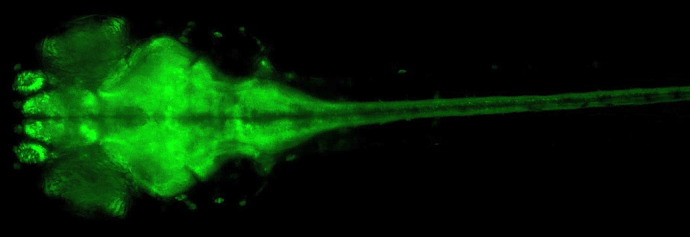 Figure 1
 Figure 2
Peer Reviews
No public reviews on file for this paper yet. If you reviewed it on a platform where reviews are public (OpenReview, ICLR, NeurIPS, ICML), you can paste yours below so the community can read it here.
Videos
No videos yet. Explain this paper in a talk, walkthrough, or lecture? Add one.
Taxonomy
TopicsZebrafish Biomedical Research Applications · Neurogenetic and Muscular Disorders Research · Genomics and Rare Diseases