Evidence for fomite transmission of SARS‐CoV‐2 Omicron variant in a mouse model
Sidi Yang, Liu Cao, Kun Li, Tiefeng Xu, Zixiao Yang, Yanxi Ji, Lihong Liu, Birong Zheng, Changwen Ke, Xiaofang Peng, Hong Peng, Deyin Guo, Chun‐Mei Li

TL;DR
This study shows that SARS-CoV-2 Omicron can spread via contaminated surfaces in mice, but the risk is low with good hygiene.
Contribution
The study experimentally demonstrates fomite transmission of SARS-CoV-2 Omicron in a mouse model.
Findings
Fomite transmission of SARS-CoV-2 Omicron occurred in some cases in the mouse model.
The risk of fomite transmission is low in natural settings with proper hygiene.
The findings could inform public health strategies for controlling the pandemic.
Abstract
Throughout the COVID‐19 pandemic, the risk of fomite‐based transmission of severe acute respiratory syndrome coronavirus 2 (SARS‐CoV‐2) has not been systematically investigated. In this study, we employed the K18‐hACE2 mouse infection model to experimentally assess the relative contribution of fomite transmission. Our findings indicate that while fomite transmission can occur in certain cases, the risk of fomite transmission in natural settings may be relatively low when appropriate hygiene practices are followed. These results may help optimize public health measures for more effective control of the COVID‐19 pandemic.
Genes, proteins, chemicals, diseases, species, mutations and cell lines named across the full text — each resolved to its canonical identifier and authoritative record.
Click any figure to enlarge with its caption.
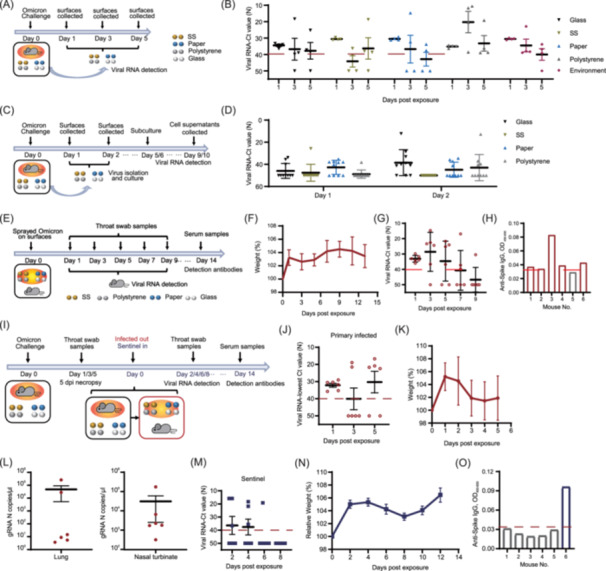 Figure 1
Peer Reviews
No public reviews on file for this paper yet. If you reviewed it on a platform where reviews are public (OpenReview, ICLR, NeurIPS, ICML), you can paste yours below so the community can read it here.
Videos
No videos yet. Explain this paper in a talk, walkthrough, or lecture? Add one.
Taxonomy
TopicsInfection Control and Ventilation · SARS-CoV-2 and COVID-19 Research · SARS-CoV-2 detection and testing