Synthesis of β-ketophosphonates through aerobic copper(II)-mediated phosphorylation of enol acetates
Alexander S Budnikov, Igor B Krylov, Fedor K Monin, Valentina M Merkulova, Alexey I Ilovaisky, Liu Yan, Bing Yu, Alexander O Terent’ev

TL;DR
A new copper-based method efficiently produces β-ketophosphonates using mild conditions and affordable materials.
Contribution
A cost-effective aerobic copper(II)-mediated phosphorylation method for synthesizing β-ketophosphonates is introduced.
Findings
Copper sulfate pentahydrate is an effective and inexpensive catalyst for phosphorylation under mild conditions.
Anhydrous CuSO4 significantly reduces phosphorylation yields, highlighting the importance of copper's ligand environment.
Common Cu(II) and Cu(I) salts like halides or nitrates are less effective or inert in this reaction.
Abstract
Aerobic copper(II)-mediated phosphorylation of enol acetates with H-phosphonates leading to the formation of β-ketophosphonates was discovered. The proposed method is applicable to a wide range of H-phosphonates or phosphine oxides as PH-reagents and enol acetates. Unlike previous reports, which generally employed stoichiometric amounts of oxidants or more expensive transition metal catalysts, the present protocol employs only cheap copper sulfate pentahydrate as a catalyst under mild reaction conditions. The achieved phosphorylation proceeds via the formation of P-centered radicals produced by the oxidation of PH-reagents by copper(II)-containing species. Employing anhydrous CuSO4 instead of the pentahydrate led to a dramatic phosphorylation yield drop from 70 to <5%. It seems that the ligand environment of copper is very important for the effective reaction: other Cu(II) and Cu(I)…
Genes, proteins, chemicals, diseases, species, mutations and cell lines named across the full text — each resolved to its canonical identifier and authoritative record.
Click any figure to enlarge with its caption.
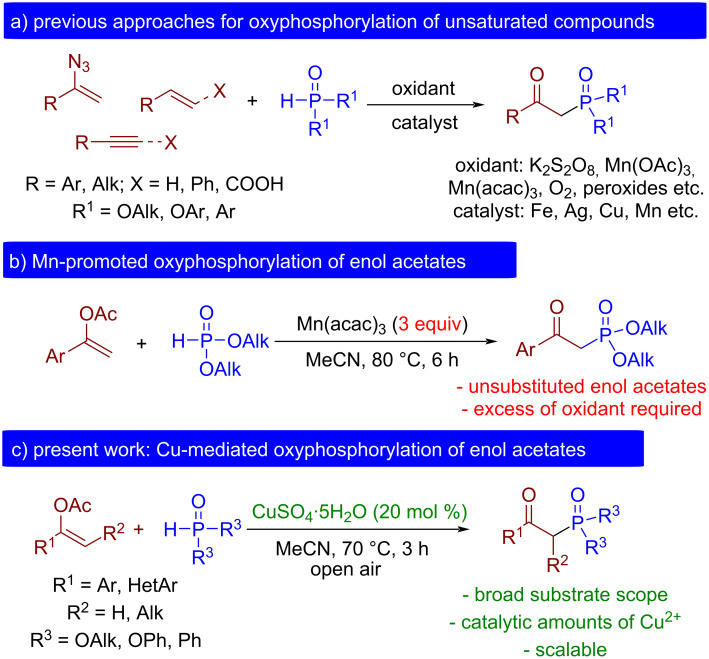 Figure 1
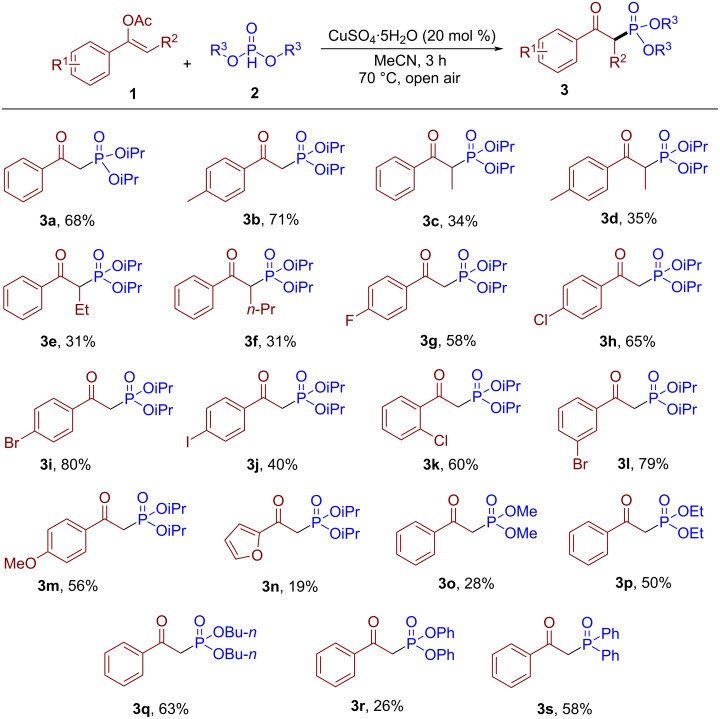 Figure 2
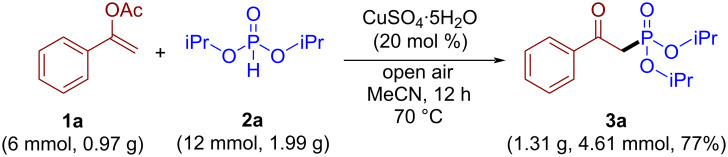 Figure 3
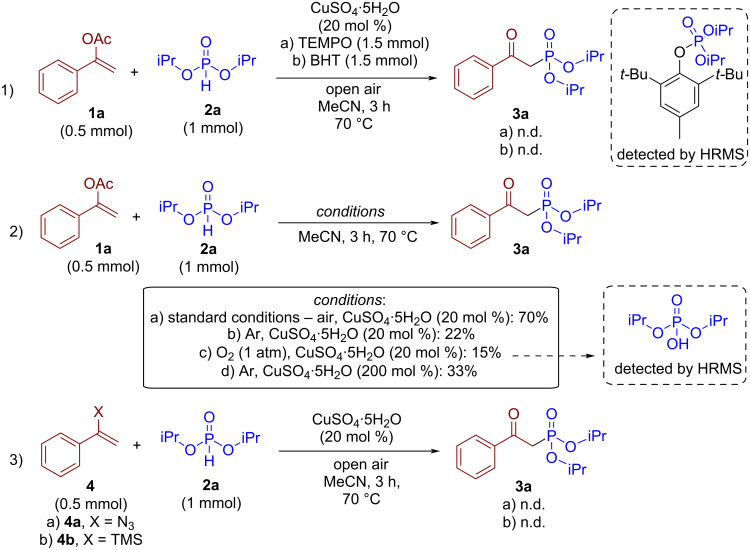 Figure 4
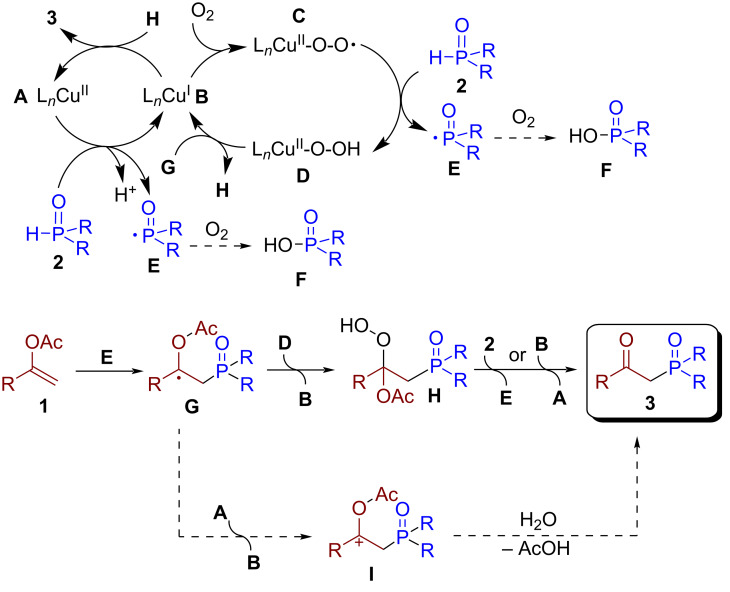 Figure 5
 Figure 6
Peer Reviews
No public reviews on file for this paper yet. If you reviewed it on a platform where reviews are public (OpenReview, ICLR, NeurIPS, ICML), you can paste yours below so the community can read it here.
Videos
No videos yet. Explain this paper in a talk, walkthrough, or lecture? Add one.
Taxonomy
TopicsOrganophosphorus compounds synthesis · Fluorine in Organic Chemistry · Organoboron and organosilicon chemistry