Bioactivity Profiling of Chemically Characterized Extract of Saudi Jackfruit (Artocarpus heterophyllus) Using In Vitro and In Silico Approaches
Hanan Y. Aati, Renad Al-Arifi, Chitchamai Ovatlarnporn, Abdul Rauf, Abdul Basit, Huma Rao, Maria Batool, Kashif ur Rehman Khan

TL;DR
This study explores the chemical and health benefits of Saudi jackfruit extract, showing it has strong antioxidant and enzyme-inhibiting properties and potential as a cancer treatment.
Contribution
The study provides a comprehensive chemical and pharmacological profile of Saudi jackfruit extract using both in vitro and in silico methods.
Findings
The extract showed high antioxidant activity and significant enzyme inhibition against urease, tyrosinase, and α-amylase.
EAHF exhibited cytotoxic effects on breast cancer cell lines MCF-7 and MDA-MB-231.
In silico analysis confirmed the extract's potential for drug-like properties and enzyme interactions.
Abstract
Artocarpus heterophyllus, also known as jackfruit, is recently introduced for cultivation in Saudi Arabia. In this study, the ethanolic extract of Artocarpus heterophyllus fruits (EAHF) was explored for its chemical and pharmacological properties. The EAHF was revealed with total phenolic contents (115.5 ± 5 mg GA.Eq.gm−1 DE), total flavonoid contents (77 ± 2.22 mg QU.Eq.gm−1 DE), and total tannin contents (59.33 ± 1.66 mg TA.Eq.gm−1 DE), while 81 phytocompounds were identified by the GC–MS analysis. The extract was found with maximum antioxidant activity in the FRAP method. EAHF showed significant thrombolytic (85.51%) and hemolytic (1.01%) activities. EAHF showed strong enzyme inhibition, against urease (95.65%), tyrosinase(71.01%), and α-amylase(28.17%). The extract showed cytotoxicity potential against breast cancer cell lines (MCF-7 and MDA-MB-231) in a concentration and…
Genes, proteins, chemicals, diseases, species, mutations and cell lines named across the full text — each resolved to its canonical identifier and authoritative record.
Click any figure to enlarge with its caption.
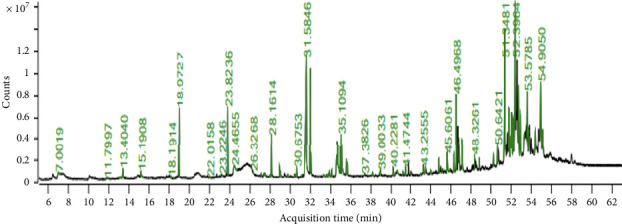 Figure 1
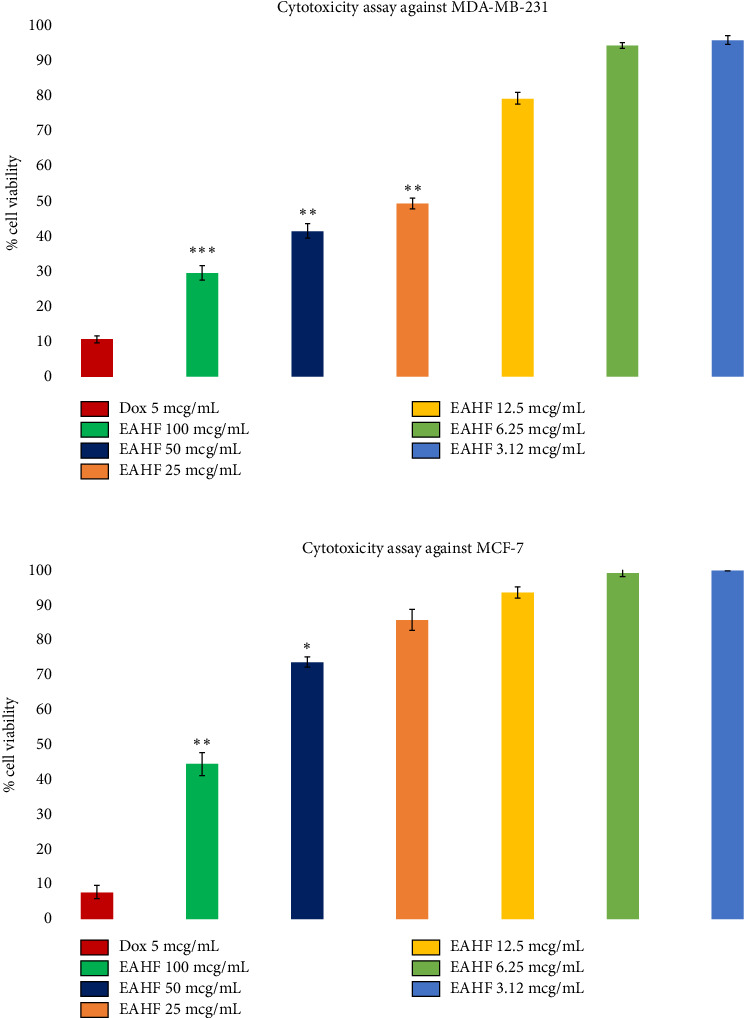 Figure 2
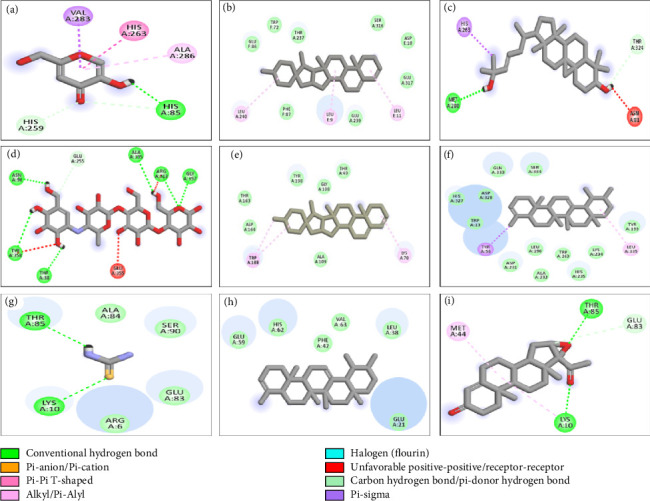 Figure 3
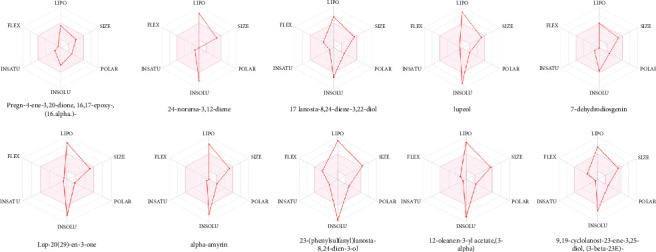 Figure 4
Peer Reviews
No public reviews on file for this paper yet. If you reviewed it on a platform where reviews are public (OpenReview, ICLR, NeurIPS, ICML), you can paste yours below so the community can read it here.
Videos
No videos yet. Explain this paper in a talk, walkthrough, or lecture? Add one.
Taxonomy
TopicsBioactive natural compounds · Phytoestrogen effects and research · Phytochemicals and Antioxidant Activities