Unexpected diversity and ecological significance of uncultivable large virus-like particles in aquatic environments
Hermine Billard, Maxime Fuster, François Enault, Jean-François Carrias, Léa Fargette, Margot Carrouée, Perrine Desmares, Tom O Delmont, Pauline Nogaret, Estelle Bigeard, Gwenn Tanguy, Anne-Claire Baudoux, Urania Christaki, Télesphore Sime-Ngando, Jonathan Colombet

TL;DR
This study reveals new types of large viruses in water and shows they play a big role in controlling tiny organisms.
Contribution
The study uncovers new viral morphotypes and their ecological roles using flow cytometry and electron microscopy.
Findings
New viral morphotypes associated with microeukaryotes were discovered in aquatic environments.
Large virus-like particles show significant abundances and multi-year dynamics in these environments.
These viruses are key regulators of microbial communities.
Abstract
The discovery of jumbo phages and giant viruses of microeukaryotes has transformed our perception of the virosphere. Metagenomic and metatranscriptomic data further highlight their diversity and ecological impact. Nevertheless, sequence-based approaches fail to take into account the morphological diversity of non-cultivated viruses, resulting in our fragmented understanding of their nature and role in the environment. Here, we combined flow cytometry and electron microscopy to uncover both previously unsuspected morphological diversity and significant abundances of large virus-like particles in aquatic environments. We discovered new viral morphotypes, all likely to be associated with microeukaryotes. We also obtained insights into the multi-year dynamics of the abundances of both giant microeukaryotic virus-like particles and jumbo phage-like particles. This work deepens our…
Genes, proteins, chemicals, diseases, species, mutations and cell lines named across the full text — each resolved to its canonical identifier and authoritative record.
Click any figure to enlarge with its caption.
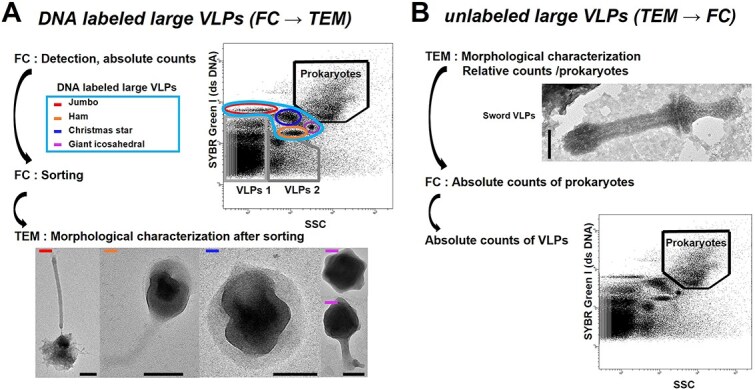 Figure 1
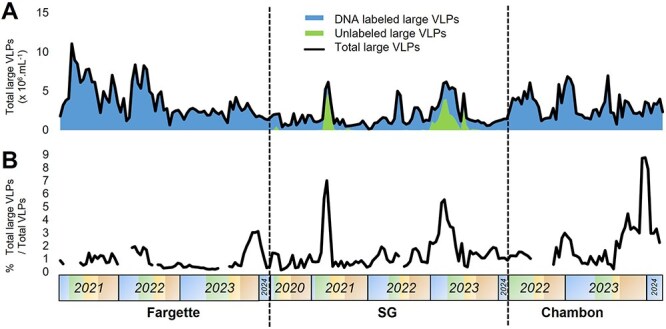 Figure 2
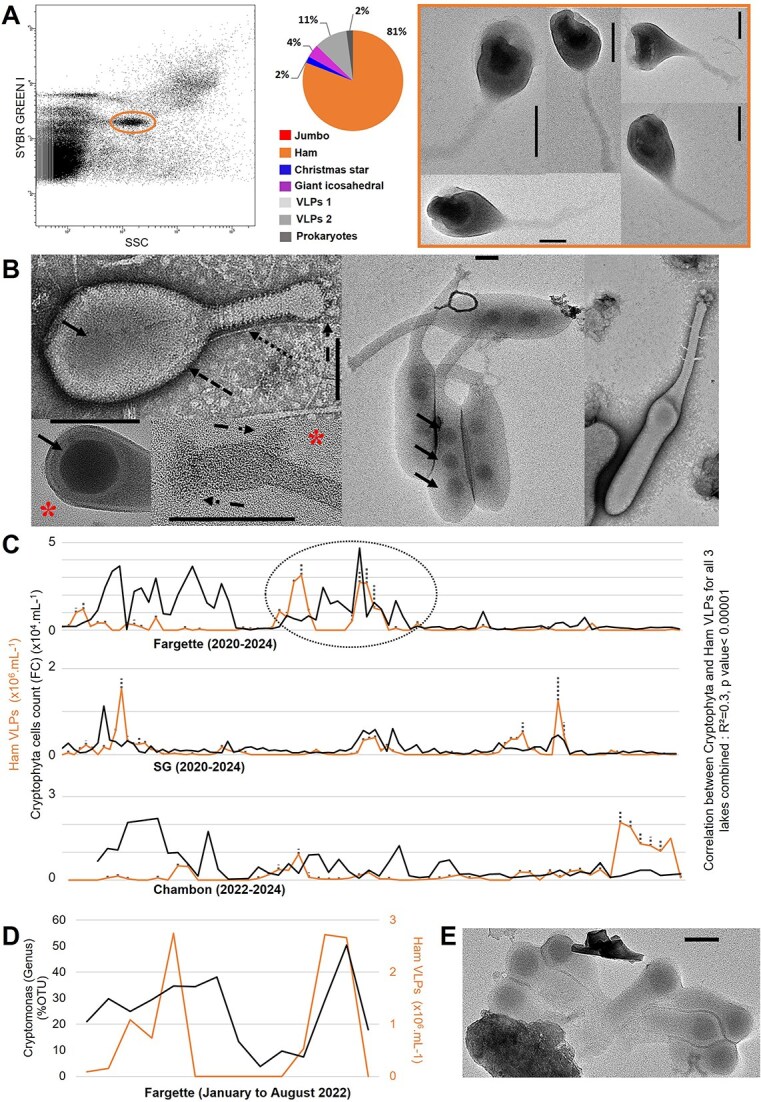 Figure 3
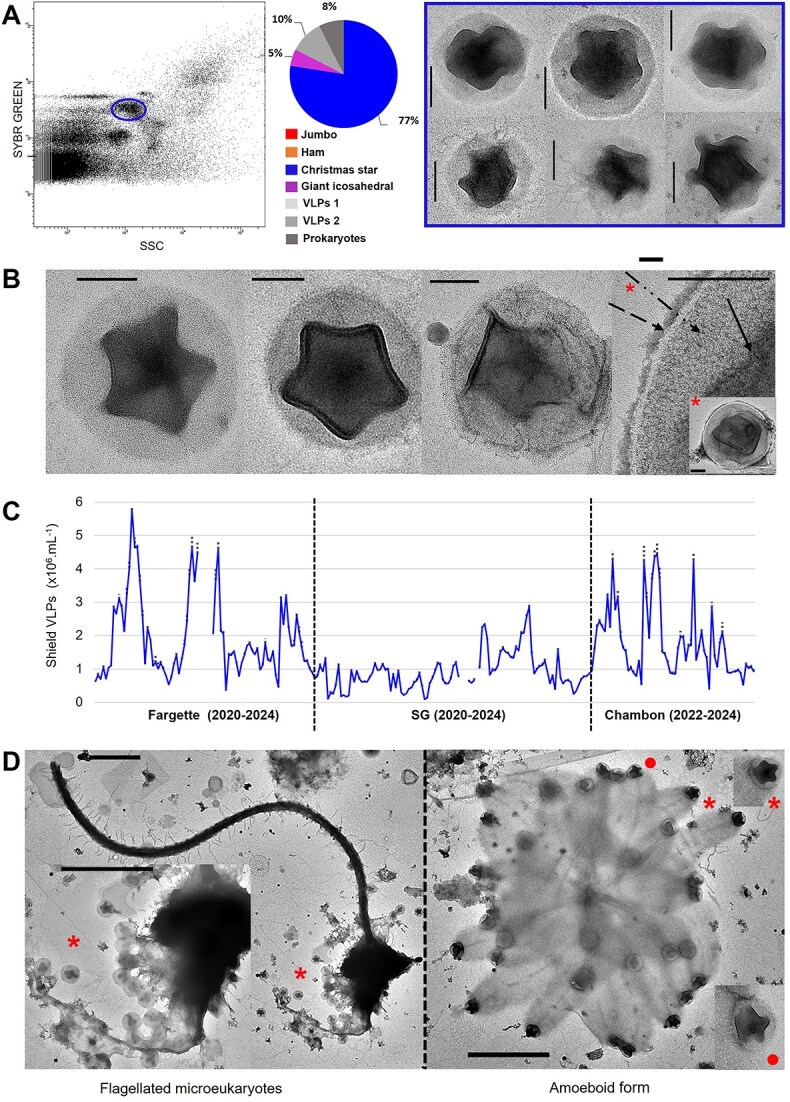 Figure 4
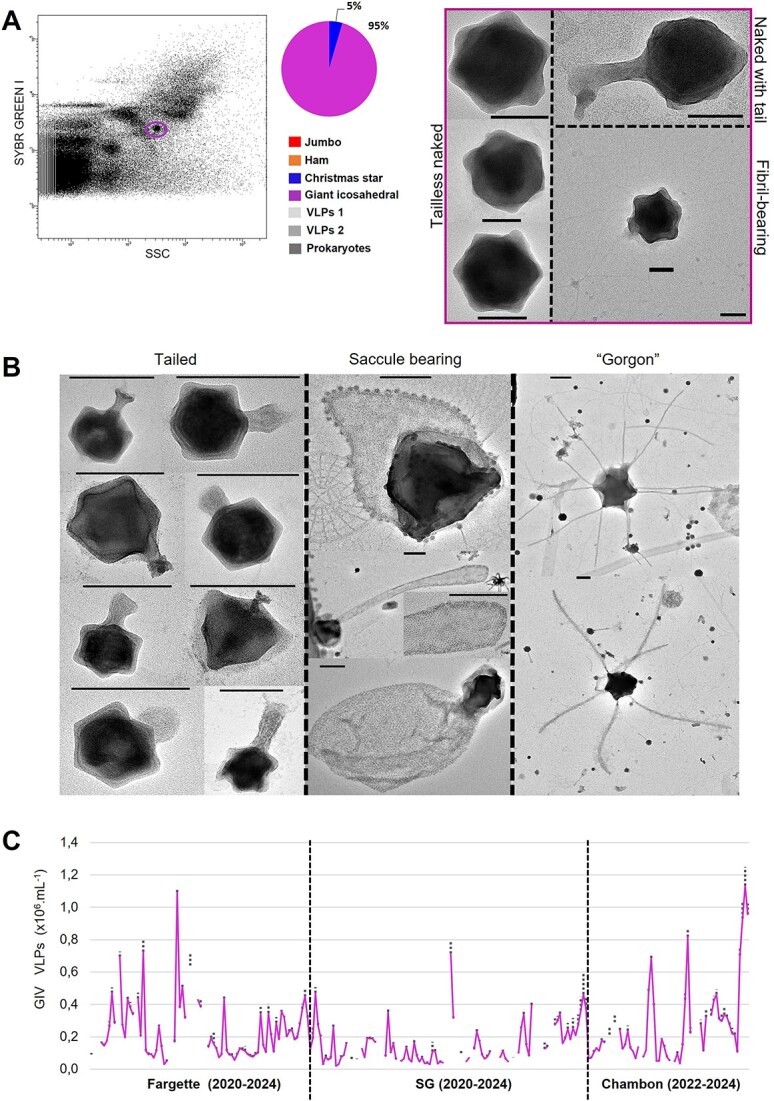 Figure 5
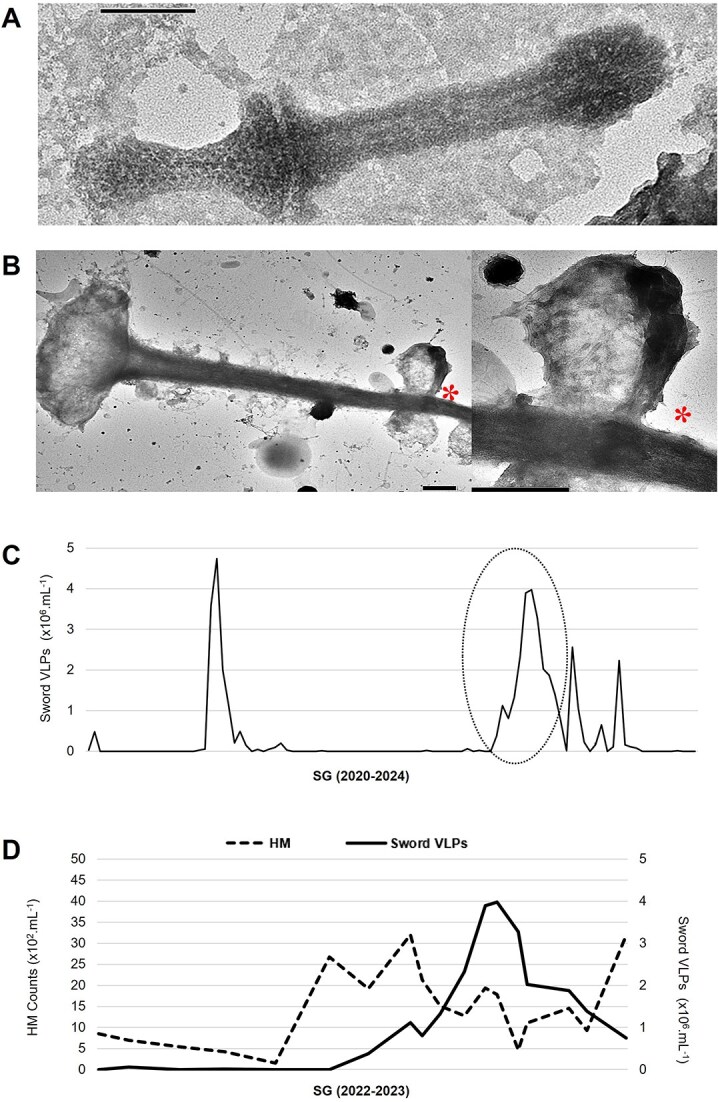 Figure 6
 Figure 7
 Figure 8
 Figure 9
 Figure 10
 Figure 11
 Figure 12
 Figure 13
 Figure 14
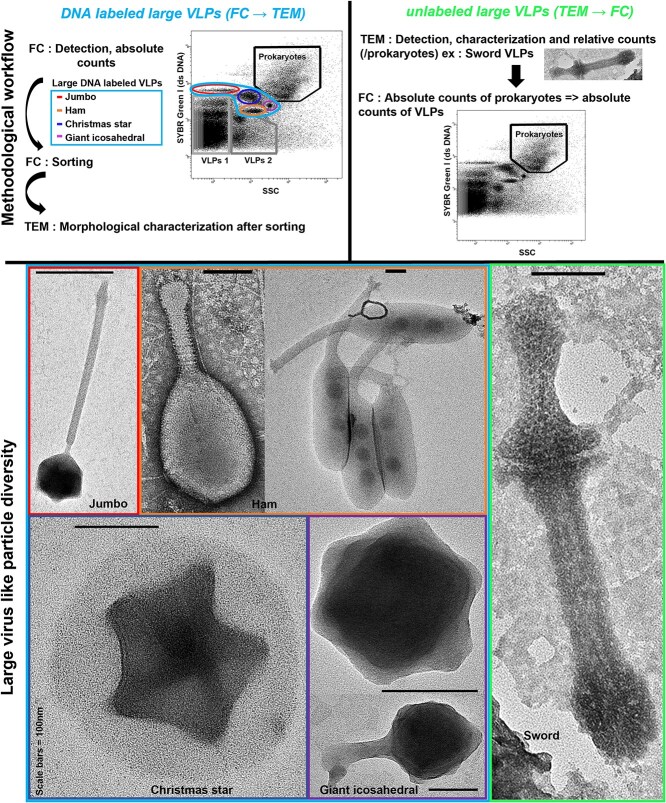 Figure 15
Peer Reviews
No public reviews on file for this paper yet. If you reviewed it on a platform where reviews are public (OpenReview, ICLR, NeurIPS, ICML), you can paste yours below so the community can read it here.
Videos
No videos yet. Explain this paper in a talk, walkthrough, or lecture? Add one.
Taxonomy
TopicsBacteriophages and microbial interactions · Microbial Community Ecology and Physiology · Environmental DNA in Biodiversity Studies