Charge-Induced Polarization in Dielectric Particle Systems: A Geometry-Dependent Effect
Eric B. Lindgren

TL;DR
This paper explores how the shape and size of dielectric particles affect electrostatic interactions, leading to unexpected behaviors like like-charge attraction.
Contribution
The study introduces a geometry-based cutoff method to efficiently model many-body polarization effects in dielectric particle systems.
Findings
Asymmetries in particle size or charge can cause like-charge attraction and complex force balances.
A boundary-integral framework shows induced surface charges propagate through iterative cascades.
Geometry-based cutoffs enable efficient computation of long-range and near-field interactions.
Abstract
Electrostatic interactions in systems composed of finite-sized dielectric materials extend well beyond simple point-charge approximations, particularly when many-body polarization effects become significant. This study shows that asymmetries in the size or net charge of spherical particles can trigger nontrivial phenomena, including like-charge attraction and intricate force balances involving neutral species. Through a rigorous boundary-integral framework, it is substantiated that induced surface charges propagate through iterative cascades, reflecting the full many-body, nonadditive character of polarization. Significantly, a geometry-based cutoff is adopted to discriminate whether long-range interactions can be approximated by monopoles, thereby retaining near-field multipole couplings without forfeiting computational efficiency. This approach provides significant computational gains…
Genes, proteins, chemicals, diseases, species, mutations and cell lines named across the full text — each resolved to its canonical identifier and authoritative record.
Click any figure to enlarge with its caption.
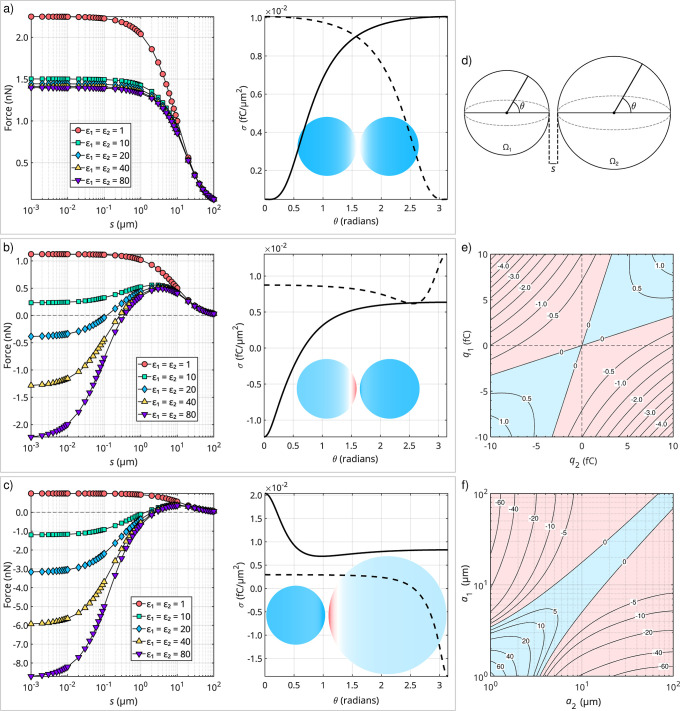 Figure 1
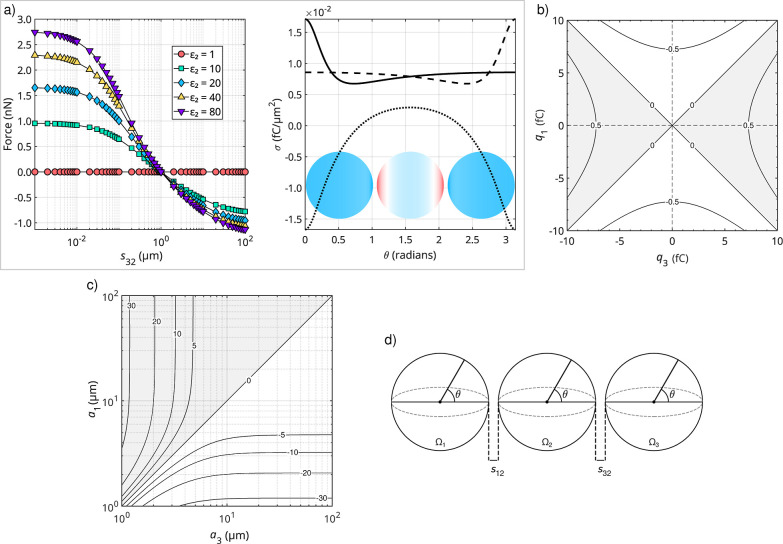 Figure 2
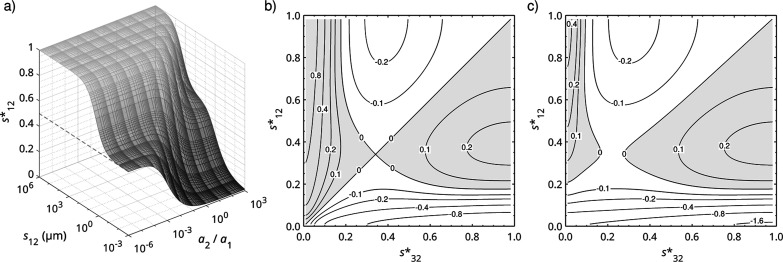 Figure 3
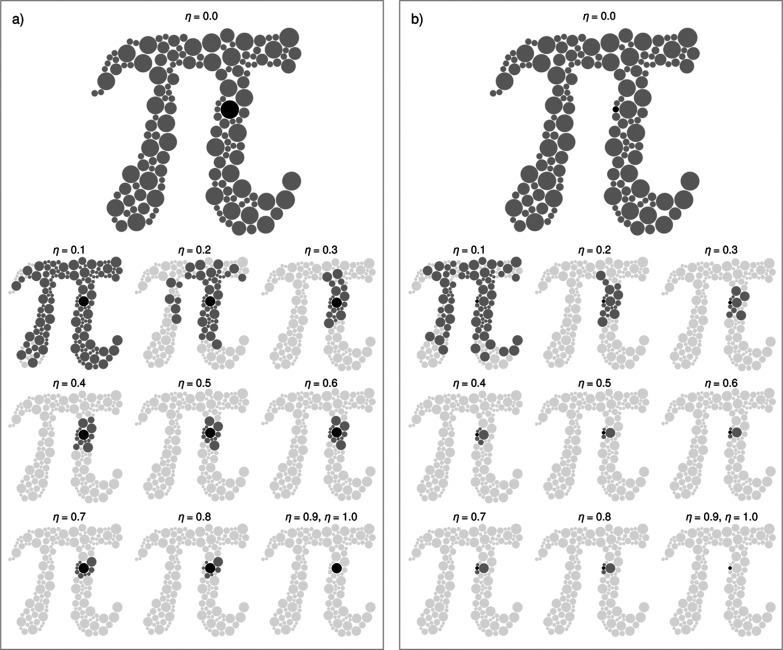 Figure 4
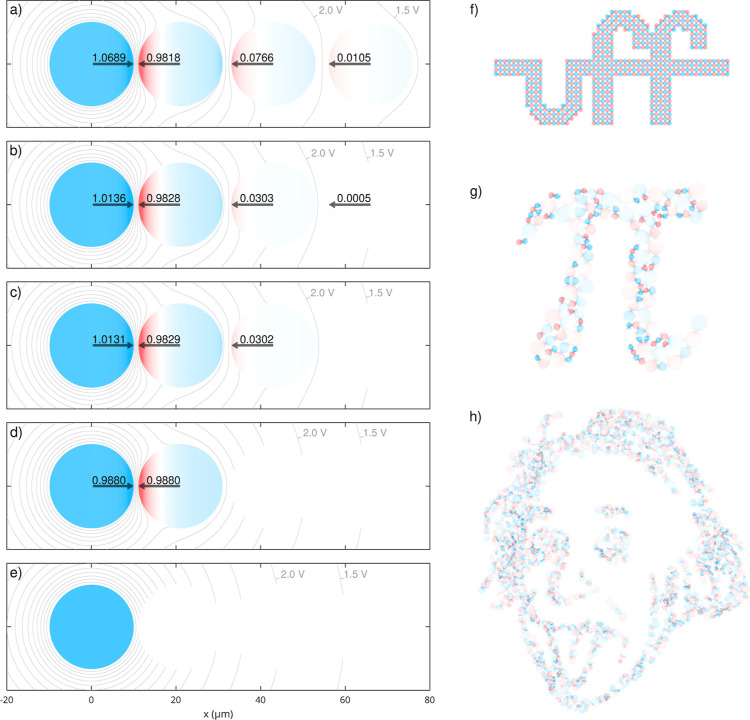 Figure 5
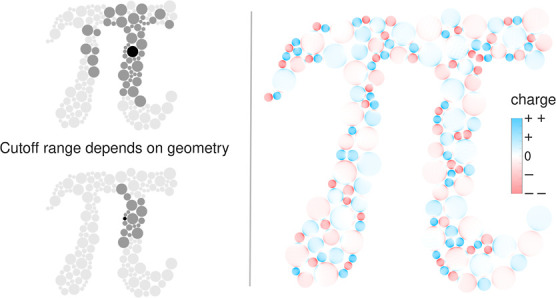 Figure 6
 Figure 7
 Figure 8
 Figure 9
 Figure 10
 Figure 11
 Figure 12
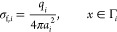 Figure 13
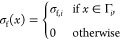 Figure 14
 Figure 15
 Figure 16
 Figure 17
 Figure 18
 Figure 19
 Figure 20
 Figure 21
 Figure 22
 Figure 23
 Figure 24
Peer Reviews
No public reviews on file for this paper yet. If you reviewed it on a platform where reviews are public (OpenReview, ICLR, NeurIPS, ICML), you can paste yours below so the community can read it here.
Videos
No videos yet. Explain this paper in a talk, walkthrough, or lecture? Add one.
Taxonomy
TopicsElectrostatics and Colloid Interactions · Material Dynamics and Properties · Iron oxide chemistry and applications