Molecular alterations in IDH-mutant astrocytoma: A multi-institutional retrospective study
Keng Lam, Hanim I Ozkizilkaya, Denái R Milton, Antonio Dono, Yajie Liu, Suprateek Kundu, Vinodh A Kumar, Jason M Johnson, Yoshua Esquenazi, Chirag B Patel, Leomar Y Ballester

TL;DR
This study analyzed molecular changes in IDH-mutant astrocytoma to understand their impact on patient survival and prognosis.
Contribution
The study provides contemporary survival data and identifies key molecular factors affecting outcomes in IDH-mutant astrocytoma patients.
Findings
Age over 40 and higher CNS WHO grade were linked to worse survival in IDH-mutant astrocytoma patients.
BRCA2 mutations and lower CNS WHO grade were associated with better survival outcomes.
Higher tumor mutation burden was linked to worse overall survival.
Abstract
Several molecular alterations have been identified to provide prognosis for patients with isocitrate dehydrogenase (IDH)-mutant astrocytoma. However, contemporary baseline survival data with respect to their molecular alterations are lacking. The prognostic value of histologic grading remains controversial. This was a retrospective multi-site study of adult IDH-mutant diffuse astrocytoma patients. Overall survival (OS) was estimated using the Kaplan-Meier method. Associations between OS and measures of interest were evaluated using Cox proportional hazards regression models. We identified 241 eligible patients. The most frequent mutations were IDH1 (98%), TP53 (91%), ATRX (70%), ARID1A (8%), BRCA2 (6%), TSC2 (6%), CDKN2A (6%), and CREBBP (6%). IDH2 mutations were identified in 2%. By univariate analysis, age > 40 (hazard ratio [HR], 2.03; 95% CI, 1.20-3.45; p = .009) was associated…
Genes, proteins, chemicals, diseases, species, mutations and cell lines named across the full text — each resolved to its canonical identifier and authoritative record.
Click any figure to enlarge with its caption.
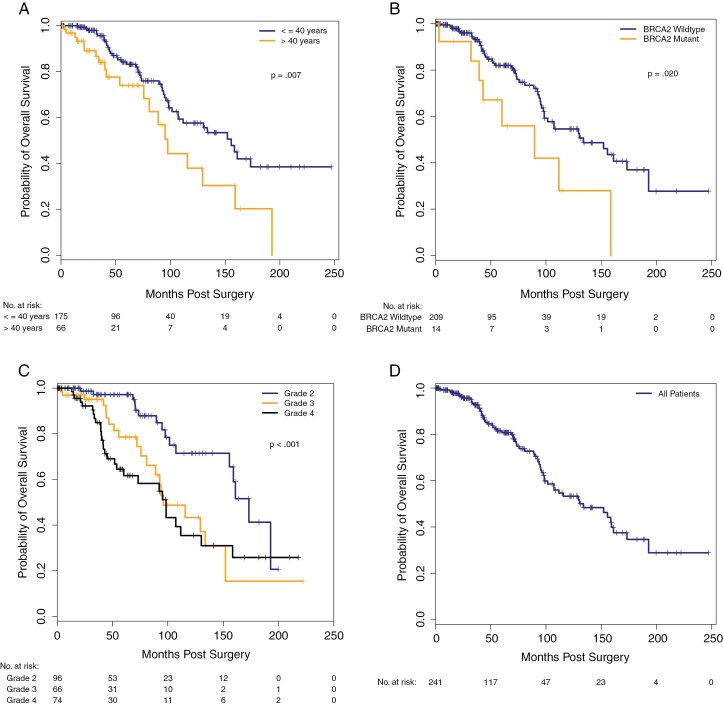 Figure 1
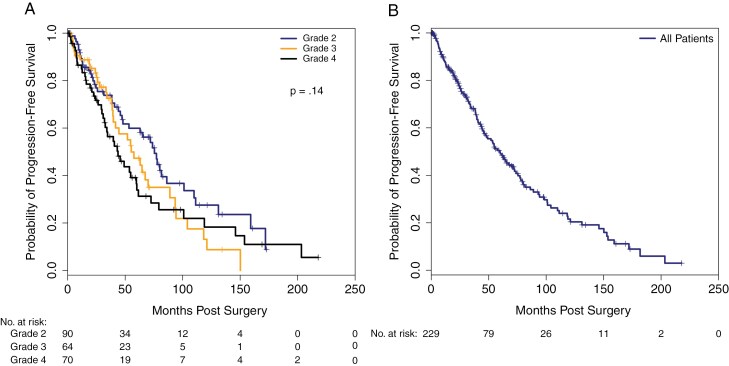 Figure 2
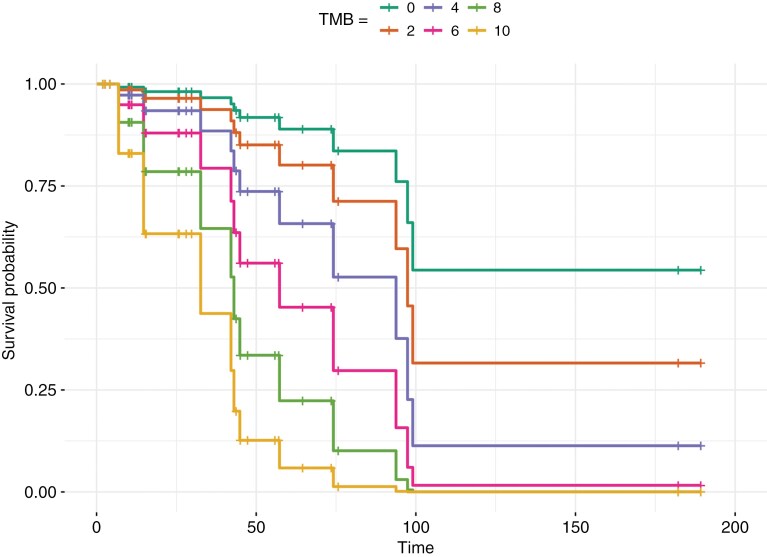 Figure 3
Peer Reviews
No public reviews on file for this paper yet. If you reviewed it on a platform where reviews are public (OpenReview, ICLR, NeurIPS, ICML), you can paste yours below so the community can read it here.
Videos
No videos yet. Explain this paper in a talk, walkthrough, or lecture? Add one.
Taxonomy
TopicsGlioma Diagnosis and Treatment · Tuberous Sclerosis Complex Research · Epilepsy research and treatment