Stellate Ganglion Block to Increase Defibrillation Effectiveness in Acute Fulminant Myocarditis-Induced Refractory Ventricular Fibrillation
Arianna Morena, Carol Gravinese, Simone Frea, Filippo Angelini, Andrea Saglietto, Marinella Zanierato, Monica Andriani, Paolo Scacciatella, Gaetano Maria De Ferrari, Veronica Dusi

TL;DR
A medical case shows that a nerve block can help control dangerous heart rhythms in a severe heart condition.
Contribution
This is the first reported use of stellate ganglion block in acute fulminant myocarditis-induced refractory ventricular fibrillation.
Findings
Percutaneous left stellate ganglion block restored stable sinus rhythm in refractory ventricular fibrillation.
The block improved defibrillation effectiveness in a case unresponsive to standard treatments.
Acute neuromodulation may enhance defibrillation success in severe heart conditions.
Abstract
Percutaneous left stellate ganglion block (PLSGB) is used to prevent ventricular arrhythmia recurrences in various settings. Clinical data on its impact on ventricular fibrillation (VF) defibrillation threshold are scant and limited to acute coronary syndromes. We present a case of refractory VF in acute fulminant myocarditis. Despite multiple drugs and hemodynamic mechanical support, the VF was unresponsive to several DC shock attempts, including double sequential and vector change defibrillation. PLSGB allowed stable sinus rhythm restoration. PLSGB was performed to enhance the success of DC shock, highlighting the importance of acute neuromodulation strategies not only to prevent ventricular arrhythmia recurrences but also to improve defibrillation effectiveness. Our case is the first reported PLSGB usage in acute fulminant myocarditis-induced refractory VF.
Genes, proteins, chemicals, diseases, species, mutations and cell lines named across the full text — each resolved to its canonical identifier and authoritative record.
Click any figure to enlarge with its caption.
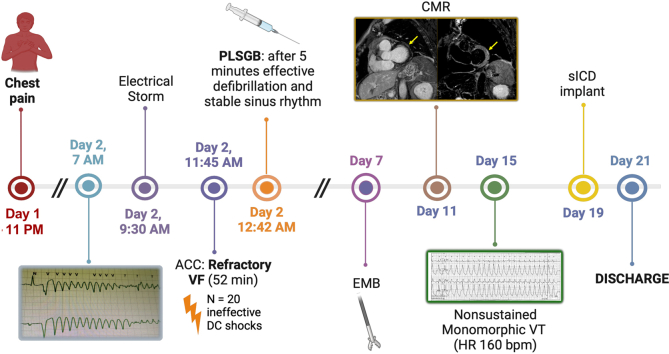 Figure 1
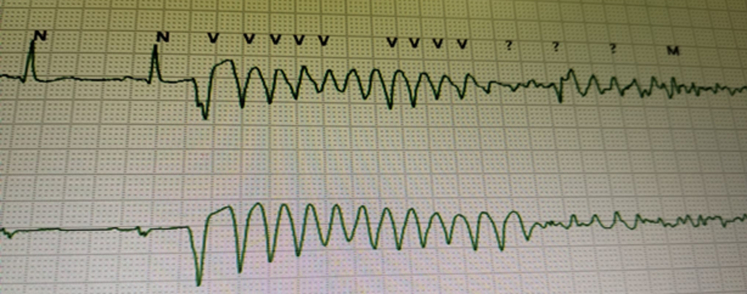 Figure 2
 Figure 3
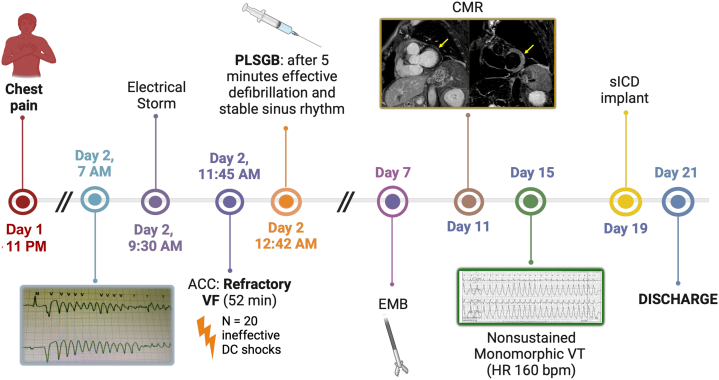 Figure 4
Peer Reviews
No public reviews on file for this paper yet. If you reviewed it on a platform where reviews are public (OpenReview, ICLR, NeurIPS, ICML), you can paste yours below so the community can read it here.
Videos
No videos yet. Explain this paper in a talk, walkthrough, or lecture? Add one.
Taxonomy
TopicsCardiac pacing and defibrillation studies · Cardiovascular Effects of Exercise · Cardiac electrophysiology and arrhythmias