Lactylation: From Molecular Insights to Disease Relevance
Yao Xu, Lu Zhang, Dong Shang, Hong Xiang

TL;DR
This paper explores lactylation, a new protein modification, and its role in health and disease, offering insights for potential therapies.
Contribution
The paper systematically reviews lactylation mechanisms and its relevance to various diseases, highlighting novel therapeutic possibilities.
Findings
Lactylation affects protein transcription and genetic information transmission.
Lactylation occurs on both histone and non-histone proteins.
Lactylation has diverse effects on health and disease, suggesting therapeutic potential.
Abstract
Lactylation, referring to the covalent coupling of the lactyl group with lysine residues, is a recently defined post-translational modification. It has been demonstrated that lactylation can alter protein transcription, thereby affecting the transmission of genetic information and ultimately exerting diverse effects on health and diseases. Here, we review the existing literature and summarize the characteristics and mechanisms of lactylation on both histone and non-histone proteins. We hope to explore lactylation targets for different diseases, thus providing potential clues for new therapeutic strategies.
Genes, proteins, chemicals, diseases, species, mutations and cell lines named across the full text — each resolved to its canonical identifier and authoritative record.
Click any figure to enlarge with its caption.
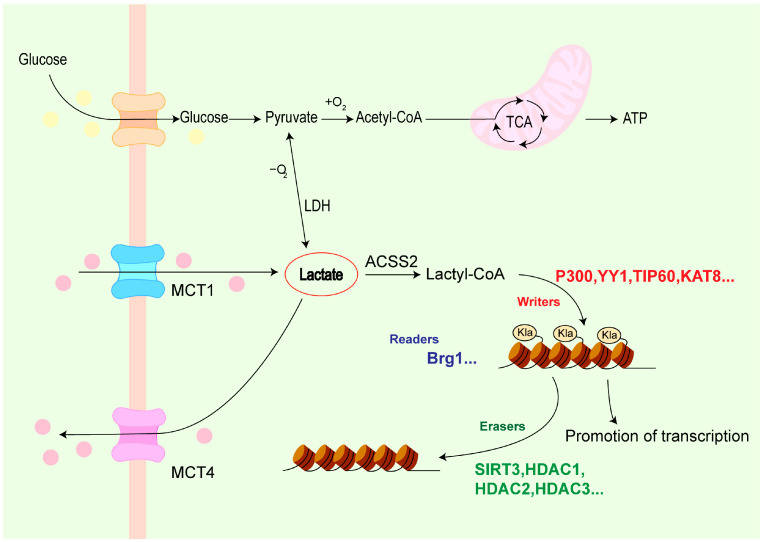 Figure 1
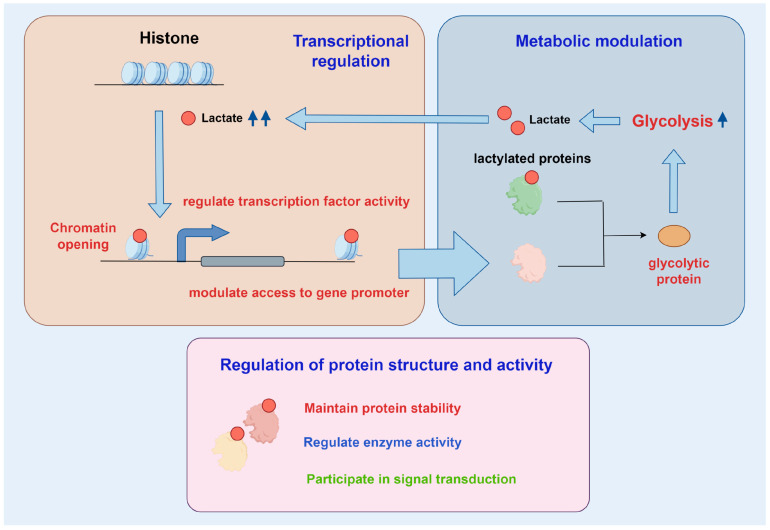 Figure 2
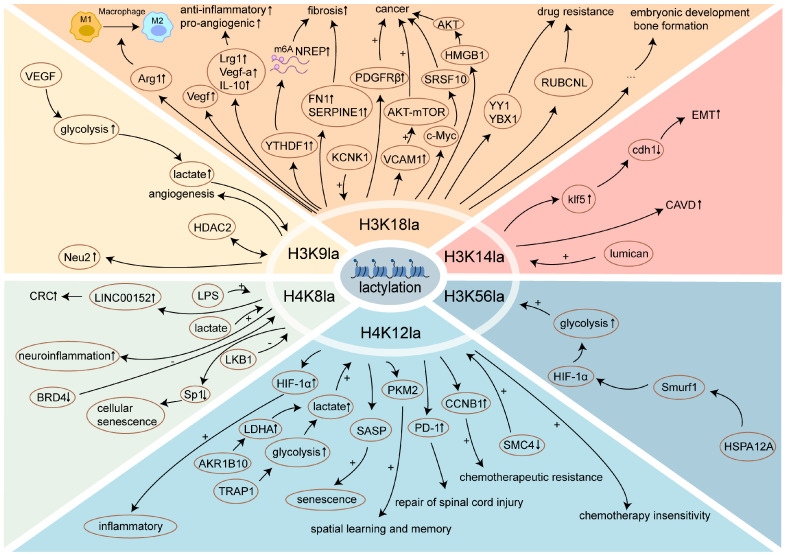 Figure 3
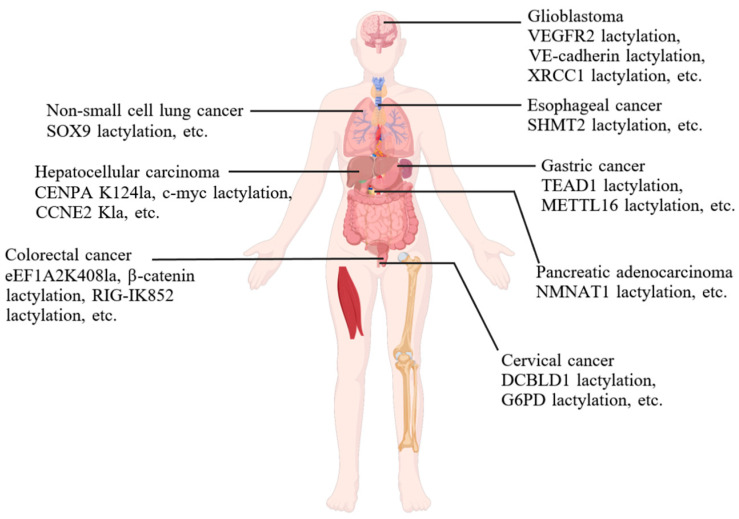 Figure 4
Peer Reviews
No public reviews on file for this paper yet. If you reviewed it on a platform where reviews are public (OpenReview, ICLR, NeurIPS, ICML), you can paste yours below so the community can read it here.
Videos
No videos yet. Explain this paper in a talk, walkthrough, or lecture? Add one.
Taxonomy
TopicsEpigenetics and DNA Methylation · RNA modifications and cancer · Cancer-related gene regulation