Coping Styles and Defense Mechanisms in Healthy Young Adults—Correlations with tPA-BDNF Pathway
Julia Pilecka, Jedrzej Wojciechowski, Weronika Bargiel, Maria Terczynska, Przemyslaw Zakowicz, Dawid Bojarski, Karolina Wasicka-Przewozna, Maria Skibinska

TL;DR
This study explores how stress-coping strategies in young adults are linked to specific proteins in the tPA-BDNF pathway, suggesting biological connections to psychological responses.
Contribution
The study identifies novel correlations between tPA-BDNF pathway proteins and coping styles or defense mechanisms in healthy individuals.
Findings
Higher BDNF and lower MMP-9 levels were observed in females.
Correlations were found between protein levels and coping strategies like denial and active coping.
DSQ-40 scores correlated with BDNF, proBDNF, MMP-9, and total serpin E1/PAI-1.
Abstract
Background/Objectives: An increasing number of studies are exploring how stress influences the development of various psychiatric and physical disorders. Psychological coping strategies and defense mechanisms play a vital role in managing stress. However, the biological mechanisms involved in coping with stress have not been thoroughly researched. This study focuses on the relationships between plasma levels of tPA-BDNF pathway proteins and their correlations with coping strategies and defense mechanisms. Methods: The study involved 48 healthy young adults. All participants completed the self-reported Defense Style Questionnaire (DSQ-40) and Coping Orientation to Problems Experienced Inventory (COPE). BDNF, proBDNF, t-plasminogen activator/tPA, total serpin E1/PAI-1, serpin F2/alpha 2-antiplasmin, and MMP-9 plasma concentrations were determined using ELISA. Results: We detected higher…
Genes, proteins, chemicals, diseases, species, mutations and cell lines named across the full text — each resolved to its canonical identifier and authoritative record.
Click any figure to enlarge with its caption.
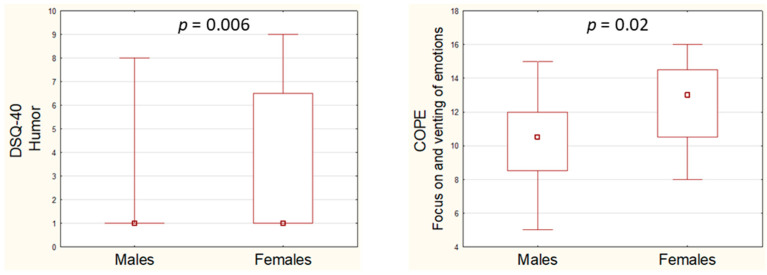 Figure 1
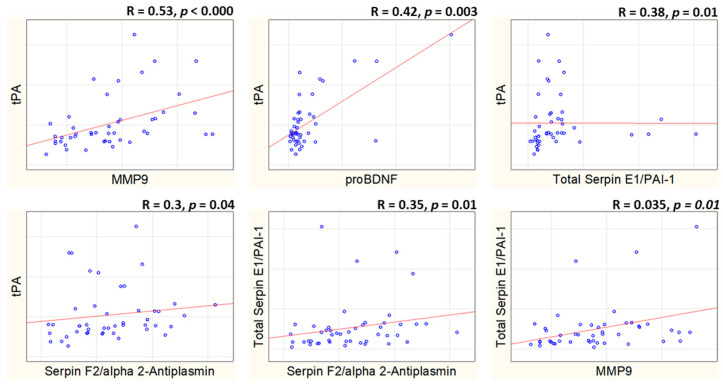 Figure 2
Peer Reviews
No public reviews on file for this paper yet. If you reviewed it on a platform where reviews are public (OpenReview, ICLR, NeurIPS, ICML), you can paste yours below so the community can read it here.
Videos
No videos yet. Explain this paper in a talk, walkthrough, or lecture? Add one.
Taxonomy
TopicsMindfulness and Compassion Interventions · Autism Spectrum Disorder Research · Bullying, Victimization, and Aggression