Distribution and Clinical Impact of Helicobacter pylori Virulence Factors in Epstein–Barr-Virus-Associated Gastric Cancer
Jin Hee Noh, Ji Yong Ahn, Hee Kyong Na, Jeong Hoon Lee, Kee Wook Jung, Do Hoon Kim, Kee Don Choi, Ho June Song, Gin Hyug Lee, Hwoon-Yong Jung

TL;DR
This study explores how Helicobacter pylori virulence factors are linked to Epstein–Barr virus-associated gastric cancer and their impact on clinical outcomes.
Contribution
The study identifies specific H. pylori virulence factors associated with EBV coinfection in gastric cancer.
Findings
EBV infection was linked to gastric carcinoma with lymphoid stroma and proximal stomach location.
H. pylori strains from EBV-positive patients showed higher prevalence of iceA2 and ureA, and lower prevalence of iceA1 and vacA s1a.
UreA was significantly associated with EBVaGC but did not affect clinical outcomes.
Abstract
Background: Helicobacter pylori (HP) and Epstein–Barr virus (EBV) coinfection lead to chronic inflammation and contribute to the development of gastric cancer. However, studies examining the association between HP virulence factors and EBV infection in gastric cancer are limited. This study investigated the polymorphisms of HP virulence factors associated with EBV infection and their effects on clinical outcomes in EBV-associated gastric cancer (EBVaGC). Methods: A total of 96 HP isolates from 54 patients with gastric cancer were divided and analyzed based on EBV coinfection status. Polymerase chain reaction amplifications of virulence factors were conducted using DNA extracts from HP isolates cultured from gastric mucosal specimens. Results: EBV infection was significantly associated with gastric carcinoma with lymphoid stroma morphology and a proximal location in the stomach. Most HP…
Genes, proteins, chemicals, diseases, species, mutations and cell lines named across the full text — each resolved to its canonical identifier and authoritative record.
Click any figure to enlarge with its caption.
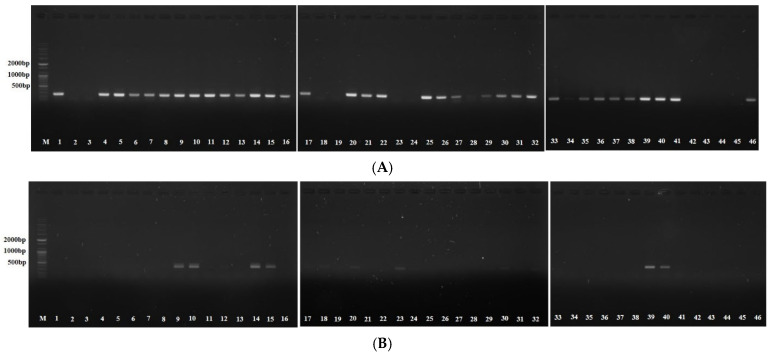 Figure 1
- —Korean College of Helicobacter and Upper Gastrointestinal Research Foundation Grant
Peer Reviews
No public reviews on file for this paper yet. If you reviewed it on a platform where reviews are public (OpenReview, ICLR, NeurIPS, ICML), you can paste yours below so the community can read it here.
Videos
No videos yet. Explain this paper in a talk, walkthrough, or lecture? Add one.
Taxonomy
TopicsHelicobacter pylori-related gastroenterology studies · Viral-associated cancers and disorders · Gastrointestinal disorders and treatments
1. Introduction
Gastric cancer remains a significant global health concern, particularly in East Asia, where incidence and mortality rates are notably high. According to the Global Cancer Statistics (GLOBOCAN 2022), it ranks as the third-most commonly diagnosed cancer and the fourth leading cause of cancer mortality in South Korea [1]. While multiple genetic and environmental risk factors contribute to gastric carcinogenesis, infectious agents have emerged as crucial contributors [2,3].
Helicobacter pylori (HP), classified as a class I carcinogen by the World Health Organization in 1994, is recognized as a primary causative agent in the development of gastric cancer [4]. HP infection initiates a pathological cascade that progresses from chronic gastritis to atrophic gastritis, intestinal metaplasia, and dysplasia, ultimately leading to intestinal-type gastric cancer [5]. The pathogenicity of HP is influenced by various virulence factors, including cagA, vacA, iceA, oipA, and dupA, which show significant associations with gastric cancer development [6,7].
Recent studies have also identified Epstein–Barr virus (EBV) infection as a risk factor in gastric carcinogenesis [8]. Notably, coinfection with EBV and HP has been reported to significantly increase the risk of developing gastric cancer by synergistically inducing severe inflammatory responses in the gastric tissue [9]. Despite several studies examining the role of HP virulence factors in gastric carcinogenesis, limited research has addressed the relationship between these factors and EBV infection in gastric cancer.
Therefore, we aimed to analyze the genotypes of major HP virulence factors in patients with gastric cancer with EBV and HP coinfection, as well as the effects of these virulence factors on the clinical outcomes of EBV-associated gastric cancer (EBVaGC).
2. Results
2.1. Clinicopathologic Characteristics According to EBV Infection Status
Table 1 outlines the clinical characteristics of patients stratified by EBV status (EBV+ [n = 28], EBV– [n = 26]). The median age of all patients was 62 (IQR, 55–68) years, with males comprising 83.3% of all patients. HP eradication success rates were not significantly different between the EBV+ and EBV–groups (88.2% vs. 93.8%, p = 1.000). Tumors in the EBV+ group were more frequently located in the upper stomach compared to the EBV– group (28.6% vs. 7.7%, p = 0.034). Histologically, the GCLS type was significantly more prevalent in the EBV+ group (53.6% vs. 0.0%, p < 0.001). No significant differences were observed between the two groups in terms of recurrence-free survival (31.5 vs. 31.0 months, p = 0.075) or overall survival (32.0 vs. 32.5 months, p = 0.113).
2.2. Positivity of Virulence Factors According to EBV Infection Status
All HP isolates from patients with gastric cancer tested positive for cagA (100.0%) and vacA (100.0%), with iceA1 detected in 87.5% of isolates. Among HP isolates from patients with EBV coinfection, iceA2 (21.7% vs. 0.0%, p < 0.001) and ureA (21.7% vs. 4.0%, p = 0.009) were significantly more frequent, and iceA1 (78.3% vs. 96.0%, p = 0.009), JHP917 (0.0% vs. 18.0, p = 0.003), and vacA s1a (4.3% vs. 22.0%, p = 0.012) were less frequent compared to the EBV– group (Table 2). Multivariate analysis indicated that ureA (OR, 6.148; 95% CI, 1.221 to 30.958; p = 0.028) was significantly associated with EBVaGC (Table 3), whereas iceA1 showed an inverse association (OR, 0.163; 95% CI, 0.032 to 0.819; p = 0.028). Figure 1 presents the agarose gel electrophoresis results for iceA1 and ureA.
2.3. Clinical Outcomes According to Virulence Factors in EBV-Associated Gastric Cancer
We analyzed clinical outcomes based on the presence of ureA in patients with both EBV and HP coinfection (n = 46) (Table 4). Despite multivariate analysis confirming a significant association between ureA and EBVaGC, no significant differences in clinical outcomes were observed based on ureA expression. Supplemental Tables S1 and S2 summarize the comparisons of clinical outcomes based on the presence of iceA1 and iceA2. Similarly, no significant differences in clinical outcomes were detected with respect to the presence of iceA1 and iceA2.
3. Discussion
In this study, regardless of EBV infection, HP isolates from patients with gastric cancer exhibited highly virulent factors, including cagA, vacA, and iceA1. In cases of EBV and HP coinfection, the HP isolates displayed iceA2 and ureA virulence factors more frequently than those with HP infection alone, with ureA showing a significant association with EBVaGC. However, the presence of ureA did not lead to significant differences in the clinical outcomes of EBVaGC.
HP has been linked to various malignant conditions, including gastric carcinoma and mucosa-associated lymphoid tissue lymphoma of the stomach. Concurrently, EBV can induce oncogenic transformation in infected cells by activating multiple signaling pathways [10]. The coinfection of these two pathogens may exert synergistic effects, enhancing inflammatory responses in gastric tissues and increasing the risk of gastric cancer development [11,12,13]. We have reported previously that EBV and HP coinfection does not significantly influence clinical outcomes in patients with EBVaGC [14]. However, there is a lack of studies investigating which HP virulence factors are prominent in EBVaGC and their impact on clinical outcomes.
Consistent with prior studies, our study found that EBV+ gastric cancers were predominantly located in the proximal region of the stomach and exhibited GCLS histology more frequently than the EBV– group [14,15]. A notable finding from our study is that HP isolates from patients with gastric cancer, irrespective of EBV infection status, were predominantly highly virulent strains positive for cagA (100%), vacA (100%), and iceA1 (87.5%). This high prevalence of virulent strains supports the well-established association between HP virulence factors and increased gastric cancer risk [7,16,17,18]. Among these factors, cagA has been reported to enhance EBV-driven epigenetic modifications by increasing DNA methyltransferase expression and promoting gastric carcinogenesis through hypermethylation and silencing of tumor suppressor genes related to cell cycle regulation, apoptosis, and DNA repair [16].
Our study revealed significant differences in the distribution of virulence factors between the EBV+ and EBV– groups. EBV-coinfected HP isolates exhibited a significantly higher prevalence of iceA2 and ureA while demonstrating lower frequencies of iceA1, JHP917, and vacA s1a. These findings suggest that specific HP virulence profiles may interact differently with EBV infection, potentially contributing to distinct carcinogenic pathways. Furthermore, multivariate analysis identified ureA (OR 6.148) as significantly associated with EBV+ gastric cancer. The urease enzyme encoded by the ure gene cluster, including ureA, is essential for HP colonization by neutralizing gastric acid, thus creating a favorable microenvironment for bacterial survival [19,20,21,22]. Further studies are required to confirm whether this enhanced urease activity facilitates EBV infection or reactivation in the gastric mucosa. Despite the significant association between ureA and EBV+ gastric cancer, our analysis found no differences in clinical outcomes, including recurrence-free survival and overall survival, based on ureA expression status. This indicates that although these virulence factors may influence susceptibility to EBV and HP coinfection and the development of gastric cancer, they may not significantly affect disease progression or prognosis. Recent in vitro studies have demonstrated that EBV infection enhances phosphorylation-dependent CagA activity and amplifies the oncogenic potential of HP [23,24]. These findings suggest that EBV and HP coinfection may involve complex molecular interactions beyond simple co-colonization, indicating that the differential virulence factor profiles observed in this study are meaningful and warrant further investigation.
This study has certain limitations. First, the retrospective design and relatively small sample size may limit the generalizability of our findings and reduce statistical power, particularly for subgroup analyses. Second, the enrolled patients predominantly consisted of early gastric cancer cases (94.4% in the EBV+ and 92.3% in the EBV– groups), which may not represent the full spectrum of gastric cancer progression. Third, because HP isolates were analyzed from patients with diagnosed gastric cancer, it was not possible to evaluate the role of virulence factors in the early stages of carcinogenesis or the temporal relationship with EBV infection. It remains unclear whether specific HP virulence profiles predispose individuals to EBV infection or whether EBV infection exerts selective pressure favoring certain HP strains.
4. Materials and Methods
4.1. Study Population
We analyzed HP isolates obtained from patients with gastric cancer who visited Asan Medical Center between January 2018 and February 2021. The inclusion criteria were as follows: (1) age ≥ 19 years; (2) histologically confirmed gastric cancer; (3) HP infection confirmed by culture from endoscopic biopsy specimens; and (4) for the EBV+ group, EBV positivity confirmed by in situ hybridization in tumoral gastric mucosa. The exclusion criteria were as follows: (1) age < 19 years; and (2) cases without culture-confirmed HP infection. A total of 96 HP isolates obtained from 54 patients with gastric cancer were enrolled and analyzed. They were divided into two groups: patients with HP and EBV coinfection (28 patients, 46 isolates) and those with HP infection alone (26 patients, 50 isolates). Clinicopathological data for each patient were retrospectively collected from medical records. The study protocol was approved by the Institutional Review Board of Asan Medical Center (IRB No. 2020-0518).
4.2. H. pylori Culture
Gastric tissue samples were collected from the antrum and corpus regions during esophagogastroduodenoscopy and immediately transferred to sterile Eppendorf tubes, which were placed in a vacuum container with dry ice for transportation. Upon arrival at the laboratory, specimens were stored in a deep freezer at –80 °C until processing. Prior to culture, the tissue samples were equilibrated to room temperature. For bacterial isolation, the specimens were cultured on specialized HP-selective medium consisting of Brucella broth agar enriched with 5% sheep blood and supplemented with antimicrobial agents (vancomycin 10 µg/L, trimethoprim 5 µg/L, amphotericin B 5 µg/L, and polymyxin B 2.5 IU). The inoculated plates were maintained at 37 °C in a microaerophilic environment (5% O_2_, 10% CO_2_, and 85% N_2_) for 5–7 days. HP identification was based on colony morphology, positive Gram staining characteristics, and urease activity.
4.3. Genomic DNA Extraction
Harvested pellets were resuspended in 200 µL PBS. Genomic DNA (gDNA) was extracted using the DNeasy^®^ (Qiagen, Hilden, Germany) kit. The mixture was incubated at 56 °C for 10 min after adding 20 µL proteinase K and 200 µL Buffer AL. Then, 200 µL ethanol was added and mixed by vortexing. The mixture was transferred to a DNeasy Mini spin column placed in a 2 mL collection tube and centrifuged at 6000× g for 1 min. A new 2 mL collection tube was used to add 500 µL Buffer AW1, followed by centrifugation for 1 min at 6000× g. A second new 2 mL collection tube was used to add 500 µL Buffer AW2, with centrifugation for 3 min at 20,000× g. For gDNA elution, 50 µL Buffer AE was added to the center of the spin column membrane and incubated for 1 min at room temperature. Centrifugation was then performed for 1 min at 6000× g. The gDNA was stored at –20 °C until required for polymerase chain reaction (PCR) amplification.
4.4. PCR Amplification
The PCR mixture included sense and antisense primers (Table 5), Taq PCR PreMix (AccuPower^®^, Daejeon, Republic of Korea), template DNA, and distilled water. PCR was performed under the following conditions: 10 min at 95 °C, followed by 30 cycles of 30 s at 95 °C, 30 s at each annealing temperature, and 30 s at 75 °C. After PCR, the products were run on 1% agarose gels, and bands were developed using an ultraviolet transilluminator and photographed.
4.5. Statistical Analysis
Descriptive variables were summarized as the median and interquartile range (IQR) or the mean and standard deviation (SD). Differences in patient characteristics and HP virulence factors between the EBV+ and EBV− groups were compared using independent t-tests and chi-square tests. Logistic regression analyses were conducted to investigate factors associated with EBVaGC, and odds ratios (ORs) and corresponding confidence intervals (CIs) were calculated. *p-*values < 0.05 were considered statistically significant. All statistical analyses were performed using SPSS version 24 (IBM Corporation, Somers, NY, USA).
5. Conclusions
In conclusion, our study demonstrates that patients in Korea with gastric cancer predominantly harbor highly virulent HP strains positive for cagA, iceA1, and vacA. The ureA virulence factor was associated with EBVaGC; however, it did not significantly influence clinical outcomes. These findings contribute to our understanding of the complex interactions between infectious agents in gastric carcinogenesis and underscore the need for further investigation into the molecular mechanisms underlying the relationship between HP virulence factors and EBV infection in gastric cancer development.
The reference list from the paper itself. Each links out to its DOI / PubMed record.
- 1Bray F. Laversanne M. Sung H. Ferlay J. Siegel R.L. Soerjomataram I. Jemal A. Global cancer statistics 2022: GLOBOCAN estimates of incidence and mortality worldwide for 36 cancers in 185 countries CA Cancer J. Clin.20247422926310.3322/caac.2183438572751 · doi ↗ · pubmed ↗
- 2Gomceli I. Demiriz B. Tez M. Gastric carcinogenesis World J. Gastroenterol.201218516451702306630910.3748/wjg.v 18.i 37.5164 PMC 3468847 · doi ↗ · pubmed ↗
- 3Salvatori S. Marafini I. Laudisi F. Monteleone G. Stolfi C. Helicobacter pylori and Gastric Cancer: Pathogenetic Mechanisms Int. J. Mol. Sci.202324289510.3390/ijms 2403289536769214 PMC 9917787 · doi ↗ · pubmed ↗
- 4Schistosomes, liver flukes and Helicobacter pylori IARC Monographs on the Evaluation of Carcinogenic Risks to Humans IARC Lyon, France 1994 Volume 611241 PMC 76816217715068 · pubmed ↗
- 5Correa P. Piazuelo M.B. The gastric precancerous cascade J. Dig. Dis.2012132910.1111/j.1751-2980.2011.00550.x 22188910 PMC 3404600 · doi ↗ · pubmed ↗
- 6Wang M.Y. Liu X.F. Gao X.Z. Helicobacter pylori virulence factors in development of gastric carcinoma Future Microbiol.2015101505151610.2217/fmb.15.7226346770 · doi ↗ · pubmed ↗
- 7Pormohammad A. Ghotaslou R. Leylabadlo H.E. Nasiri M.J. Dabiri H. Hashemi A. Risk of gastric cancer in association with Helicobacter pylori different virulence factors: A systematic review and meta-analysis Microb. Pathog.201811821421910.1016/j.micpath.2018.03.00429510208 · doi ↗ · pubmed ↗
- 8Chen X.Z. Chen H. Castro F.A. Hu J.K. Brenner H. Epstein-Barr virus infection and gastric cancer: A systematic review Medicine 201594 e 79210.1097/MD.000000000000079225997049 PMC 4602887 · doi ↗ · pubmed ↗