Genetic and morphological variation in the genus Zygogonium (Zygnematophyceae, Charophyta) from localities in Europe and North America and description of Z. angustum, sp. nov
Rosalina Stancheva, Louise A. Lewis, John Hall, Tereza Šoljaková, Charlotte Permann, Andreas Holzinger

TL;DR
This study explores genetic and physical differences in the Zygogonium genus from Europe and North America, leading to the discovery of a new species.
Contribution
The paper describes a new Zygogonium species, Z. angustum, based on genetic and morphological analysis.
Findings
Phylogenetic analysis using the psbC gene identified three main groups and one subgroup within Zygogonium.
A new species, Z. angustum, was identified based on narrower filaments and distinct aplanospores.
Morphological and genetic diversity in Zygogonium appears to correlate with habitat and ecological factors.
Abstract
The globally distributed genus Zygogonium exhibits a narrow environmental range, with 19 morphologically described species. Its molecular characterization is poor, based on a single accession of the type species Z. ericetorum from Austria. We examined the genetic variability, morphology, and ultrastructure of field‐collected Zygogonium material from different sampling sites in Austria, Norway, Ireland, Scotland, and the United States. Phylogenetic analysis based on partial sequences of the psbC gene distinguished three well‐supported groups and one subgroup. AtpB gene sequences collected from a subset of samples also support this result, while rbcL gene data provided lower support. Group 1A contained the type species Z. ericetorum from Obergurgl/Austria and samples from Kühtai/Austria, Norway, and Scotland. The morphology was characterized by wide vegetative filaments (15–31 μm) and the…
Genes, proteins, chemicals, diseases, species, mutations and cell lines named across the full text — each resolved to its canonical identifier and authoritative record.
Click any figure to enlarge with its caption.
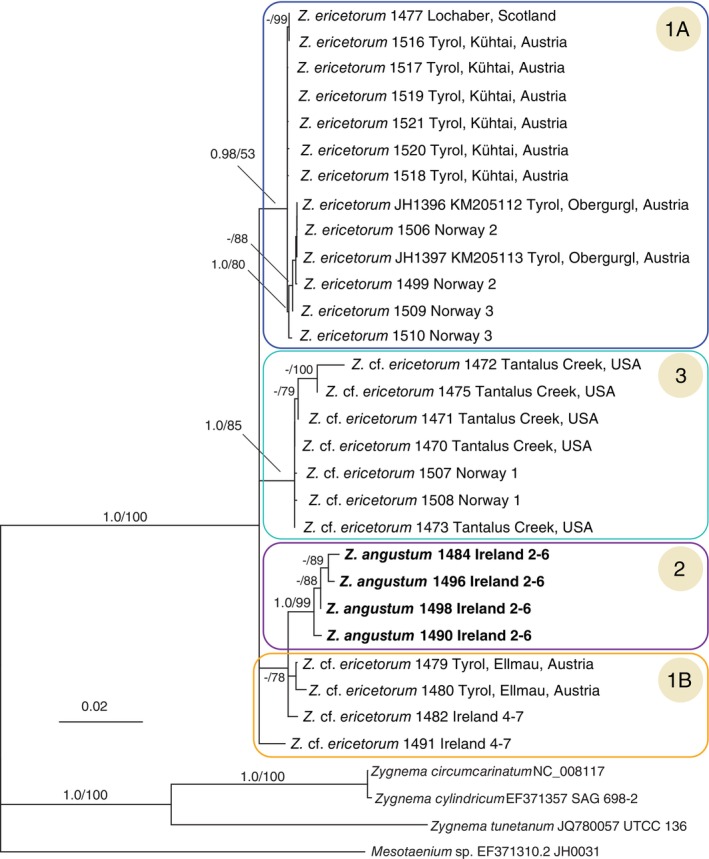 Figure 1
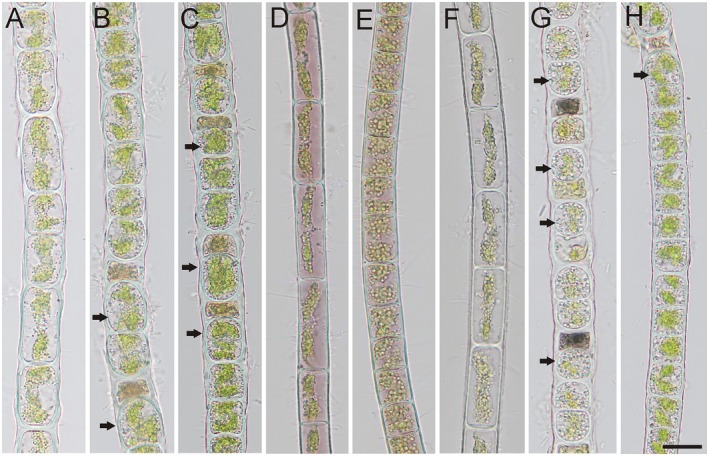 Figure 2
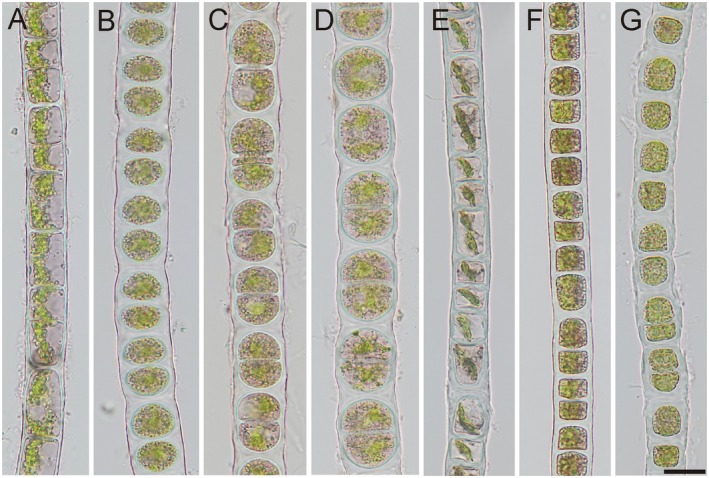 Figure 3
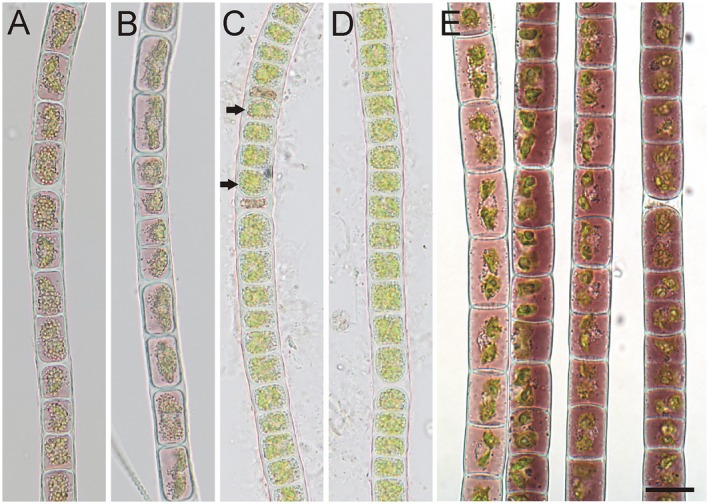 Figure 4
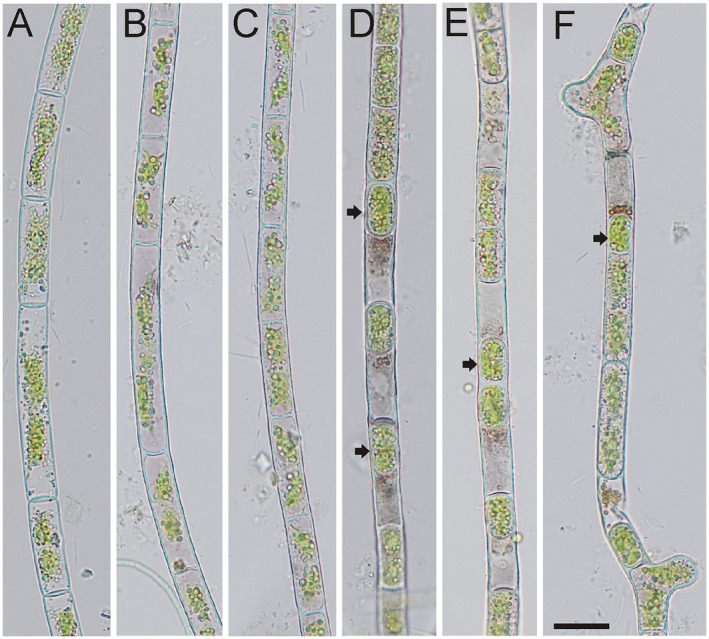 Figure 5
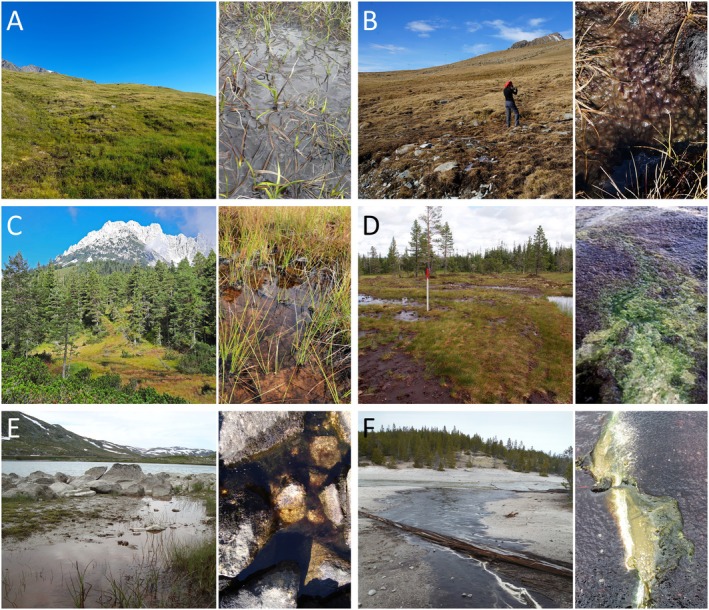 Figure 6
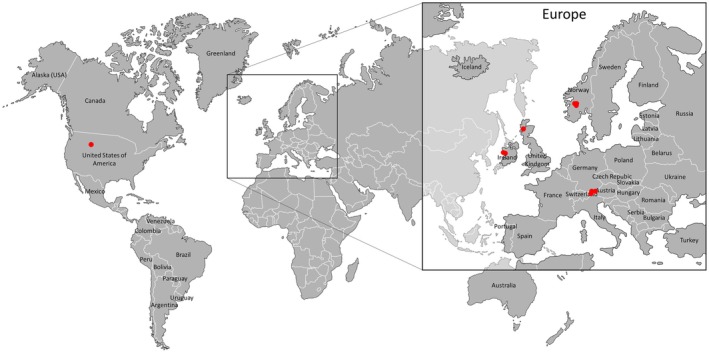 Figure 7
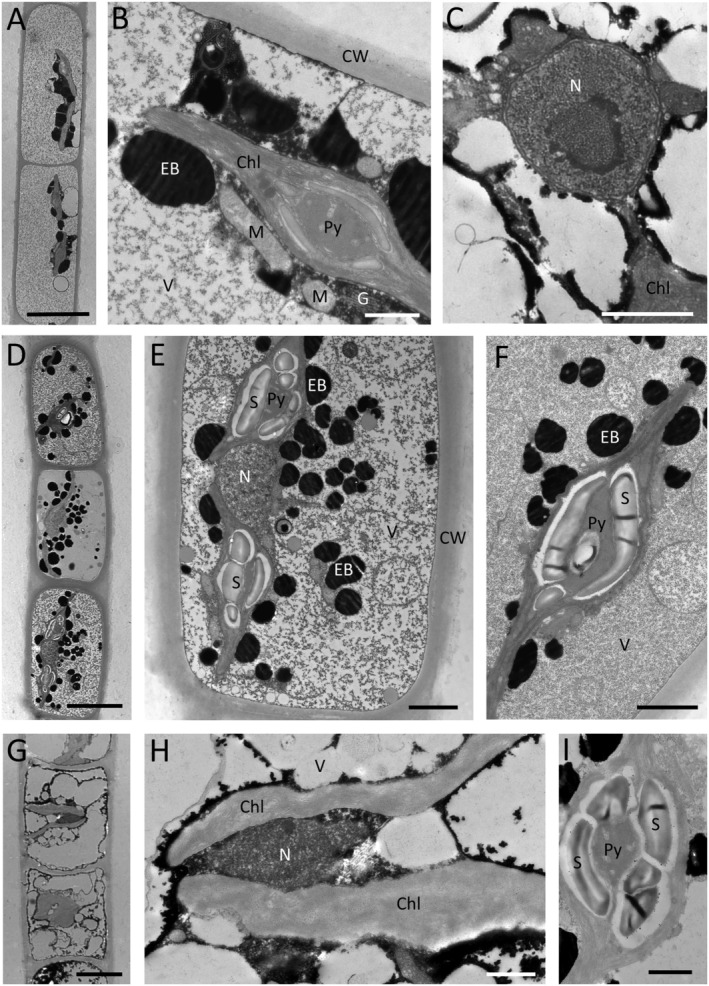 Figure 8
Peer Reviews
No public reviews on file for this paper yet. If you reviewed it on a platform where reviews are public (OpenReview, ICLR, NeurIPS, ICML), you can paste yours below so the community can read it here.
Videos
No videos yet. Explain this paper in a talk, walkthrough, or lecture? Add one.
Taxonomy
TopicsAquatic Ecosystems and Phytoplankton Dynamics · Biocrusts and Microbial Ecology · Protist diversity and phylogeny