Molecular glue binding behavior of phosphoantigens to alpaca butyrophilins
Chang Liu, Simin Yi, Mengting Zhang, Chun-Chi Chen, Yingle Liu, Zhen Zhang, Rey-Ting Guo, Yunyun Yang

TL;DR
This study reveals how phosphoantigens bind to alpaca butyrophilins, providing insights into immune system activation and cross-species immune adaptation.
Contribution
The discovery of DMASPP acting as a molecular glue in alpaca butyrophilin interactions is novel and expands understanding of immune recognition mechanisms.
Findings
DMASPP functions as a molecular glue in the interaction between alpaca and human butyrophilin B30.2 domains.
HMBPP-08 has stronger affinity to VpBTN3 B30.2 domain but does not promote heterologous VpBTNs interaction.
The study establishes a theoretical framework for Vγ9Vδ2 T cell activation and cross-species immune adaptation.
Abstract
Vγ9Vδ2 T cells that respond to phosphoantigen (pAg) function as crucial sentinels of the immune system to eradicate pathogen-infected cells and tumor cells. Alpaca (Vicugna pacos) is the first nonprimate species identified to possess the pAg-reactive Vγ9Vδ2 T cell subset. However, the molecular mechanism accounting for the pAg recognition of alpaca Vγ9Vδ2 T cells remains unclear. Here, we report the crystal structures of alpaca butyrophilin 3 (VpBTN3) B30.2 domain in complex with the exogenous pAg analog, HMBPP-08, which is a valuable tool for studying the mechanism of butyrophilin-dependent Vγ9Vδ2 T cell activation, and the endogenous pAg analogue, dimethylallyl (S)-thiolodiphosphate (DMASPP). We elucidated that the function of pAgs is governed by their structural differences. Notably, DMASPP acts as a molecular glue in the interaction between the intracellular B30.2 domains of…
Genes, proteins, chemicals, diseases, species, mutations and cell lines named across the full text — each resolved to its canonical identifier and authoritative record.
Click any figure to enlarge with its caption.
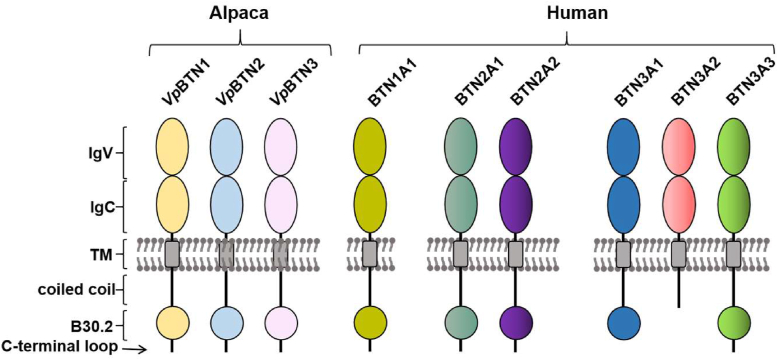 Figure 1
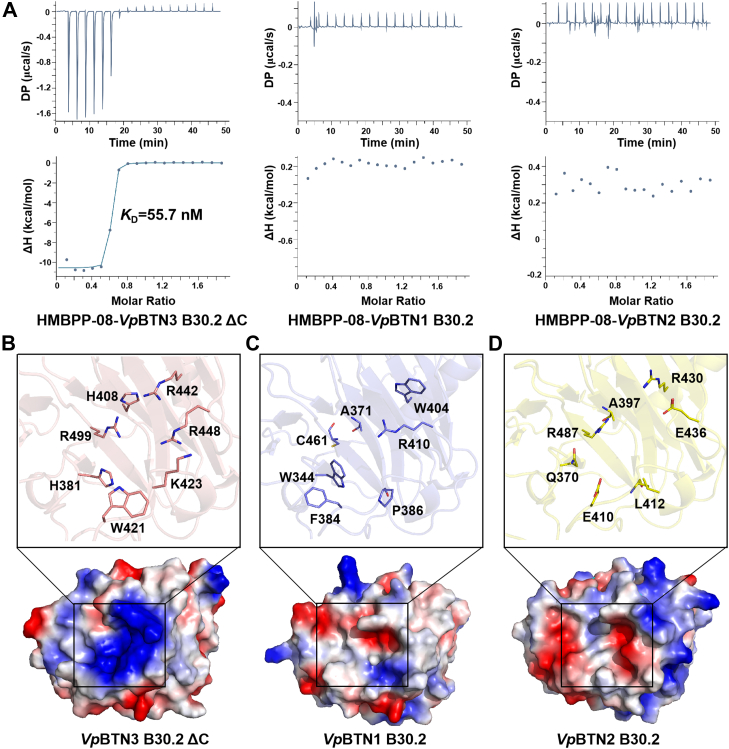 Figure 2
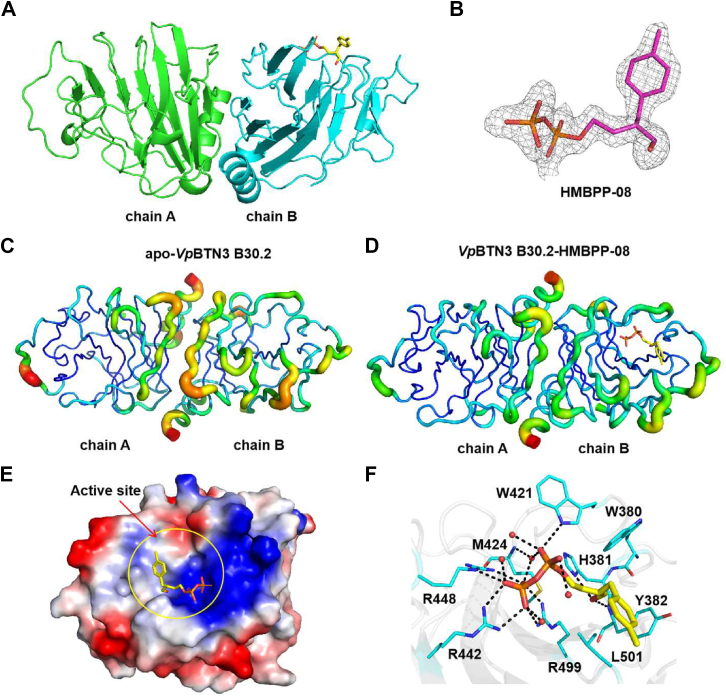 Figure 3
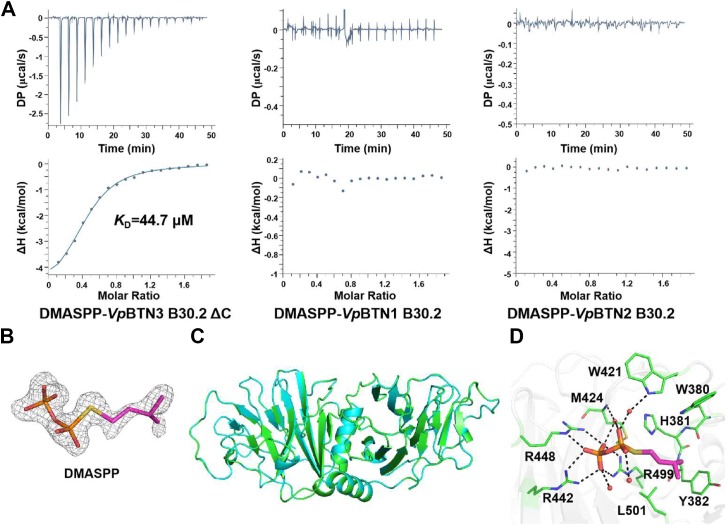 Figure 4
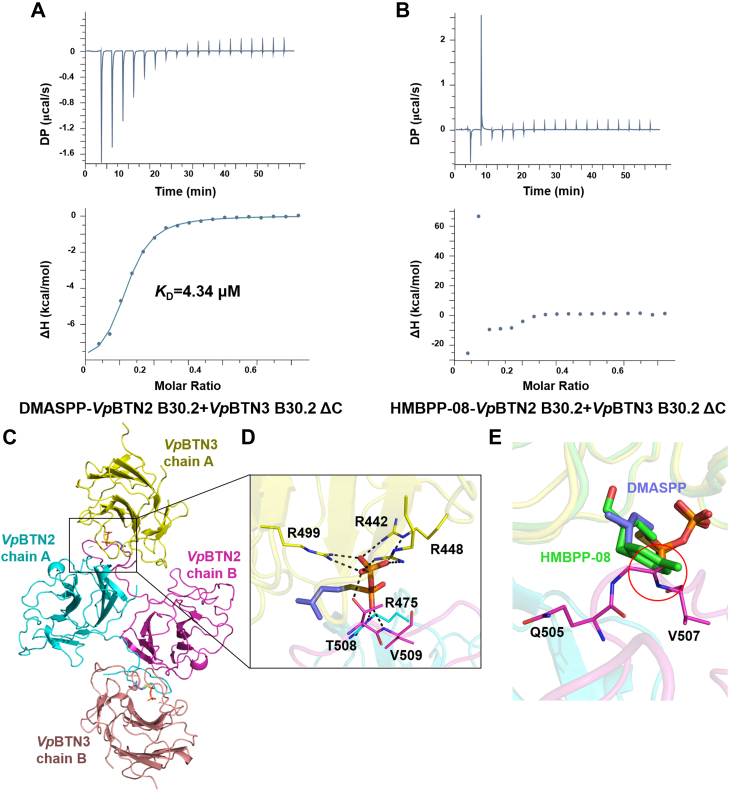 Figure 5
Peer Reviews
No public reviews on file for this paper yet. If you reviewed it on a platform where reviews are public (OpenReview, ICLR, NeurIPS, ICML), you can paste yours below so the community can read it here.
Videos
No videos yet. Explain this paper in a talk, walkthrough, or lecture? Add one.
Taxonomy
TopicsCarbohydrate Chemistry and Synthesis · Protease and Inhibitor Mechanisms · Peptidase Inhibition and Analysis