Use of Brazilian flora as the main source of new antimalarials: a systematic review
Ana Rafaela Antunes Porto, Isabela de Brito Duval, Luisa Vitor Braga do Amaral, Izabela da Silva Oliveira, João Gabriel Acioli de Siqueira, Bruno Araújo de Albuquerque, Maria Alice Guarini Rocha, Gabriela Gomes Monteiro Lemos, Marcelo Eduardo Cardozo, José Bryan da Rocha Rihs

TL;DR
This paper reviews how plants from Brazil's rich biodiversity, especially the Amazon, can provide new antimalarial compounds to combat drug-resistant malaria.
Contribution
The study systematically reviews Brazilian flora's potential as a source of new antimalarial compounds using PRISMA guidelines.
Findings
Most antimalarial compounds were isolated from the Amazon Rainforest in northern Brazil.
Alkaloids from the Apocynaceae family showed significant antiplasmodial activity.
Further research is needed to understand the full potential of these natural compounds.
Abstract
Plants represent an important source of compounds for treating malaria, highlighting the rich biodiversity of Brazilian flora as a vital resource for developing new, effective antimalarial drugs. The present study sought to shed light on the search for new compounds with antimalarial activity obtained from the Brazilian flora. In this sense, a systematic review was conducted using screening techniques based on “The Preferred Reporting Items for Systematic Reviews and Meta-Analysis” (PRISMA) protocol. Most of the plants collected in the studies were from the Amazon Rainforest, north of Brazil. Most of the isolated compounds were from the Apocynaceae family and the alkaloids were the main compounds isolated with significant antiplasmodial activity, followed by flavonoids and phenolic compounds. The Brazilian flora can source many compounds with potential antimalarial activity that can…
Genes, proteins, chemicals, diseases, species, mutations and cell lines named across the full text — each resolved to its canonical identifier and authoritative record.
Click any figure to enlarge with its caption.
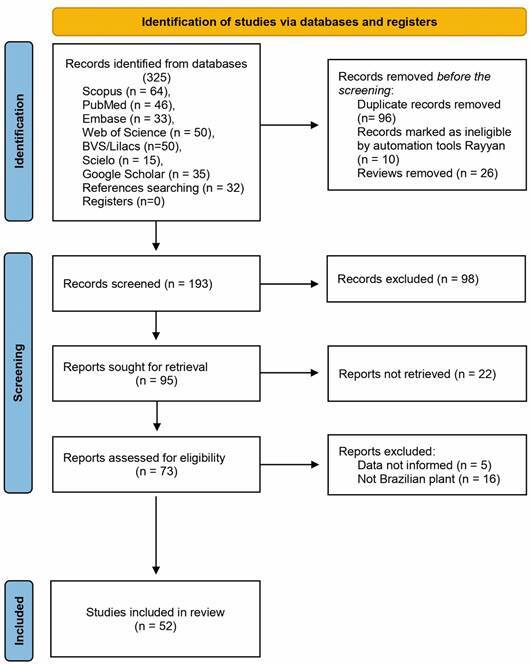 Figure 1
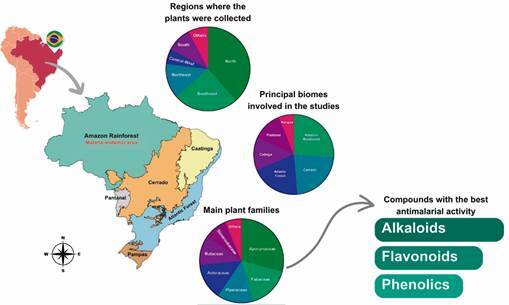 Figure 2
Peer Reviews
No public reviews on file for this paper yet. If you reviewed it on a platform where reviews are public (OpenReview, ICLR, NeurIPS, ICML), you can paste yours below so the community can read it here.
Videos
No videos yet. Explain this paper in a talk, walkthrough, or lecture? Add one.
Taxonomy
TopicsTraditional and Medicinal Uses of Annonaceae · Phytochemistry and Bioactivity Studies · Phytochemistry Medicinal Plant Applications