Severe E-Cigarette-Induced Esophagitis in a Patient With Eosinophilic Esophagitis: A Case Report
Larissa A Lucena, Paulo César da Silva, Verônica S Vale, Sílvio José L Dantas, Rodrigo A Oliveira

TL;DR
A man with a history of allergies and esophageal issues developed severe esophagitis after vaping, showing a possible link between e-cigarettes and esophageal damage.
Contribution
Highlights a rare case linking e-cigarette use to severe esophagitis in a patient with pre-existing conditions.
Findings
A 24-year-old man developed severe esophageal ulcerations and necrosis after a week of vaping.
Follow-up endoscopy showed diverticular formations and friable lesions despite treatment.
The case suggests a potential association between vaping and ulcerative esophagitis in vulnerable individuals.
Abstract
Chemical esophagitis, a rare and potentially life-threatening condition, was diagnosed in a 24-year-old man with food allergies, presumed IgA nephropathy, eosinophilic esophagitis (EoE), and electronic cigarette (e-cigarette) use. After a week of vaping, he developed severe dysphagia, and endoscopy revealed extensive esophageal ulcerations and necrosis. Treatment included total parenteral nutrition, esomeprazole, and sucralfate. Follow-up endoscopy showed diverticular formations and friable lesions. This case underscores the emerging link between vaping and ulcerative esophagitis, especially in patients with pre-existing conditions, highlighting the need for early diagnosis and further research to understand and manage this association.
Genes, proteins, chemicals, diseases, species, mutations and cell lines named across the full text — each resolved to its canonical identifier and authoritative record.
Click any figure to enlarge with its caption.
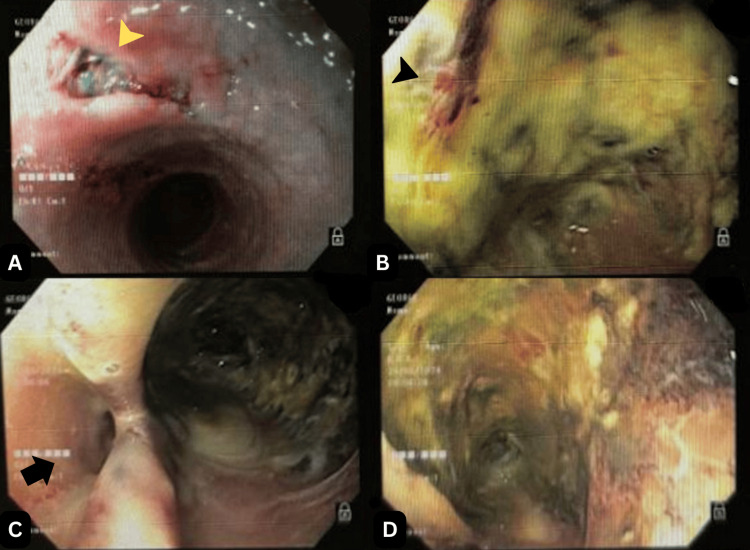 Figure 1
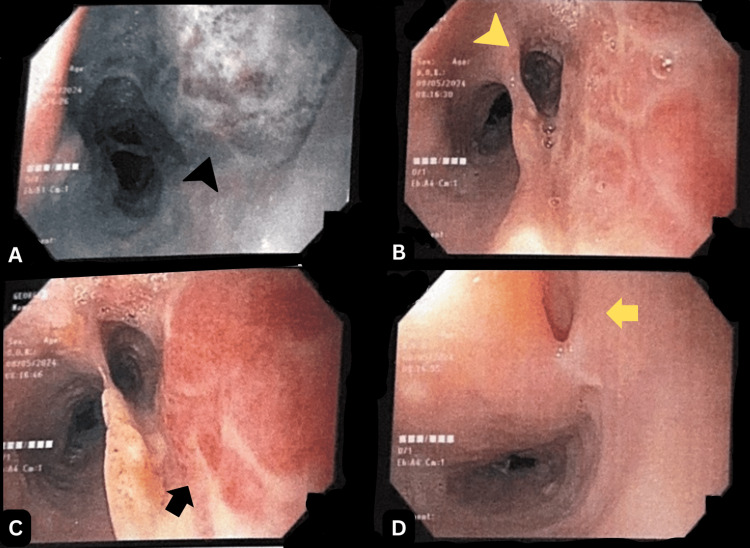 Figure 2
| Test | Patient’s value | Reference range |
| Hemoglobin | 13.7 g/dL | 12.0-15.0 g/dL |
| Leukocytes | 12,610 cells/mm³ | 4,000-10,000 cells/mm³ |
| Neutrophils | 10,466 cells/mm³ | 2,000-7,000 cells/mm³ |
| Eosinophils | 126 cells/mm³ | 20-500 cells/mm³ |
| Platelet count | 235,000 cells/mm³ | 150,000-400,000 cells/mm³ |
| aPTT | 34.3 seconds | 28-42 seconds |
| PT | 15.4 seconds | 11.0-13.5 seconds |
| Urea | 36 mg/dL | 16.6-48.5 mg/dL |
| Creatinine | 1.3 mg/dL | 0.70-1.20 mg/dL |
| Sodium | 137 mmol/L | 136-145 mmol/L |
| Potassium | 4.1 mmol/L | 3.5-5.1 mmol/L |
| Ionic calcium | 1.08 mmol/L | 1.16-1.31 mmol/L |
| Magnesium | 2.0 mg/dL | 1.7-2.2 mg/dL |
| Alkaline phosphatase | 75 U/L | 30-130 U/L |
| Gamma-GT | 49 U/L | 5-40 U/L |
| C-reactive protein | 346.8 mg/L | <5.0 mg/L |
| Urinalysis | Proteins (+), presence of red blood cells, and granular casts | Negative |
| HIV-1 and HIV-2 | NR | - |
| Hepatitis C (anti-HCV) | NR | - |
| VDRL | NR | - |
| Cytomegalovirus, IgG and IgM | NR | - |
| Herpes simplex I and II, IgG | NR | - |
Peer Reviews
No public reviews on file for this paper yet. If you reviewed it on a platform where reviews are public (OpenReview, ICLR, NeurIPS, ICML), you can paste yours below so the community can read it here.
Videos
No videos yet. Explain this paper in a talk, walkthrough, or lecture? Add one.
Taxonomy
TopicsEosinophilic Esophagitis · Esophageal and GI Pathology
Introduction
Electronic cigarettes (e-cigarettes) have emerged as popular alternatives to traditional tobacco, particularly among young adults. Despite their reputation as a safer option, e-cigarettes have been linked to various health concerns, most notably e-cigarette- or vaping-associated lung injury (EVALI) [1]. However, the impact of vaping on the gastrointestinal (GI) tract, especially the esophagus, is poorly characterized and likely underrecognized.
Recent case reports have described esophageal injury associated with vaping, including presentations of severe erosive esophagitis in otherwise healthy individuals [2,3]. The mechanism is not fully understood but may involve direct mucosal irritation, chemical toxicity, and immune-mediated responses triggered by flavoring agents or other components of e-liquids [4,5]. Individuals with pre-existing esophageal disorders, such as eosinophilic esophagitis (EoE), may be particularly vulnerable to these effects.
We report a rare case of extensive esophageal ulceration temporally associated with vaping in a young man with a history of EoE, highlighting a potential link between electronic cigarette use and chemical esophagitis.
Case presentation
A 24-year-old man presented to the emergency department with acute odynophagia and progressively worsening dysphagia over the past week. Symptoms affected both solids and liquids. He reported the recurrent use of electronic cigarettes, approximately three times per week, using a refillable device with fruit-flavored e-liquids. The patient resided in Brazil but imported the e-cigarette product from Europe. The onset of symptoms occurred shortly after his most recent vaping episode. He denied chest pain, fever, or weight loss.
He had a history of EoE and presumed IgA nephropathy. He also reported known allergies to egg and coconut. He consumed alcohol occasionally in small amounts and denied use of traditional tobacco cigarettes, illicit drugs, or nonsteroidal anti-inflammatory drugs.
At the time of admission, his EoE was clinically inactive. He had been using proton pump inhibitors (PPIs) and sucralfate on an as-needed basis, with no recent exacerbations. Physical examination was unremarkable, and vital signs were within normal limits. Laboratory test results are shown in Table 1.
Upper gastrointestinal endoscopy revealed extensive ulcerative lesions beginning 18 cm from the upper dental arch, which became increasingly friable and circumferential around 25 cm. The mucosa appeared thinned, and a probable fistulous tract was noted (Figure 1). Due to the high risk of perforation, biopsies were deferred. The endoscopic findings were classified as Zargar grade 3A caustic injury.
Initial upper gastrointestinal endoscopy revealed extensive ulcerative lesions and necrosis in the esophagus.(A) At 18 cm from the upper dental arcade (UDA), ulcerated, moderately deep lesions are observed (yellow arrowhead). (B) At approximately 25 cm from the UDA, extensive, friable, ulcerated lesions with broad areas of necrosis and thin, delicate mucosa are visualized (black arrowhead). (C and D) A probable fistulous opening is also identified (black arrow).
Thoracic and abdominal computed tomography demonstrated circumferential esophageal wall thickening, distal esophageal pneumatosis, and patchy bilateral pulmonary opacities. A comprehensive infectious workup, including serologies for HIV, hepatitis viruses, herpes simplex virus (HSV), and cytomegalovirus (CMV); blood cultures; and acid-fast bacilli testing, was negative.
The patient was initially managed with total parenteral nutrition for 10 days, followed by a gradual transition to a liquid oral diet. Pharmacological therapy included intravenous esomeprazole and oral sucralfate. He was advised to permanently discontinue vaping.
A follow-up endoscopy performed 30 days later showed marked improvement in mucosal integrity, though residual friable elevated lesions and diverticular formations persisted in the upper and middle thirds of the esophagus (Figure 2). Testing for Helicobacter pylori was negative. At that point, due to concern for ongoing mucosal vulnerability and to prevent further complications (as well as an EoE flare), treatment with oral budesonide twice daily and esomeprazole once daily was initiated. The patient reported the complete resolution of dysphagia and was tolerating a regular solid diet at last follow-up.
Follow-up endoscopy revealed diverticular formations and friable elevated lesions in the upper and middle esophagus.(A) At 18 cm from the UDA, focal areas of fibrosis are observed (black arrowhead). (B) At approximately 20 cm, a small diverticulum with a mucosal bridge is noted (yellow arrowhead). (C) At around 25 cm from the UDA, on the right lateral wall, an elevated lesion with an erythematous, friable surface upon endoscopic contact is seen (black arrow). (D) Slightly below, at approximately 30 cm from the UDA, another diverticular formation with a mucosal bridge and associated fibrosis is identified (yellow arrow).UDA: upper dental arcade
Discussion
This case underscores a rare but severe esophageal injury temporally associated with e-cigarette use. While the pulmonary complications of vaping are increasingly recognized, gastrointestinal injuries remain less well-characterized. Our patient, with a history of EoE in remission, presented with extensive esophageal ulcerations and a suspected fistulous tract following recurrent exposure to fruit-flavored vaping products.
The endoscopic findings were classified as Zargar grade 3A, indicating focal necrosis without perforation. The Zargar classification is a widely accepted system for grading caustic esophageal injuries, with higher grades correlating with an increased risk of complications such as strictures and perforation [6].
Although EoE can compromise mucosal integrity, the abrupt onset of symptoms following vaping, combined with negative infectious workup and the severity of endoscopic findings, supports a toxic/chemical etiology rather than an EoE flare. Reviews and similar cases have suggested that heated chemical aerosols in e-cigarette vapor can directly injure the esophageal epithelium [2,3,7,8].
The pathophysiology underlying vaping-induced esophageal injury remains speculative. However, it is hypothesized that the inhalation of heated chemicals and flavoring agents in e-cigarette aerosols may lead to direct mucosal irritation and inflammation. Additionally, nicotine exposure has been shown to alter esophageal pH and motility, potentially exacerbating mucosal damage [2,8-10].
The management of severe esophageal injuries involves supportive care, including nil per os (NPO) status, intravenous PPIs, and mucosal protectants such as sucralfate [10]. In our patient, total parenteral nutrition was initiated due to the extent of mucosal injury. Following stabilization, the patient was transitioned to a liquid diet.
This case emphasizes the need for heightened awareness among clinicians regarding the potential gastrointestinal risks associated with vaping, particularly in individuals with pre-existing esophageal conditions. Further research is warranted to elucidate the mechanisms by which vaping contributes to esophageal injury and to establish evidence-based guidelines for diagnosis and management.
Conclusions
This case reports a severe Zargar grade 3A caustic esophageal injury likely caused by recurrent e-cigarette use in a patient with controlled EoE. Acute symptoms following vaping, coupled with ulcerative lesions on endoscopy, suggest a chemical etiology. Treatment with parenteral nutrition, esomeprazole, sucralfate, budesonide, and vaping cessation led to symptom resolution. This highlights the gastrointestinal risks of vaping, warranting further research.
The reference list from the paper itself. Each links out to its DOI / PubMed record.
- 1Pulmonary illness related to e-cigarette use in Illinois and Wisconsin - final report N Engl J Med Layden JE Ghinai I Pray I 90391638220203149107210.1056/NEJ Moa 1911614 · doi ↗ · pubmed ↗
- 2Vaping induced severe erosive esophagitis JPGN Rep Pace LM Mc Googan K 04202310.1097/PG 9.0000000000000327 PMC 1043502237600612 · doi ↗ · pubmed ↗
- 3Vaping-associated esophagitis BMC Gastroenterol Pasricha TS Kochar B 1062120213366340910.1186/s 12876-021-01695-8PMC 7934248 · doi ↗ · pubmed ↗
- 4Chemical constituents involved in e-cigarette, or vaping product use-associated lung injury (EVALI)Toxics Muthumalage T Friedman MR Mc Graw MD Ginsberg G Friedman AE Rahman I 25820203226005210.3390/toxics 8020025 PMC 7355865 · doi ↗ · pubmed ↗
- 5Mechanisms of toxicity and biomarkers of flavoring and flavor enhancing chemicals in emerging tobacco and non-tobacco products Toxicol Lett Kaur G Muthumalage T Rahman I 14315528820182948184910.1016/j.toxlet.2018.02.025PMC 6549714 · doi ↗ · pubmed ↗
- 6Ingestion of corrosive acids: spectrum of injury to upper gastrointestinal tract and natural history Gastroenterology Zargar SA Kochhar R Nagi B Mehta S Mehta SK 7027079719892753330 · pubmed ↗
- 7Impact of electronic cigarettes on the upper aerodigestive tract: a comprehensive review for otolaryngology providers OTO Open Soo J Easwaran M Erickson-Di Renzo E 07202310.1002/oto 2.25PMC 1004679636998560 · doi ↗ · pubmed ↗
- 8E-cigarettes and flavorings induce inflammatory and pro-senescence responses in oral epithelial cells and periodontal fibroblasts Oncotarget Sundar IK Javed F Romanos GE Rahman I 7719677204720162779120410.18632/oncotarget.12857 PMC 5363580 · doi ↗ · pubmed ↗