Use of Excimer Lamp and Topical Tofacitinib 2% Gel in the Treatment of Pediatric Alopecia Areata: A Case Report
Revathi Dineshkumar, Shvedha Manthri, Swetha Duraisamy, Abhijeet Malvi

TL;DR
This case report describes the treatment of a child with severe alopecia areata using a 308 nm excimer lamp and tofacitinib 2% gel.
Contribution
The study presents a novel treatment approach for pediatric alopecia areata using excimer lamp and tofacitinib gel.
Findings
The combination of excimer lamp and tofacitinib gel was used to treat a pediatric case of recalcitrant alopecia areata.
The treatment approach is proposed as a potential therapeutic option for children with severe alopecia areata.
Abstract
Alopecia areata (AA) is a chronic inflammatory disease distinguished by non-scarring alopecia. The latest evidence suggests it is a T cell-mediated autoimmune disease that manifests in genetically susceptible individuals. In contrast to adult-onset AA, clinical traits and treatment of pediatric AA have been investigated very little. We hereby report a pediatric case of recalcitrant AA treated with a 308 nm excimer lamp and topical tofacitinib 2% gel.
Genes, proteins, chemicals, diseases, species, mutations and cell lines named across the full text — each resolved to its canonical identifier and authoritative record.
Click any figure to enlarge with its caption.
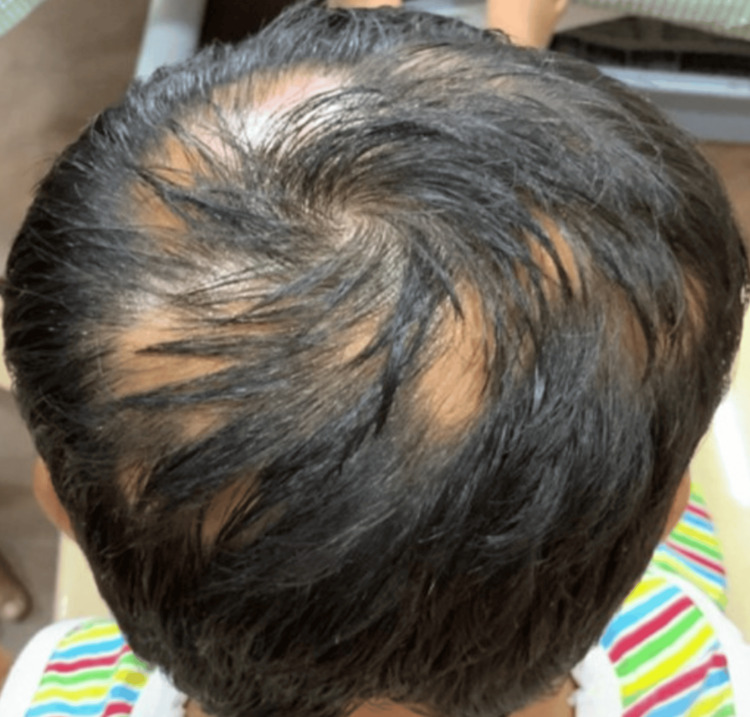 Figure 1
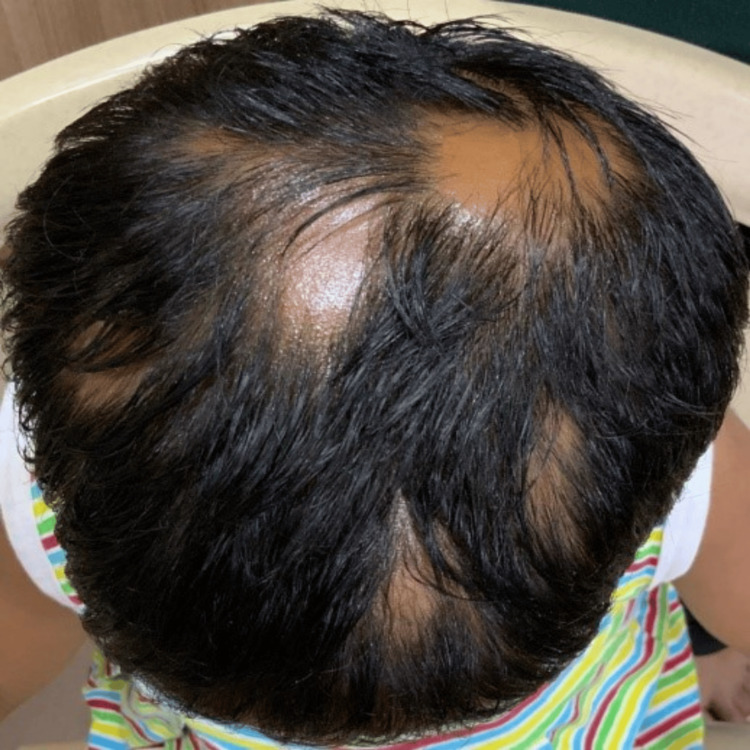 Figure 2
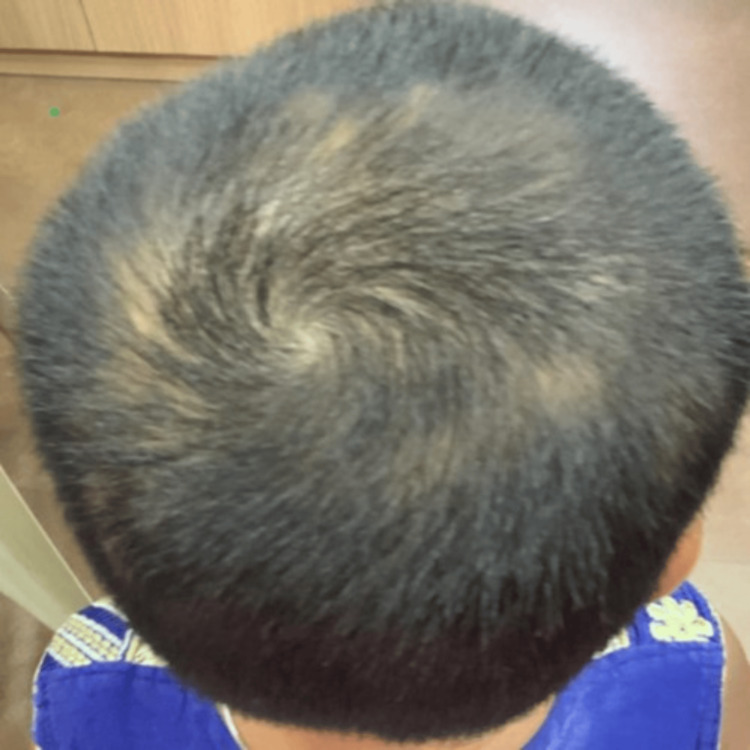 Figure 3
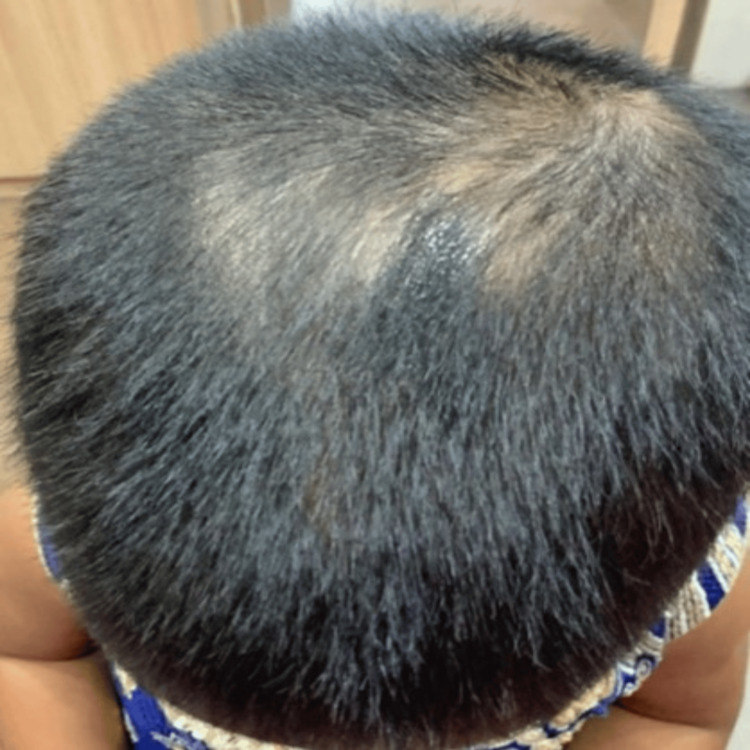 Figure 4
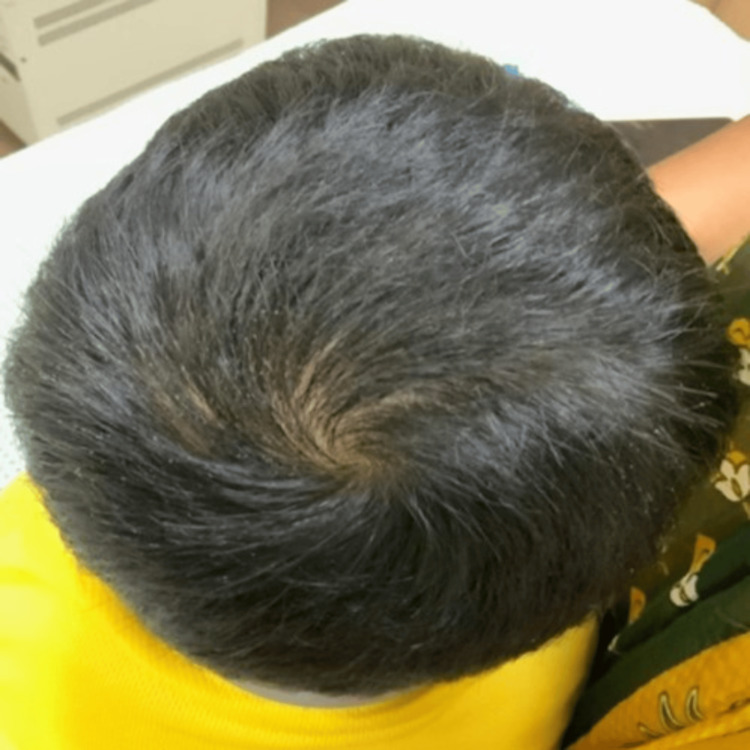 Figure 5
| Marking | Shape | Area (cm2) |
| D1 | Circle | 12.56 |
| D2 | Circle | 7.06 |
| D3 | Circle | 3.14 |
| D4 | Circle | 0.78 |
| D5 | Square | 6.25 |
| D6 | Square | 1.00 |
Peer Reviews
No public reviews on file for this paper yet. If you reviewed it on a platform where reviews are public (OpenReview, ICLR, NeurIPS, ICML), you can paste yours below so the community can read it here.
Videos
No videos yet. Explain this paper in a talk, walkthrough, or lecture? Add one.
Taxonomy
TopicsHair Growth and Disorders · Autoimmune Bullous Skin Diseases · Wound Healing and Treatments
Introduction
Alopecia areata (AA) is a chronic inflammatory disease directed against the anagen hair follicles, causing non-scarring scalp alopecia and/or body hair. Pediatric cases accounted for 20% of AA cases [1]. First-line treatment with corticosteroids (topical or intralesional) is effective for many localized AA cases, but others may necessitate more aggressive approaches. In pediatric AA, there is a tendency for poor treatment response and pain intolerance with intralesional injections and the potential for more side effects with systemic treatment [1]. We hereby report a pediatric case of recalcitrant AA treated with a 308nm excimer lamp and topical tofacitinib 2% gel.
Case presentation
A four-year-old female child weighing 16 kg was brought to the dermatology clinic by her mother with chief complaints of asymptomatic annular hair loss at multiple sites over the scalp for the past one year. The girl was having an O-positive blood group with completed vaccination to date and no history of atopy. No family history of similar conditions or allergic disorders was reported. On local examination, multiple well-defined annular patches of non-scaring alopecia of sizes ranging from 4 cm × 3 cm to 2 cm × 1 cm were present mainly at the vertex and parietal region of the scalp (Figures 1-2). Exclamatory hairs were present at the border, and the hair pull test was positive with no associated skin changes or nail changes. The Severity of Alopecia Tool (SALT) score before treatment was 23 (Table 1). The systemic examination was within normal limits. There were no abnormalities in the routine blood test.
First visit to our clinic - SALT 23 (occipital view)SALT: Severity of Alopecia Tool
First visit to our clinic - SALT 23 (anteroposterior view)SALT: Severity of Alopecia Tool
The patient was treated with topical corticosteroids and weekend oral corticosteroid therapy for the past one year in an outside clinic and presented to our clinic with no significant improvement. Irradiation of the affected area was done with a 308 nm excimer lamp (Dermaindia, Chennai, India) once a week with a dose of 270 mJ/cm^2^ for 9 milliseconds with an appropriate spot size of 24 sessions for six months. Phototherapy with the 308 nm excimer lamp was added with the application of topical tofacitinib 2% gel once a day and oral multivitamins, calcium, vitamin D3, and iron supplements.
The patient had marked hair regrowth in four months (Figures 3-4) and complete hair growth in six months (Figure 5). No adverse effects were noted, and there was no relapse in subsequent follow-ups.
Fourth month of treatment (occipital view)
Fourth month of treatment (anteroposterior view)
Sixth month of treatment
Discussion
AA developing during childhood has a higher likelihood of extensive or refractory hair loss compared to adult-onset cases. Most conventional medical therapies available today have a low success rate and are frequently accompanied by a high risk of side effects [2].
The pathogenesis of AA involves autoreactive CD8+ T cell activation, primarily driven by JAK-STAT-dependent cytokines such as interferon-gamma and interleukin-15. Targeting interferon-gamma (IFN-γ) via JAK inhibition provides a rationale for JAKi use in AA management. Oral JAK inhibitors have demonstrated good effectiveness in managing refractory AA, but their long-term adverse effects are a matter of concern. Considering the systemic side effects of oral tofacitinib, the topical tofacitinib 2% gel is fairly well tolerated with no complications in pediatric AA [3]. As per a 24-week, open-label, single-arm pilot study involving 10 patients, hair regrowth was seen in three patients when treated with topical tofacitinib 2% ointment applied twice daily [4]. The mean reduction in SALT score was 34.6% (SD ±23.2%). One patient experienced significant scalp hair regrowth, with a 61% improvement in the SALT score, while two others had partial responses with SALT score improvements of 18% and 25%, respectively [4].
The 308 nm excimer lamp is safe and efficacious for managing AA. The photons of the excimer lamp act on the DNA of T cell lymphocytes and induce their apoptosis. Also, epidermal cellular DNA synthesis and mitosis are reduced. In addition to DNA injury in T cells, it also affects the relocation of T cells from the skin [5]. It enables targeted irradiation of the affected areas while preserving the surrounding unaffected skin [6,7]. Expert consensus recommends the simultaneous use of topical tofacitinib and light-based therapies such as psoralen and ultraviolet A (PUVA), narrowband ultraviolet B (NB-UVB), or excimer radiation to achieve superior results in managing vitiligo and AA [8].
Relapse or recurrence is an important aspect of the management of AA. Some of the factors linked to recurrence are earlier age of onset, family history of AA, a history of atopy, an autoimmune disease in patient or first-degree relatives, a disease duration of more than a year, associated nail changes, the appearance of new patch while on treatment, and severe nature of the disease, such as alopecia totalis, alopecia universalis, or emphasis pattern, more than 50% scaly involvement and loss of eyebrows and eyelashes. There were no adverse effects, and there was the absence of relapses on subsequent follow-ups [9].
Conclusions
The case report demonstrated that for the pediatric patient with AA, phototherapy with a 308 nm excimer lamp and topical tofacitinib 2% gel is a valuable treatment option. It is also safe, effective, and painless, especially when dealing with the pediatric population. Moreover, the same treatment could be well tolerated and effectively reapplied in case of recurrence or relapse, without adverse effects.
The reference list from the paper itself. Each links out to its DOI / PubMed record.
- 1Clinico-epidemiological profile of childhood alopecia areata along with dermoscopic correlation: a cross-section, observational study Indian Dermatol Online J Bhardwaj P Basu D Podder I Gharami RC 2502571220213395952110.4103/idoj.IDOJ_451_20PMC 8088186 · doi ↗ · pubmed ↗
- 2Comparative efficacy of topical minoxidil versus topical minoxidil combined with 308-nm excimer laser therapy in the treatment of scalp alopecia areata: a dermoscopic, histological and biochemical study Eur Chem Bull Ramadan O Elshahat O Abd Allah E 544554112022
- 3Efficacy and safety of topical tofacitinib for the treatment of alopecia areata Indian Dermatol Online J Chikhalkar SB Prasanna S Vishwanath T 6246291520243905004610.4103/idoj.idoj_535_23PMC 11265738 · doi ↗ · pubmed ↗
- 4Tofacitinib 2% ointment, a topical Janus kinase inhibitor, for the treatment of alopecia areata: a pilot study of 10 patients J Am Acad Dermatol Liu LY Craiglow BG King BA 4034047820182910890810.1016/j.jaad.2017.10.043 · doi ↗ · pubmed ↗
- 5308-nm excimer lamp for the treatment of alopecia areata: clinical trial on 16 cases Indian J Dermatol Ohtsuki A Hasegawa T Komiyama E Takagi A Kawasaki J Ikeda S 32658201310.4103/0019-5154.113954 PMC 372689923919022 · doi ↗ · pubmed ↗
- 6Epidermal langerhans cell depletion after artificial ultraviolet B irradiation of human skin in vivo: apoptosis versus migration J Invest Dermatol Kölgen W Both H van Weelden H 81281711820021198275810.1046/j.1523-1747.2002.01742.x · doi ↗ · pubmed ↗
- 7Topical immunotherapy in alopecia areata J Invest Dermatol Happle R 7172961991202287810.1111/1523-1747.ep 12471884 · doi ↗ · pubmed ↗
- 8Role of topical tofacitinib in autoimmune skin disorders: an expert opinion Indian J Clin Exp Dermatol Godse K Girdhar M Jagadeesan S Laiker R 254259102024