Effectiveness of herbal medicine for liver cancer treatment as revealed by a bibliometric and visualization analysis
Yusha Shi, Juwei Wang, Yahui Zhang, Kai Wu, Yibo Zhu, Kaiwen Yan, Qin Ouyang

TL;DR
This study analyzes global research trends in herbal medicine for liver cancer, highlighting key contributors, topics, and future directions.
Contribution
The paper provides a novel bibliometric and visualization analysis of herbal medicine research for liver cancer, identifying emerging trends and key contributors.
Findings
Chinese researchers, especially from Shanghai University of Traditional Chinese Medicine, dominate the field.
Keywords like 'NF kappa B' and apoptosis are central, while 'network pharmacology' and antioxidants are emerging topics.
Research is primarily published in molecular biology and immunology journals, with cited works in environment, toxicology, and nutrition.
Abstract
Liver cancer is highly prevalent worldwide. However, current medical treatments remain insufficient. Although herbal medicine has a long history and extensive expertise in treating liver cancer, the literature in this field has not been thoroughly explored. This study aims to assess and analyze the distribution patterns and key research areas of publications concerning herbal medicine for liver cancer. Literature on herbal medicine and liver cancer published between January 1, 2008, and September 28, 2024, was collected for this research. Excel, CiteSpace 6.4.R1, VOSviewer 1.6.20, Scimago Graphica, and Bibliometrix 4.1 were used for data analysis. The study examines 634 academic articles on herbal medicine for liver cancer, with the majority contributed by Chinese researchers, particularly from Shanghai University of Traditional Chinese Medicine. Wang Ning is the most productive…
Genes, proteins, chemicals, diseases, species, mutations and cell lines named across the full text — each resolved to its canonical identifier and authoritative record.
Click any figure to enlarge with its caption.
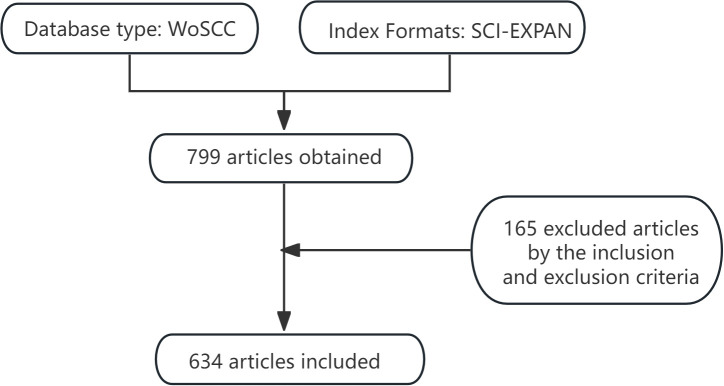 Figure 1
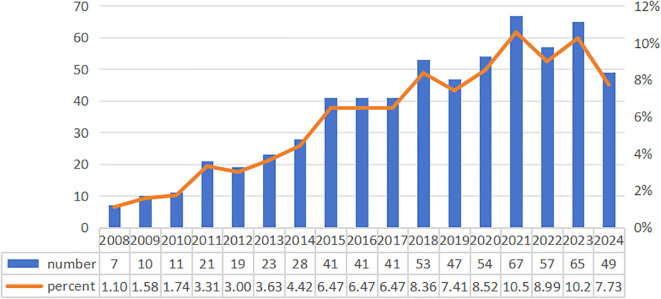 Figure 2
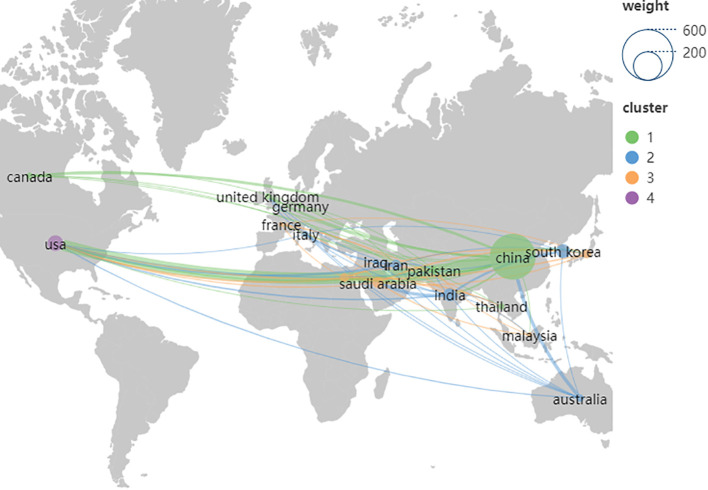 Figure 3
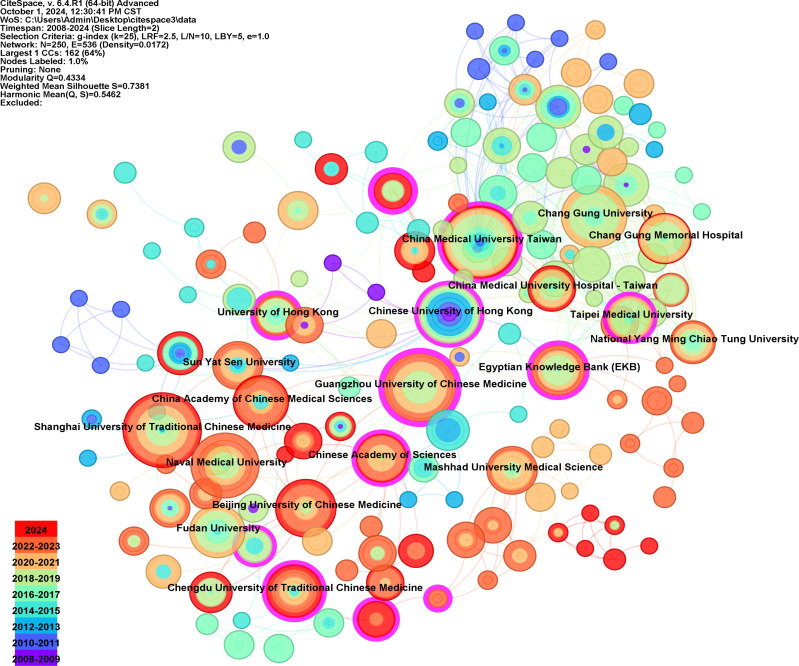 Figure 4
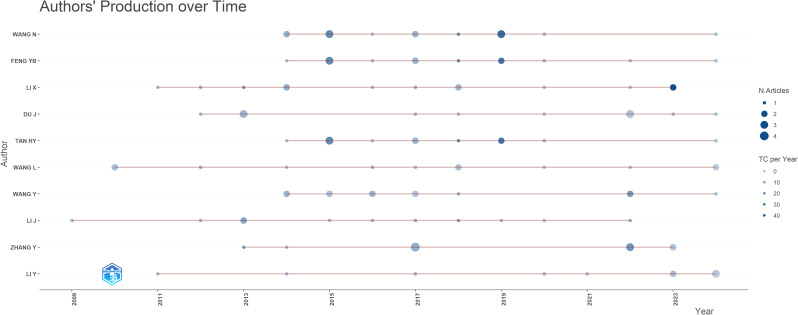 Figure 5
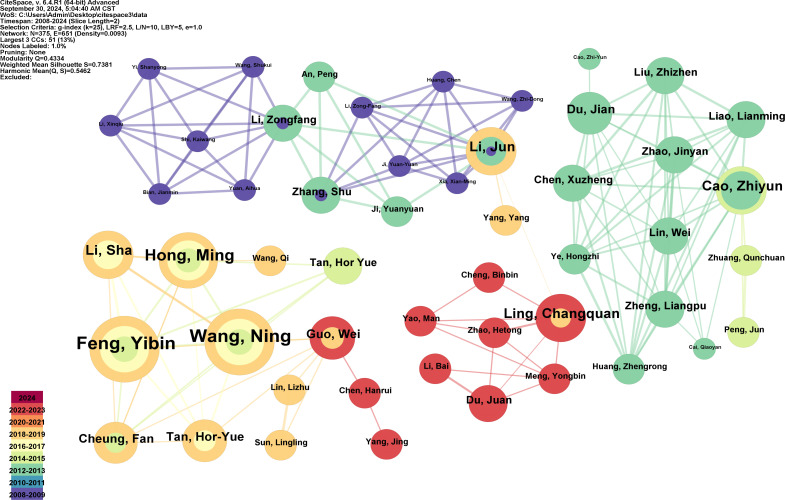 Figure 6
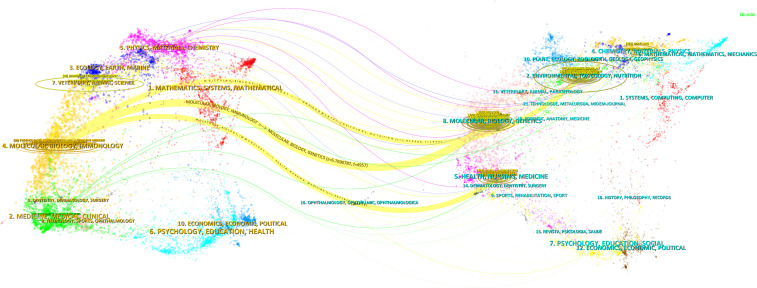 Figure 7
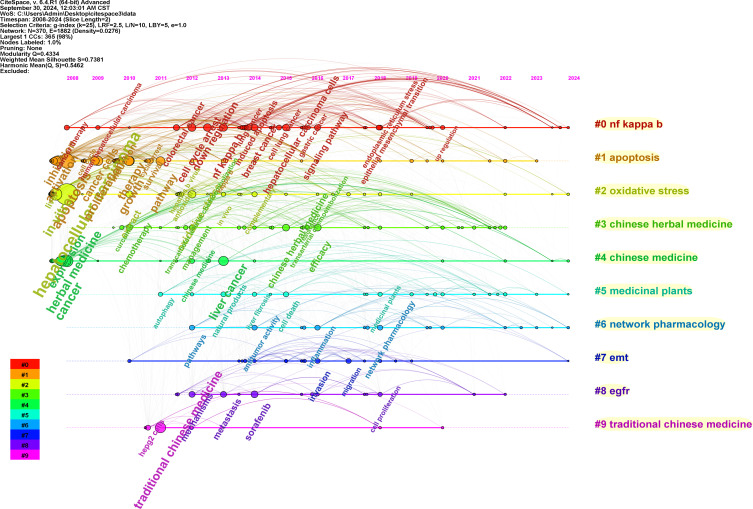 Figure 8
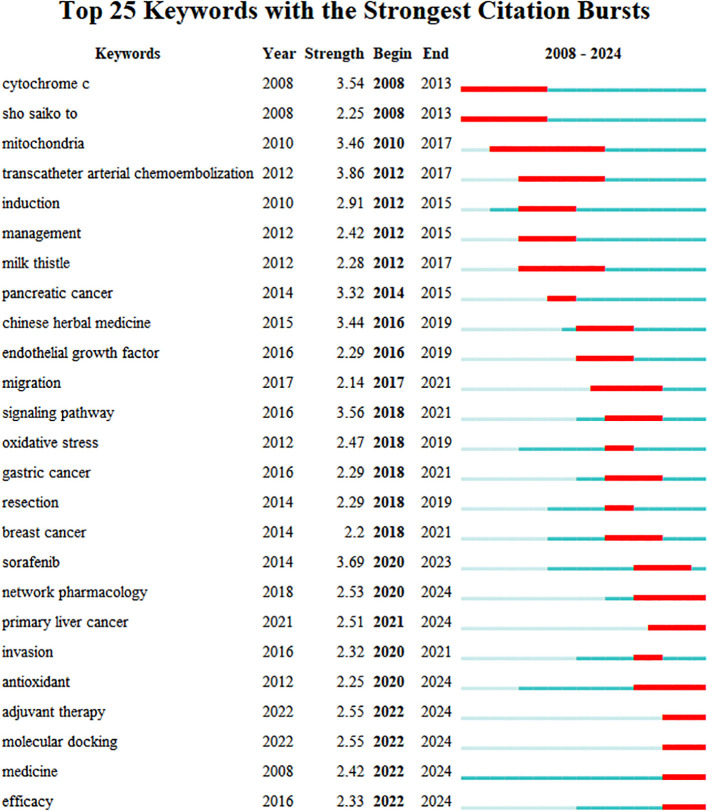 Figure 9
| Rank | Countries | Publications | Centrality |
|---|---|---|---|
| 1 | China | 456 | 0.52 |
| 2 | USA | 53 | 0.35 |
| 3 | South Korea | 43 | 0.15 |
| 4 | India | 37 | 0.25 |
| 5 | Saudi Arabia | 25 | 0.06 |
| 6 | Iran | 22 | 0.09 |
| 7 | Japan | 17 | 0.01 |
| 8 | Egypt | 17 | 0.05 |
| 9 | Pakistan | 12 | 0.07 |
| 10 | Australia | 12 | 0.1 |
| Rank | Institutions | Publications | Centrality | Country |
|---|---|---|---|---|
| 1 | Shanghai University of Traditional Chinese Medicine | 29 | 0.07 | China |
| 2 | China Medical University Taiwan | 28 | 0.14 | China |
| 3 | Guangzhou University of Chinese Medicine | 22 | 0.23 | China |
| 4 | Naval Medical University | 19 | 0.01 | China |
| 5 | Beijing University of Chinese Medicine | 18 | 0.04 | China |
| 6 | Chang Gung University | 17 | 0.08 | China |
| 7 | Egyptian Knowledge Bank | 16 | 0.13 | Egypt |
| 8 | Fudan University | 15 | 0.04 | China |
| 9 | China Medical University Hospital - Taiwan | 15 | 0.06 | China |
| 10 | Chinese Academy of Sciences | 14 | 0.1 | China |
| Rank | Author | Publications | h_index | Citations |
|---|---|---|---|---|
| 1 | Wang Ning | 14 | 11 | 718 |
| 2 | Feng Yibin | 13 | 10 | 618 |
| 3 | Li Xin | 13 | 10 | 535 |
| 4 | Tan Horyue | 12 | 10 | 613 |
| 5 | Wang Ying | 12 | 9 | 270 |
| 6 | Du Jian | 12 | 7 | 181 |
| 7 | Wang Lu | 12 | 6 | 188 |
| 8 | Li Jun | 11 | 8 | 395 |
| 9 | Zhang Yu | 11 | 8 | 308 |
| Rank | Source | h_index | Citations | Publications | IF |
|---|---|---|---|---|---|
| 1 | JOURNAL OF ETHNOPHARMACOLOGY | 16 | 922 | 37 | 4.8 |
| 2 | EVIDENCE-BASED COMPLEMENTARY AND ALTERNATIVE MEDICINE | 13 | 471 | 30 | 2.65 |
| 3 | ONCOLOGY REPORTS | 13 | 360 | 14 | 3.8 |
| 4 | BIOMEDICINE & PHARMACOTHERAPY | 12 | 454 | 22 | 6.9 |
| 5 | INTERNATIONAL JOURNAL OF MOLECULAR SCIENCES | 10 | 518 | 14 | 4.9 |
| 6 | MOLECULES | 10 | 451 | 12 | 4.2 |
| 7 | INTEGRATIVE CANCER THERAPIES | 9 | 224 | 15 | 2.9 |
| 8 | PHYTOTHERAPY RESEARCH | 9 | 260 | 12 | 6.1 |
| 9 | FRONTIERS IN PHARMACOLOGY | 8 | 304 | 19 | 4.4 |
| 10 | PHYTOMEDICINE | 8 | 447 | 15 | 6.7 |
| Rank | Cocitation strength | Total citation | Title | Categories |
|---|---|---|---|---|
| 1 | 9.38 | 36 | Global Cancer Statistics 2020: GLOBOCAN Estimates of Incidence and Mortality Worldwide for 36 Cancers in 185 Countries | Multicenter Study |
| 2 | 5.4 | 13 | Cancer incidence and mortality worldwide: sources, methods and major patterns in GLOBOCAN 2012 | Multicenter Study |
| 3 | 5.22 | 9 | Thyroid cancer management: from a suspicious nodule to targeted therapy | Review |
| 4 | 4.46 | 13 | A global view of hepatocellular carcinoma: trends, risk, prevention and management | Review |
| 5 | 4.33 | 10 | Traditional herbal medicine prevents postoperative recurrence of small hepatocellular carcinoma: A randomized controlled study | Randomized Controlled Trial |
| 6 | 3.92 | 10 | Chinese herbal medicine-derived compounds for cancer therapy: a focus on hepatocellular carcinoma | Review |
| 7 | 3.89 | 11 | Global cancer statistics, 2012 | Multicenter Study |
| 8 | 3.83 | 11 | Lenvatinib versus sorafenib in first-line treatment of patients with unresectable hepatocellular carcinoma: a randomized phase 3 non-inferiority trial | Clinical Trial |
| 9 | 3.8 | 13 | Cancer statistics in China, 2015 | Multicenter Study |
| 10 | 3.61 | 7 | Hepatocellular carcinoma | Commet |
| Rank | Keywords | Frequency |
|---|---|---|
| 1 | hepatocellular carcinoma | 307 |
| 2 | apoptosis | 142 |
| 3 |
| 93 |
| 4 | cancer | 91 |
| 5 | herbal medicine | 83 |
| 6 | traditional Chinese medicine | 67 |
| 7 | expression | 64 |
| 8 | activation | 63 |
- —Department of Education of Zhejiang Province 10.13039/501100008867
Peer Reviews
No public reviews on file for this paper yet. If you reviewed it on a platform where reviews are public (OpenReview, ICLR, NeurIPS, ICML), you can paste yours below so the community can read it here.
Videos
No videos yet. Explain this paper in a talk, walkthrough, or lecture? Add one.
Taxonomy
TopicsGlutathione Transferases and Polymorphisms · Liver Disease Diagnosis and Treatment · Nutrition, Genetics, and Disease
Introduction
1
Liver cancer is the fourth most common cause of death globally, resulting in over 800,000 deaths annually (1). The majority of primary liver cancers are hepatocellular carcinoma, accounting for about 90%, followed by intrahepatic cholangiocarcinoma and other primary liver malignancies (2). China alone accounts for 45.3% of the world’s liver cancer cases and 47.1% of liver cancer deaths (3). The hepatitis B virus remains the primary cause of liver cancer mortality, followed by the hepatitis C, alcohol consumption, and noncoholic steatohepatitis (4, 5). Available treatments include surgical resection, transarterial chemoembolization, and ablation (6). However, these do not significantly improve patient survival or alleviate discomfort. Therefore, more effective treatment strategies need to be identified.
Herbal medicine has shown promise in treating liver cancer (7). Modern research indicates that herbs not only affect tumor cells’ growth, proliferation, apoptosis, invasion, and migration, but also alleviate symptoms, reduce side effects after surgery or chemoembolization, and improve patient quality of life and survival (8–10). Herbal therapy could provide additional treatment options and enhance healthcare delivery for liver cancer patients.
Bibliometrics, using mathematical and statistical methods, quantitatively assesses knowledge vectors in different research areas. Its applications include analyzing the evolutionary potential of research areas, the dynamics of knowledge structures, the intensity of collaborations, identifying research hotspots, and predicting development trajectories (11). For example, Liu JM (12) used bibliometrics to study the evolutionary patterns of CDK7 inhibitors in cancer treatment, while Zhao WJ (13) analyzed research trends in COVID-19 acute kidney injury.
Studies have been conducted to investigate the molecular mechanisms and clinical applications of herbal medicine against liver cancer (14, 15). However, the spatial and temporal distribution characteristics, collaborative network relationships, and research hotspots of studies related to herbal medicine and liver cancer on a global scale remain unresolved. This study fills the above gaps through bibliometrics to provide a comprehensive understanding of the distribution characteristics of publications and research hotspots between 2008 and September 28, 2024 on herbal medicines for hepatocellular carcinoma. It also provides personal predictions and insights on several potential hotspots. This study provides data-driven decision-making for interdisciplinary research.
Materials and methods
2
Data sources and retrieval strategy
2.1
Materials were collected from the Web of Science Core Collection (WoSCC) database and Science Citation Index Expanded (SCI-E) from 2008 to the present. The WoSCC and SCI-E remain indispensable tools for bibliometric research, distinguished by their discipline-wide coverage, high quality data, in-depth citation capabilities and historical integrity. The WoSCC can provide indicators such as H-index, citation count, and journal impact factor. And it is seamlessly integrated with multiple platforms to support visualization and analysis of collaboration networks and research trends. SCI-E focuses on natural science fields, and its selection criteria are more stringent to ensure the academic standardization of the included literature.
We used the following search terms: TS=((“liver cancer” OR “Liver Neoplasm” OR “liver tumors” OR “Hepatocellular Cancers” OR “Hepatoma” OR “Liver Carcinoma” OR “Hepatic tumor” OR “Hepatic cancer” OR “Cancer of Liver” OR “cancer of the liver” OR “hepatic neoplasms” OR “Neoplasm of liver” OR “liver and intrahepatic bile duct carcinoma” OR “liver and intrahepatic biliary tract cancer” OR “Tumor of liver” OR “liver malignant tumors” OR “Neoplasm of the liver” OR “Hepatocellular Carcinoma”) AND (“herbal medicine” OR “herbal therapy” OR “herb therapy” OR “phytotherapy” OR “drugs, Chinese herbal” OR “ethnobotany”)). The search was completed on September 28, 2024, including 799 publications.
Data extraction and processing methods
2.2
To ensure our inclusion criteria were met, we carefully reviewed the type and full texts of the search results. Publications were screened according to the following inclusion and exclusion criteria:
Inclusion Criteria:
The research topics of the publications are liver cancer and herbal medicine.Document types are Articles and review articles.Literature published in English.A portion of the publications addresses liver cancer and herbal medicine, with substantial content covering at least one.Literature not directly discussing liver cancer, herbs, needs to be clearly focused on at least one of the following areas: possible pathogenic mechanisms, precursor diseases, signaling pathways, etc., of herbal medicines in treating liver cancer.
Exclusion Criteria:
The research topics and content of the publications are unrelated to liver cancer and herbal medicine.Literature published in Non-English.Although some portions of the publications cover liver cancer and herbal medicine, the content is minimal, typically comprising only a few quotations or statements without in-depth discussion.Articles are incomplete or only summaries are available.Duplicate publications.
After the scrutiny, we obtained a total of 634 documents (Figure 1).
Article search and screening process.
Analysis software
2.3
The data did not contain identifiable patient information and therefore did not require an ethical review. Excel, Citespace 6.4.R1, VOSviewer 1.6.20, Scimago Graphica, and Bibliometrix 4.1 were used for data analysis (16).
The annual volume of publications is summarized in Excel. Analyze countries, institutions, authors, journals, article co-citations, and keywords using Citespace 6.4.R1. Utilize Scimago Graphica and VOSviewer 1.6.20 to create country cooperation network maps. Analyze authors and journals using Bibliometrix 4.1.
Interpretation of main parameters
2.4
The Hirsch index (H-index) indicates that at least H published papers have been cited at least H times (17). It is a useful measure for evaluating the volume and impact of a researcher’s scholarly output. A higher H-index indicates greater contribution and influence. Centrality serves as a measure of the impact of nodes within a network. Nodes with higher centrality are connected to more other nodes. Burst analysis can reveal abrupt shifts in citations or keywords during a specified time frame, helping to identify important nodes and gain insights into emerging research trends. In the graph, node size indicates the number of publications, colors indicate different clusters, and line thickness indicates the degree of cooperation.
Results
3
Annual publication number analysis
3.1
The study encompasses an analysis of 634 scholarly articles about herbal medicine for liver cancer. As shown in Figure 2, the highest publication year was 2021 (67) and the lowest was 2008 (7). The annual growth rate for publications is 12.93%.
Annual number of published papers. The horizontal axis represents the time of publication. The blue bar graph represents the annual publication number, corresponding to the value on the left. The orange line graph represents the percentage of the annual publication number, corresponding to the values on the right.
Country analysis
3.2
A total of 61 countries contributed to research on herbal medicine and liver cancer. Table 1 lists the top ten countries by the number of publications. China led with 456 articles, accounting for 53.52% the total. The United States followed with 53 publications, South Korea with 43, India with 37, and Saudi Arabia with 25. China, the USA, and India stood out with higher centrality values (0.52, 0.35, and 0.25, respectively), indicating their pivotal roles in international cooperation. Despite a low publication count (8), the United Kingdom ranked fourth in centrality (0.16), showcasing its high-quality publications and extensive scientific cooperation with other countries. Figure 3 illustrates the collaborative networks of the top 18 countries by publication count. Figure 3 indicates that China maintains a high level of cooperation and exchange with the United States and Australia.
The map of the top 18 countries’ cooperation networks. The node size indicates the number of publications, colors indicate different clusters, and lines indicate partnerships. The thicker the line between the connecting points, the closer the cooperation between the two countries.
Institutions analysis
3.3
Table 2 highlights the significant contributions of Chinese research institutions in the field. Shanghai University of Traditional Chinese Medicine leads with 29 publications, followed by China Medical University Taiwan with 28 and Guangzhou University of Chinese Medicine with 22. Despite its relatively low global publication count, Guangzhou Medical University surpasses other institutions in centrality (n=0.24), indicating widespread recognition of its research. The Egyptian Knowledge Bank has published 16 articles, the highest number outside Chinese research institutions. Figure 4 presents a co-occurrence graph of publishing.
The collaboration network of institutions. The node size indicates the number of publications of the institution. The color of the node corresponds to the annual publication time. The light purple ring on the outermost ring indicates high centrality of the node. (Figure created using CiteSpace).
Authors analysis
3.4
A total of 375 authors contributed to research on herbal medicine and liver cancer during the study period. Table 3 lists the top ten most productive authors, all from China. It is regrettable that no non-Chinese scholars have appeared on the list thus far. Wang Ning ranks as the most prolific author with 14 articles, followed by Feng YiBin and Li Xin, who each have 13 articles. They also possess high h-indices, indicating their influence in the field. Figure 5 illustrates the authors’ achievements over time, while Figure 6 displays an author collaboration network constructed using CiteSpace.
The achievements of authors over time. The size of the nodes indicates the number of articles published by the author. The color indicates the number of citations, and the darker the color, the more citations.
The collaboration network of authors. The size of the nodes indicates the number of articles published by the author. The lines between the nodes represent the collaborative relationships. The color corresponds to the annual publication time period from 2008 to 2024. (Figure created using CiteSpace).
Journals analysis
3.5
Throughout the study period, 259 journals published articles on herbal medicine and liver cancer. Table 4 displays the top ten journals, with the JOURNAL OF ETHNOPHARMACOLOGY leading in publications, followed by EVIDENCE-BASED COMPLEMENTARY AND ALTERNATIVE MEDICINE and BIOMEDICINE & PHARMACOTHERAPY. BIOMEDICINE & PHARMACOTHERAPY boasts the highest impact factor (n=6.9). Despite having a relatively small number of publications, ONCOLOGY REPORTS possesses a high h-index, indicating high-quality literature. The dual-map overlay in Figure 7 illustrates that journals publishing on herbal medicine and liver cancer are primarily in the fields of molecular biology and immunology, whereas the cited journals are mainly in the fields of environment, toxicology, and nutrition.
The dual-map overlay. The dots represent journals, with journals citing references on the left and cited journals on the right. The curve between the left and right side indicates the citation link. The weight assigned to a color for a particular cluster is determined by the number of items in the neighborhood of that point that belong to that cluster, with each color representing each cluster.
Article co-citation analysis
3.6
Small (18) first introduced the concept of co-citation as a research method to assess the degree of relationship between documents in 1973. The number of citations can reflect the impact of an article in a particular field of research. Table 5 lists the ten papers with the highest co-citation strengths. The most prevalent article type is the multicenter study. According to CiteSpace analysis, the publication with the highest co-citation strength and total citations is “Global Cancer Statistics 2020: GLOBOCAN Estimates of Incidence and Mortality Worldwide for 36 Cancers in 185 Countries” (19). The article, authored by Sung H and published in the A Cancer Journal for Clinicians in 2021, appears in the journal with the highest impact factor in the world. It presents an updated analysis of the global cancer burden using the GLOBOCAN 2020 estimates of cancer incidence and mortality provided by the International Agency for Research on Cancer.
Keywords analysis
3.7
Keywords are essential for reflecting the main topics of an article. Table 6 showcases the ten most frequently used keywords in the study, with “hepatocellular” (n=307), “carcinoma” (n=142), and “in vitro” (n=93) being the most prevalent. The timeline view of keyword clustering created by CiteSpace (Figure 8) highlights specific clusters such as “NF kappa B”, apoptosis, “oxidative stress”, “Chinese herbal medicine”, “Chinese medicine”, and “medicinal plants” with respective sizes of 82, 68, 67, 54, 45, and 42. These categories represent the primary classifications in herbal medicine related to liver cancer. Figure 9 illustrates the top 25 keywords with the strongest citation bursts. “Network pharmacology”, antioxidant, “adjuvant therapy”, and “molecular docking” are poised to emerge as significant areas of research in the near future.
Timeline view of keyword clustering analysis. The size of the node represents how often the cited literature is cited. The horizontal axis represents when the literature was published. The lines between the nodes represent the collaborative relationships. The cluster labels (right) summarize major research themes in the field. (Figure created using CiteSpace).
The top 25 keywords with the strongest citation bursts. The blue line indicates the timeline, and the red bar indicates the burst period.
Discussion
4
General information
4.1
In recent years, a growing body of literature has demonstrated the efficacy of herbal medicine in treating liver cancer. China has emerged as a leader in this field, with the highest volume and centrality of publications, and the top 10 most productive authors all coming from Chinese research institutions. The top 10 publications on herbal medicine for liver cancer were all affiliated with Chinese research institutions. All of the aforementioned analyses suggest that herbal medicine for liver cancer exhibits a more distinct geographical character. This creates specific challenges for the global dissemination of the discipline’s culture. These publications appeared in 259 different journals, with the Journal of Ethnopharmacology having the highest number of publications and the highest h-index. The journals publishing articles on herbal medicine for liver cancer primarily focused on molecular biology and immunology, while the cited journals were predominantly from the fields of environment, toxicology, and nutrition.
Hotspots and frontiers
4.2
We used CiteSpace to conduct a keyword analysis to assess current research trends and frontiers. The findings revealed that the most frequently occurring keywords from 2008 to 2024 were hepatocellular carcinoma, apoptosis, and “in vitro”. Additionally, our analysis identified “NF kappa B” and apoptosis as the leading keyword clusters in current research. Based on the assessment of trending keywords, “network pharmacology”, antioxidants, “adjuvant therapy”, and “molecular docking” are anticipated to emerge as popular research areas in the coming years.
Adjunctive therapy
4.2.1
Herbal medicine complements conventional treatments by Surgery, ablation, and transarterial chemoembolization are the primary treatment modalities for liver cancer (6). These interventions aim to eliminate or destroy cancer cells. However, these treatments are associated with potential complications, toxicity, and drug resistance. Herbal medicine is used as a supplementary approach in managing liver cancer (20). It has been shown to enhance the effectiveness of primary treatments and reduce adverse side effects (21). A study at Beijing Ditan Hospital of Capital Medical University suggests that using traditional Chinese medicine as an adjunctive therapy may extend median survival time and improve overall survival in patients with HCC (22). Research by Luo Ru (23) indicates that using Jianpi Huayu decoction as a complementary treatment for HCC following hepatectomy is associated with a low rate of postoperative recurrence and high overall survival. Incorporating herbal remedies as adjunctive therapy in managing liver cancer has significantly improved patient prognosis. Some studies have shown the potential adjunctive role of herbal therapy in addressing tumor cell metabolism (24). In addition to traditional compound herbs, single herbs have become a hot research topic in the adjuvant treatment of hepatocellular carcinoma. Single herbs and plant derivatives such as Crithmum maritimum and Crithmum maritimum L can reduce amino acid levels and prevent and improve HCC by lowering choline, phosphorylcholine, and regulating lipid homeostasis (25, 26). These emerging complementary therapies are promising and worthy of attention in clinical applications.
Antioxidant
4.2.2
A strong correlation exists between oxidative stress and the development of liver cancer (27–29). Hepatocytes are crucial in producing oxygen-free radicals in the body. When liver cell function is compromised or metabolic imbalance occurs, a large quantity of oxidative free radicals is produced, leading to intracellular oxidative stress. The inability to clear these free radicals can ultimately lead to the development of liver cancer. Cancer progression is driven by the imbalance between pro-oxidants, such as reactive oxygen species (ROS), and endogenous antioxidant molecules. Herbal medicine, a key component of traditional medicine in many cultures, serves as a natural antioxidant (30). It is rich in flavonoids, phenolic compounds, saponins, and active polysaccharides (31). Natural antioxidants play a crucial role in treating liver diseases caused by free radicals by alleviating oxidative stress and counteracting the effects of these radicals (32). The use of natural antioxidants is becoming increasingly significant in managing liver cancer. In recent years, antioxidant therapy for hepatocellular carcinoma has attracted significant attention from scholars. Studies have demonstrated that extracts from Coleus and Liuwei Dihuang Pills may have anticancer potential in hepatocellular carcinoma by modulating ROS levels and mitochondrial membrane potential (33, 34). Numerous studies have demonstrated the antioxidant effects of herbs in treating liver cancer.
Molecular docking
4.2.3
Molecular docking studies the binding affinity between protein receptors and small drug molecules at the molecular level, describing their conformational relationships (35). Unlike traditional research methods, molecular docking employs computer software to identify potential key active substances that interact with target proteins through geometric and energy matching based on the lock-and-key principle (36). Molecular docking predicts drug-target interactions and is widely applied in natural product research. For example, Shehawy demonstrated that the strong interaction between the herbal active ingredients Thymoquinone and Piperine with DNMT3B and HDAC3 inhibited the activity of hepatocellular carcinoma cells and led to growth arrest and cell death by molecular docking (37). It provides a theoretical basis for elucidating mechanisms of action and offering novel insights into the study of traditional herbal medicine.
Emerging applications of molecular docking technology include predicting adverse reactions, drug repurposing, pharmacology, and target fishing and profiling (38). In recent years, molecular docking has gained prominence in exploring active ingredients in herbal remedies. For example, Tang (39) verified the mechanism of anti-HCC of Polygonum perfoliatum L extraction, a traditional Chinese medicine plant. Molecular docking simulations were conducted to investigate the binding affinities of ADRA1B, PLCB2, PRKG2, and GLO1 as protein receptors for the compounds of interest.
Network pharmacology
4.2.4
Network pharmacology is an interdisciplinary field that emerges from the integration of biology and computer technology. By utilizing high-throughput genomics data analysis, computer simulations, and open database searches, network pharmacology seeks to uncover the complex network relationships involved in drug-gene-target-disease interactions (40). The concept of network pharmacology was first introduced by the British pharmacologist A. L. Hopkins in 2007 (41). Network pharmacology is characterized by its “multi-component, multi-target, and multi-channel” features. Compared to traditional pharmacological experiments, network pharmacology provides unique advantages in preventing and treating complex diseases. Network pharmacology increases the success rate of new drug clinical trials, and reduces the costs of drug research and development (42). In recent years, network pharmacology has attracted significant attention from scholars. Interestingly, numerous articles used network pharmacology combined with molecular docking techniques, incorporating experimental validation to further confirm the mechanisms of action and efficacy of drugs, thereby enhancing the reliability and accuracy of prediction results (43). The investigation of herbal treatments for hepatocellular carcinoma has become a focal area of research. The diverse active components found in herbs and the complex interactions between these components merit investigation. For instance, Jihan Huang (44) predicted that ten compounds, including betaine, epoetin, and berberine, derived from the herbal remedy Xianglian pill, exhibit activity against multiple HCC-related targets and pathways in the treatment of hepatocellular carcinoma through the integration of network pharmacology and RNA sequencing.
Strengths and limitations
4.2.5
This study offers several significant advantages. Firstly, it provides a comprehensive and systematic bibliometric analysis of herbal remedies for hepatocellular carcinoma, addressing a notable gap in the existing literature. Secondly, our data analysis methodology is highly objective, employing widely recognized bibliometric tools such as CiteSpace, VOSviewer, and Bibliometrix. Finally, we provide multiple new perspectives on molecular research to clinical citations. This helps to understand the current state of research and identify future research hotspots.
However, there are certain limitations to this study. Firstly, the data utilized in this study were exclusively sourced from the WoSCC database and SCIE (2008-present), thereby disregarding valuable information from other databases and indexing methods. Secondly, Publications predating 2008 were excluded from our analysis due to limited availability of historical data. Data were limited to publications before September 2024, which may affect the accuracy of the prediction of emerging hotspots. Thirdly, only articles, reviews, and English-language literature were included. This potentially resulted in an incomplete literature collection, overlooked the importance of non-English articles, and led to an incomplete presentation of geographical research trends. Lastly, the absolute dominance of Chinese institutions may mask small-scale innovative research in other countries, which needs to be interpreted in the context of regional policy and financial support.
Conclusions
5
This study analyzes the evolution of the field of herbal medicine for liver cancer from 2008 to September 28, 2024. China has made the most significant contributions to this field and ranks first in the number of published papers, authors, and institutions. Shanghai University of Traditional Chinese Medicine is the leading institution in terms of publication output. Wang Ning is the most prolific author in this field. The JOURNAL OF ETHNOPHARMACOLOGY has published the highest number of articles. “NF kappa B” and apoptosis have historically been the primary research topics in this field. “Network pharmacology”, antioxidants, “adjuvant therapy”, and “molecular docking” are likely to emerge as future research hotspots.
The findings of this study have the following implications for clinical practice and future research. Herbal medicine as adjuvant therapy reveals its gradual emergence in areas such as alternative treatment and prevention of liver cancer, which could be promoted for inclusion in the guidelines for the comprehensive treatment of liver cancer. The antioxidant effect of herbs is very significant, and research focusing on uncovering the antioxidant mechanism of herbs in liver cancer treatment deserves attention. We believe that network pharmacology, molecular docking and other means will continue to be strong in the future, and the combined application between them is already a popular trend. In the future, based on this combination, together with basic experiments, it may become the key project of each subject group.
The reference list from the paper itself. Each links out to its DOI / PubMed record.
- 1Chon YE Park SY Hong HP Son D Lee J Yoon E . Hepatocellular carcinoma incidence is decreasing in Korea but increasing in the very elderly. Clin Mol Hepatol. (2023) 29:120–34. doi: 10.3350/cmh.2021.0395 PMC 984566035957547 · doi ↗ · pubmed ↗
- 2Arnold M Abnet CC Neale RE Vignat J Giovannucci EL Mc Glynn KA . Global burden of 5 major types of gastrointestinal cancer. GASTROENTEROLOGY. (2020) 159:335. doi: 10.1053/j.gastro.2020.02.068 32247694 PMC 8630546 · doi ↗ · pubmed ↗
- 3Sun L Yang Y Li Y Li Y Zhang B Shi R . The past, present, and future of liver cancer research in China. Cancer Lett. (2023) 574:216334. doi: 10.1016/j.canlet.2023.216334 37574184 · doi ↗ · pubmed ↗
- 4Choi S Kim BK Yon DK Lee SW Lee HG Chang HH . Global burden of primary liver cancer and its asso- ciation with underlying aetiologies, sociodemo- graphic status, and sex differences from 1990-2019: A DALY-based analysis of the Global Burden of Disease 2019 study. Clin AND Mol Hepatol. (2023) 29:433–52. doi: 10.3350/cmh.2022.0316 PMC 1012131736597018 · doi ↗ · pubmed ↗
- 5Oh JH Jun DW . The latest global burden of liver cancer: A past and present threat. Clin AND Mol Hepatol. (2023) 29:355–7. doi: 10.3350/cmh.2023.0070 PMC 1012129536891606 · doi ↗ · pubmed ↗
- 6European Assoc Study Liver . EASL Clinical Practice Guidelines: Management of hepatocellular carcinoma. J OF Hepatol. (2018) 69:182–236. doi: 10.1016/j.jhep.2018.03.019 29628281 · doi ↗ · pubmed ↗
- 7Guan W Qi W . Ginsenoside Rh 2: A shining and potential natural product in the treatment of human nonmalignant and Malignant diseases in the near future. PHYTOMEDICINE. (2023) 118:154938. doi: 10.1016/j.phymed.2023.154938 37406390 · doi ↗ · pubmed ↗
- 8Asano N . Unveiling the anticancer effect of traditional Chinese herbal medicine. World J OF Gastroenterol. (2024) 30:3625–7. doi: 10.3748/wjg.v 30.i 30.3625 PMC 1134614939193575 · doi ↗ · pubmed ↗