The complete chloroplast genome and phylogenetic analysis of Cyananthus macrocalyx Franch. 1887 Campanulaceae
Hai-Tao Ma, Dan Lei, Qi-Yin Chen, Bei Jiang, Yong-Zeng Zhang

TL;DR
This study sequenced the chloroplast genome of Cyananthus macrocalyx and analyzed its phylogenetic position within the Campanulaceae family.
Contribution
The paper presents the complete chloroplast genome and phylogenetic analysis of Cyananthus macrocalyx for the first time.
Findings
The chloroplast genome of C. macrocalyx is 167,964 bp long with a GC content of 37.95%.
Phylogenetic analysis shows C. macrocalyx is closely related to C. flavus.
The genome contains 112 genes, including 78 protein-coding genes and 54 SSRs, mostly A/T monomers.
Abstract
Cyananthus macrocalyx Franch. belongs to the genus Cyananthus in the family Campanulaceae. In this study, we sequenced and analyzed its chloroplast genome then constructed a phylogenetic tree to determine its phylogenetic position. The results show: the total length of the chloroplast genome of C. macrocalyx was 167,964 bp, with a GC content of 37.95%, and the chloroplast genome exhibited a standard quadripartite structure, consisting of a large single-copy (LSC) region (82,884 bp), a small single-copy (SSC) region (8118 bp), and a pair of inverted repeats (IRs) regions (76,962 bp). A total of 112 genes were annotated from C. macrocalyx, including 78 protein-coding genes, 30 transfer RNA (tRNA) genes, and four ribosomal RNA (rRNA) genes. Additionally, 54 simple sequence repeats (SSRs) were detected, most of which were A/T monomeric sequences. Phylogenetic analyses showed that C.…
Genes, proteins, chemicals, diseases, species, mutations and cell lines named across the full text — each resolved to its canonical identifier and authoritative record.
Click any figure to enlarge with its caption.
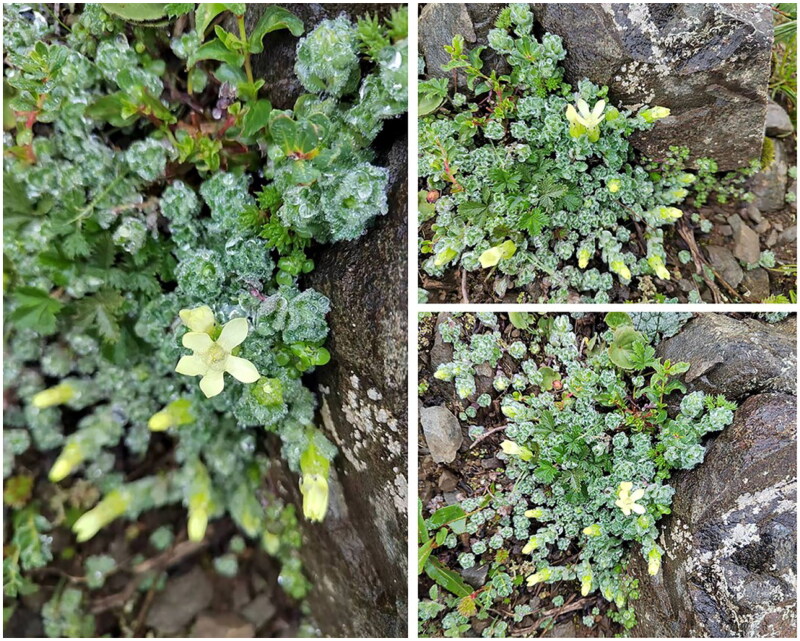 Figure 1
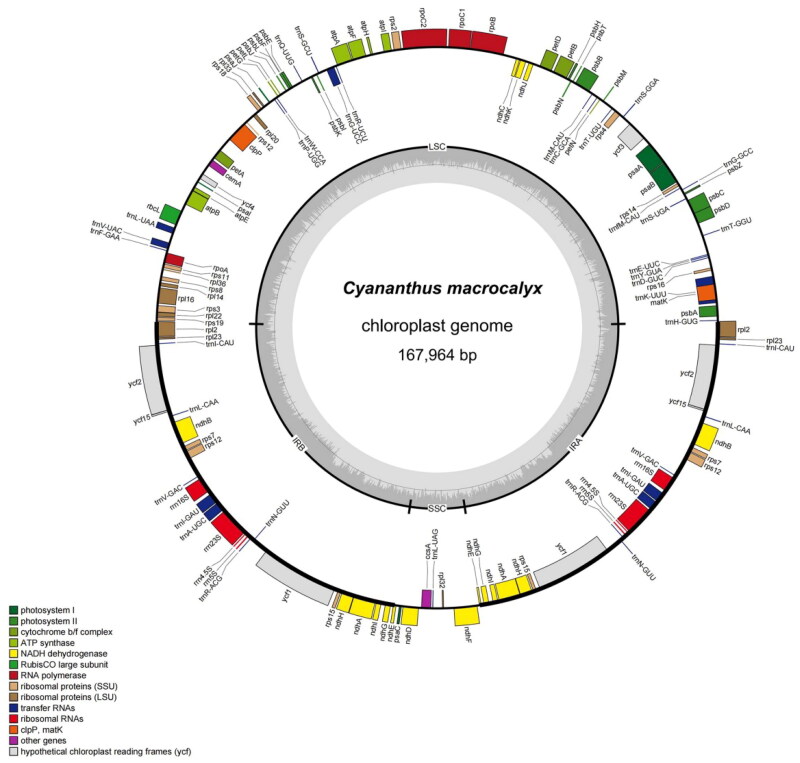 Figure 2
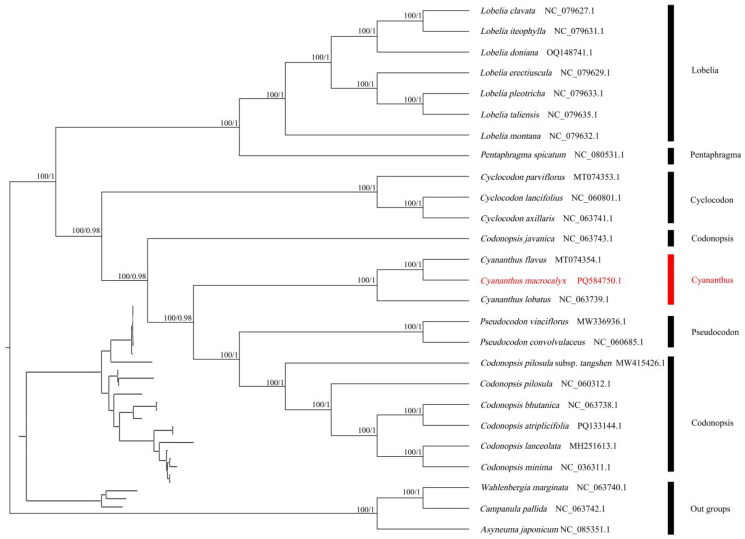 Figure 3
- —National Natural Science Foundation of China10.13039/501100001809
- —Natural Science Foundation of Yunnan Province of China
- —Yunnan Key Laboratory of Screening and Research on Anti-pathogenic Plant Resources from Western Yunnan
Peer Reviews
No public reviews on file for this paper yet. If you reviewed it on a platform where reviews are public (OpenReview, ICLR, NeurIPS, ICML), you can paste yours below so the community can read it here.
Videos
No videos yet. Explain this paper in a talk, walkthrough, or lecture? Add one.
Taxonomy
TopicsPlant Diversity and Evolution · Genomics and Phylogenetic Studies · Photosynthetic Processes and Mechanisms
Introduction
The genus Cyananthus of the family Campanulaceae is classified as an annual and perennial herb (Hong and Ma 1991). It comprises about 18 species worldwide and 17 species in China (Hong et al. 2011), is an endemic genus of the Himalayan and the Hengduan Mountains (Zhou et al. 2013). The genus Cyananthus has significant pharmacological value. For example, C. incanus and C. hookeri are used to treat damp-heat (Lin and Huang 1989). The whole herb of C. inflatus was used as a medicine to treat infantile convulsion and rheumatic disorder (Lin and Huang 1989).
Cyananthus originated in the Kan-Dian ancient landmass (which is presently in Western Sichuan and Northwest Yunnan, covering almost the entire range of the Hengduan Mountains) in the early Tertiary (Hong and Ma 1991), and was adapted to the Himalayan region following the uplift of the Tibetan Plateau in the middle and late Tertiary (Zhou et al. 2013). Cyananthus was one of the most primitive genera in the Campanulaceae, for its special flower character (Hong and Ma 1991; Hong 1995). However, only two species (C. flavus and C. lobatus) of complete chloroplast genome data have been deposited in NCBI so far and the chloroplast genome of C. macrocalyx has not been reported. In this study, the chloroplast genome of C. macrocalyx was successfully assembled and analyzed, aiming to provide evidence for further studies on Cyananthus in species identification, phylogeny, and species conservation.
Materials and methods
Sampling
2.1.
Fresh leaves of Cyananthus macrocalyx were collected from Baima Mountain (Deqin, Yunnan, China; coordinates: 28°20′10.896″N, 99°4′58.332″E) by Dr. Yong-Zeng Zhang (Figure 1), and subsequently desiccated using silica gel. The voucher specimen has been archived in the Key Laboratory of Screening and Research on Anti-pathogenic Plant Resources from Western Yunnan (voucher code 20230724-4, Yong-Zeng Zhang, [email protected]).
Cyananthus macrocalyx. The photo was taken by Yong-Zeng Zhang in Baima Mountain, Yunnan, China. The flowers are yellow-green and solitary at the stem apex, with leaves usually opposite or alternate, and four or five leaves clustered in a whorled arrangement beneath the flower.
DNA extraction and sequencing
2.2.
Chloroplast genomic DNA was isolated with a modified CTAB method (Doyle 1987). DNA quality and concentration were assessed by 1% agarose gel electrophoresis and spectrophotometry (Bio-Rad, Hercules, CA). The DNA was sheared to obtain a fragment of approximately 350 bp for library construction. Sequencing of DNA libraries on the DNBSEQ-T7 sequencing platform. The fastp v0.23.2 (Chen 2023) was then used to remove low-quality sequences. The sequencing depth coverage was conducted by Samtools (Li et al. 2009). The entire sequencing process was carried out by Benagen Technology (Wuhan, China).
Assembly and annotation
2.3.
We performed a de novo assembly of the complete chloroplast genome of Cyananthus macrocalyx. The complete chloroplast genome was assembled using GetOrganelle v1.7.5 (Jin et al. 2020). The chloroplast complete genome was annotated using CPGAVAS2 (Shi et al. 2019), and the chloroplast genome map was visualized using OGDRAW (Greiner et al. 2019). Each annotation error of the chloroplast genome was manually modified and corrected using CPGView (Liu et al. 2023) and Apollo (Lewis et al. 2002). Finally, we submitted the annotated genomic sequence to GenBank with the accession number PQ584750.1.
Repeat sequence analysis
2.4.
The repeated sequence of Cyananthus macrocalyx was analyzed using microsatellite (Beier et al. 2017), tandem repeats finder (Benson 1999), and REPuter (Kurtz et al. 2001), respectively.
Phylogenetic analysis
2.5.
To investigate the phylogenetic relationships of Cyananthus macrocalyx, the chloroplast complete genomes of 25 species of the family Campanulaceae were downloaded from the NCBI database, and Wahlenbergia marginata, Campanula pallida, and Asyneuma japonicum were selected as outgroups for analysis. Phylogenetic analyses were performed using maximum-likelihood (ML) and Bayesian inference (BI) methods. All the sequences were aligned using MAFFT v7.313 (Katoh and Standley 2013) and automatic alignment trimming sequences with Trimal v1.4 (Capella-Gutiérrez et al. 2009). Based on ModelFinder (Kalyaanamoorthy et al. 2017) in PhyloSuite v1.2.3 (Zhang et al. 2020), the best model for ML was filtered: GTR + I + G4 and BI best model: GTR + F + I + G. IQ-tree 2.2.0 (Nguyen et al. 2015) was used to construct a phylogenetic tree with 1000 bootstraps based on the ML method (Minh et al. 2013). Bayesian inference phylogeny (two parallel runs, 1,000,000 generations) based on MrBayes v3.2.7 (Ronquist et al. 2012), where an initial 25% of the sampled data was discarded as burn-in data. The phylogenetic tree was visualized using Figtree v1.4.4 (Rambaut 2018).
Results
The chloroplast complete genome of Cyananthus macrocalyx exhibited a typical quadripartite structure, which was 167,964 bp in length with 37.95% GC content (Figure 2). The minimum and average read mapping depths were 465× and 9735.42× (Figure S1). The chloroplast complete genome consisted of a large single-copy region (LSC) of 82,884 bp, a small single-copy (SSC) region of 8118 bp, and a pair of inverted repeat regions (IRA and IRB) of 76,962 bp (Figure 2). A total of 112 genes were annotated, including 78 protein-coding, 30 transfer RNA (tRNA), and four rRNA genes. In the genome, seven protein-coding genes (ndhA, ndhB, rpl2, rpl16, petB, petD, and atpF) and six tRNA genes (trnA-UGC, trnG-UCC, trnI-GAU, trnK-UUU, trnL-UAA, and trnV-UAC) contain an intron. In addition, three genes (ycf3, clpP, and rps12) contain two introns (Table S1). Notably, the chloroplast genome contained nine cis-splicing genes (Figure S2) and one trans-splicing gene (Figure S3). In addition, 54 simple sequence repeats (SSRs) were detected, containing monomeric (22), dimeric (12), trimeric (7), tetrameric (8), pentameric (2), and hexameric (3) and long sequence repeats (LSRs) containing 641 forward repeats, 618 palindromic repeats, 12 reverse repeats, and 13 complement repeats (Figure S4).
Circular map of the Cyananthus macrocalyx chloroplast genome. Genes shown inside the circle are transcribed clockwise, those outside the circle are counterclockwise transcribed. The light grey and the darker grey in the inner circle represent AT and GC content, respectively. Different functional groups of genes are signed according to the colored boxes. LSC: large single copy; SSC: small single copy; IRA/IRB: inverted repeat regions.
ML and BI trees indicate the phylogenetic relationships of Cyananthus macrocalyx within the Campanulaceae family. The phylogenetic analysis showed that the species of Campanulaceae and three outgroup species each form a highly supported monophyletic group (Figure 3). Three species of Cyananthus formed a strongly monophyletic clade and C. macrocalyx and C. flavus were sister species to each other (Figure 3).
Maximum-likelihood (ML) and Bayesian inference (BI) phylogenetic tree based on the complete chloroplast genome sequence of 26 species from the Campanulaceae. Number above nodes are support values with ML bootstrap (BS) values on the left and BI posterior probabilities (PPs) values on the right. The sequences used for constructing the phylogenetic tree are as follows: Cyananthus macrocalyx PQ584750.1, Cyananthus flavus MT074354.1 (Li et al. 2020), Cyananthus lobatus NC_063739.1, Cyclocodon parviflorus MT074353.1 (Li et al. 2020), Cyclocodon lancifolius NC_060801.1 (Shang et al. 2020), Cyclocodon axillaris NC_063741.1, Codonopsis bhutanica NC_063738.1, Codonopsis javanica NC_063743.1, Codonopsis atriplicifolia PQ133144.1, Codonopsis pilosula subsp. tangshen MW415426.1, Pseudocodon convolvulaceus NC_060685.1, Codonopsis minima NC_036311.1 (Cheon et al. 2017), Codonopsis pilosula NC_060312.1, Codonopsis lanceolata MH251613.1, Lobelia clavata NC_079627.1, Lobelia iteophylla NC_079631.1 (Li et al. 2023), Lobelia doniana OQ148741.1 (Li et al. 2023), Lobelia montana NC_079632.1 (Li et al. 2023), Lobelia taliensis NC_079635.1 (Li et al. 2023), Lobelia erectiuscula NC_079629.1 (Li et al. 2023), Lobelia pleotricha NC_079633.1 (Li et al. 2023), Pentaphragma spicatum NC_080531.1 (Cheng et al. 2023), Pseudocodon vinciflorus MW336936.1, Wahlenbergia marginata NC_063740.1, Campanula pallida NC_063742.1, and Asyneuma japonicum NC_085351.1. The chloroplast genomes of Cyananthus macrocalyx in this study were labeled in red color.
Discussion and conclusions
In this study, the complete chloroplast genomes of C. macrocalyx were reported for the first time and contained 112 unique genes, including 78 protein-coding genes, 30 tRNA genes, and four rRNA genes. The chloroplast genome of C. macrocalyx is similar in character to that of C. flavus and C. lobatus, suggesting that Cyananthus chloroplast genomes are relatively evolutionarily conserved. Moreover, a total of 54 SSRs were detected in the chloroplast genome of the C. macrocalyx. Among them, the mononucleotide was the most abundant, and dominated by adenine (A) and thymine (T). This indicates the preference of A and T bases for SSR in the Cyananthus.
The phylogenetic analysis showed that three species of Cyananthus are clustered into a single group, and C. macrocalyx is more closely related to C. flavus, which is similar to the work of Zhou et al. (2013). In addition, our results of the relationship of Pseudocodon and Codonopsis, and classification of P. vinciflorus and P. convolvulaceus were similar to Wang and Hong (2015). It is worth noting that Codonopsis javanica was not clustered in Codonopsis (Figure 3), indicating that Codonopsis needs to be further studied. All in all, our study enriches the molecular biological resources of Cyananthus and provides evidence for further species identification, resource conservation and systematic evolution of Cyananthus.
Supplementary Material
supplementary material clean copy.docx
The reference list from the paper itself. Each links out to its DOI / PubMed record.
- 1Beier S, Thiel T, Münch T, Scholz U, Mascher M. 2017. MISA-web: a web server for microsatellite prediction. Bioinformatics. 33(16):2583–2585. doi:10.1093/bioinformatics/btx 198.28398459 PMC 5870701 · doi ↗ · pubmed ↗
- 2Benson G. 1999. Tandem repeats finder: a program to analyze DNA sequences. Nucleic Acids Res. 27(2):573–580. doi:10.1093/nar/27.2.573.9862982 PMC 148217 · doi ↗ · pubmed ↗
- 3Capella-Gutiérrez S, Silla-Martínez JM, Gabaldón T. 2009. trim Al: a tool for automated alignment trimming in large-scale phylogenetic analyses. Bioinformatics. 25(15):1972–1973. doi:10.1093/bioinformatics/btp 348.19505945 PMC 2712344 · doi ↗ · pubmed ↗
- 4Chen S. 2023. Ultrafast one-pass FASTQ data preprocessing, quality control, and deduplication using fastp. Imeta. 2(2):e 107. doi:10.1002/imt 2.107.38868435 PMC 10989850 · doi ↗ · pubmed ↗
- 5Cheng Z, Yu B, Huang X, Bin Z, Liu SZ, Chi Z. 2023. The first complete chloroplast genome sequence of Pentaphragma spicatum Merr. (Pentaphragmataceae) and phylogenetic analysis. Mitochondrial DNA B Resour. 8(12):1368–1372. doi:10.1080/23802359.2023.2290339.38196793 PMC 10776070 · doi ↗ · pubmed ↗
- 6Cheon KS, Kim KA, Han JS, Yoo KO. 2017. The complete chloroplast genome sequence of Codonopsis minima (Campanulaceae), an endemic to Korea. Conserv Genet Resour. 9(4):541–543. doi:10.1007/s 12686-017-0718-0. · doi ↗
- 7Doyle J. 1987. A rapid DNA isolation procedure for small quantities of fresh leaf tissue. Phytochem Bull. 19(1):11–15.
- 8Greiner S, Lehwark P, Bock R. 2019. Organellar Genome DRAW (OGDRAW) version 1.3.1: expanded toolkit for the graphical visualization of organellar genomes. Nucleic Acids Res. 47(W 1):W 59–W 64. doi:10.1093/nar/gkz 238.30949694 PMC 6602502 · doi ↗ · pubmed ↗