Chitosan-supported CuI-catalyzed cascade reaction of 2-halobenzoic acids and amidines for the synthesis of quinazolinones
Xuhong Zhao, Weishuang Li, Mengli Yang, Bojie Li, Yaoyao Zhang, Lizhen Huang, Lei Zhu

TL;DR
A new catalyst made from chitosan and copper helps efficiently create quinazolinones from specific acids and amidines under mild conditions.
Contribution
A chitosan-supported CuI catalyst enables efficient quinazolinone synthesis with high yields and broad substrate scope.
Findings
The CS@CuI catalyst achieves up to 99% yield in quinazolinone synthesis.
The reaction works under mild conditions with a broad range of substrates (30 examples).
Abstract
A chitosan-supported CuI (CS@CuI) catalyst was developed for the synthesis of quinazolinones from 2-halobenzoic acids (including iodine and bromine) and amidines. The reaction proceeds under mild reaction conditions, demonstrating a broad substrate scope (30 examples) and good catalytic efficiency (up to 99% yield).
Genes, proteins, chemicals, diseases, species, mutations and cell lines named across the full text — each resolved to its canonical identifier and authoritative record.
Click any figure to enlarge with its caption.
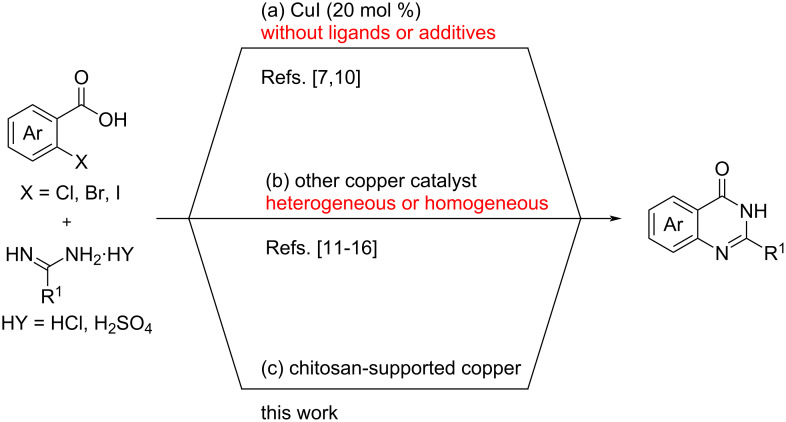 Figure 1
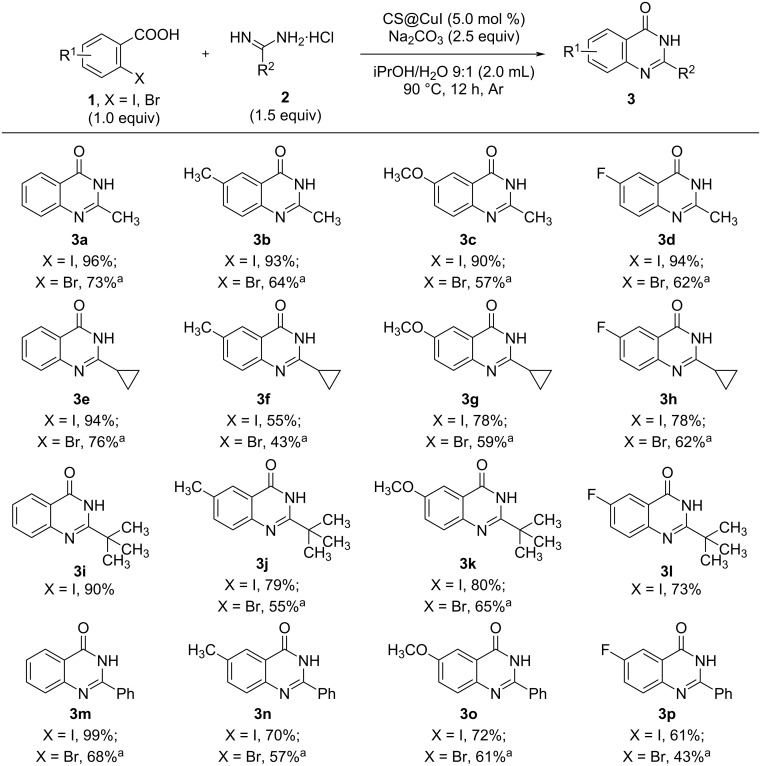 Figure 2
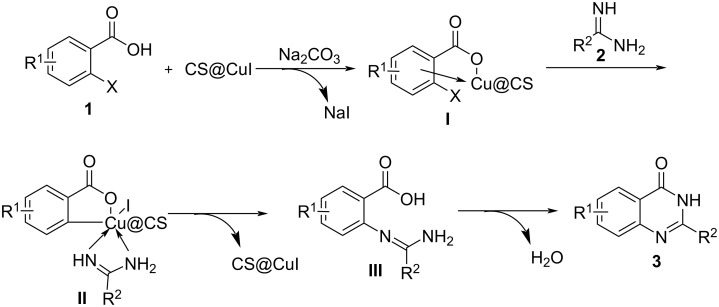 Figure 3
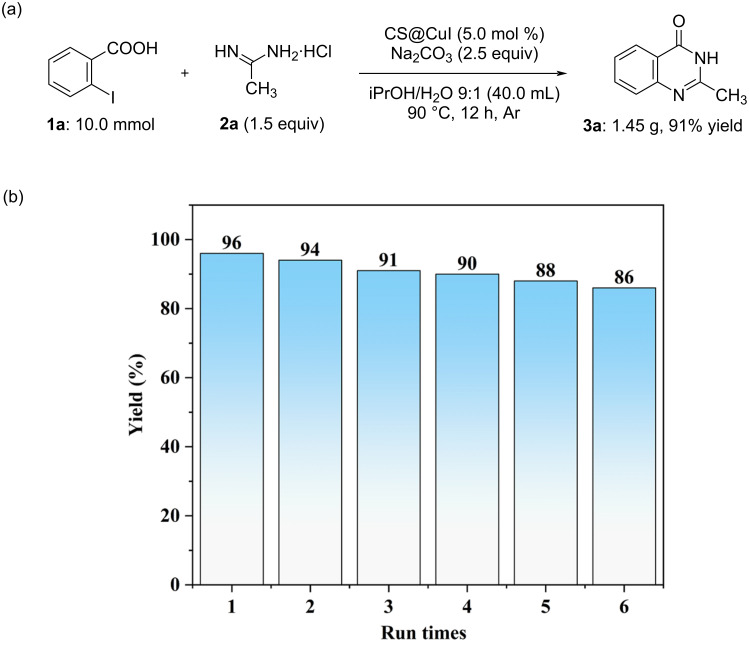 Figure 4
 Figure 5
Peer Reviews
No public reviews on file for this paper yet. If you reviewed it on a platform where reviews are public (OpenReview, ICLR, NeurIPS, ICML), you can paste yours below so the community can read it here.
Videos
No videos yet. Explain this paper in a talk, walkthrough, or lecture? Add one.
Taxonomy
TopicsQuinazolinone synthesis and applications · Synthesis and Biological Evaluation · Microwave-Assisted Synthesis and Applications