Differential Induction of Endoplasmic Reticulum Stress Signaling by Antibody Isotypes: Implications for Plasma Cell Differentiation
Kunie Obayashi, Tomomitsu Doi, Kazuhiro Sumida, Motoyoshi Endo

TL;DR
IgE antibodies cause more endoplasmic reticulum stress than IgG1, which may influence how plasma cells develop.
Contribution
The study identifies the Cε3 domain of IgE as a key driver of ER stress through enhanced BiP binding.
Findings
IgE induces stronger ER stress compared to IgG1 due to its Cε3 domain.
IRE1-XBP1 signaling links ER stress to plasma cell differentiation.
IgE's unique properties suggest specific roles in immune responses.
Abstract
IgE induces stronger ER stress than IgG1 due to its constant region, particularly the Cε3 domain, which binds BiP more efficiently. Genetic and structural analyses confirmed IgE's higher BiP‐binding capacity. ER stress, driven by IRE1‐XBP1 signaling, regulates plasma cell differentiation, suggesting IgE‐specific mechanisms in immune responses.
Genes, proteins, chemicals, diseases, species, mutations and cell lines named across the full text — each resolved to its canonical identifier and authoritative record.
Click any figure to enlarge with its caption.
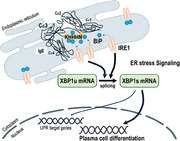 Figure 1
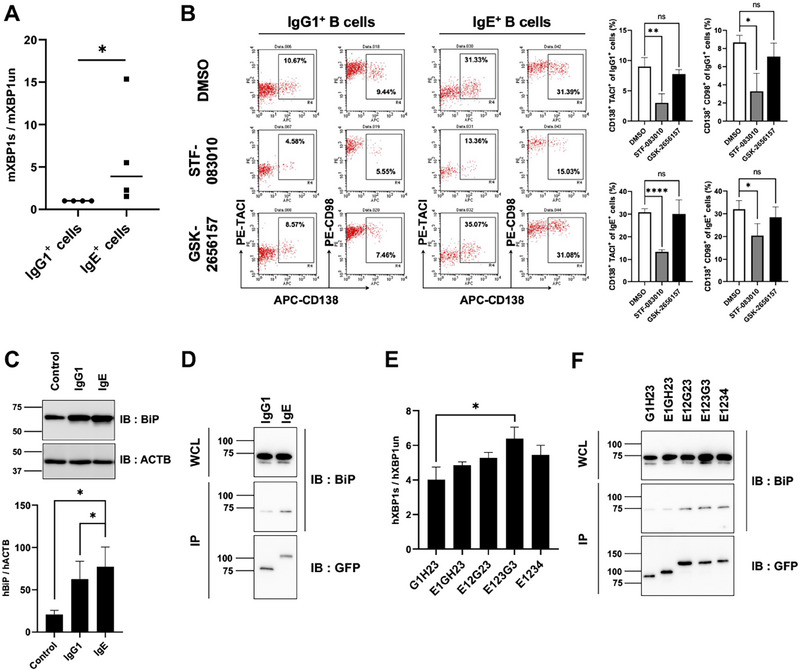 Figure 2
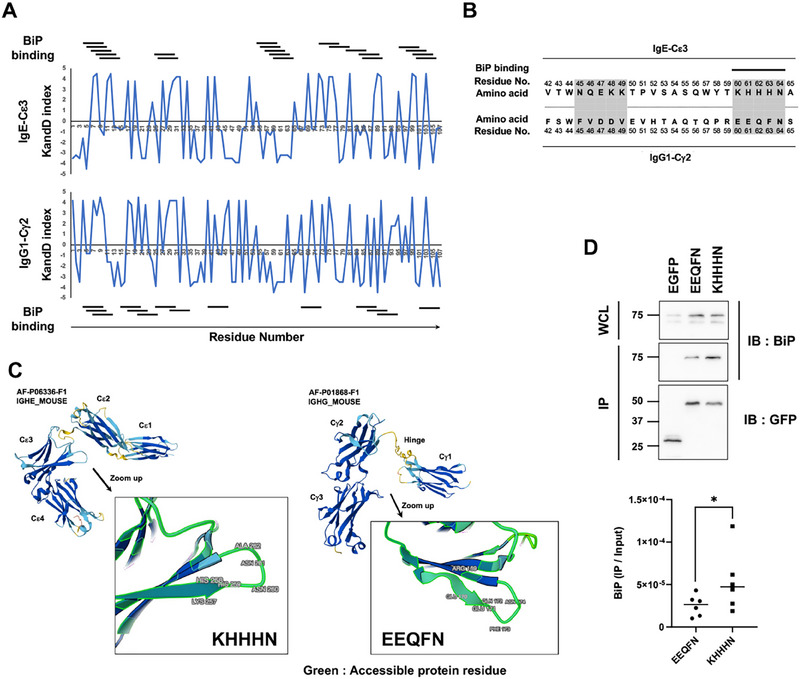 Figure 3
Peer Reviews
No public reviews on file for this paper yet. If you reviewed it on a platform where reviews are public (OpenReview, ICLR, NeurIPS, ICML), you can paste yours below so the community can read it here.
Videos
No videos yet. Explain this paper in a talk, walkthrough, or lecture? Add one.
Taxonomy
TopicsEndoplasmic Reticulum Stress and Disease · Heat shock proteins research · Ion Channels and Receptors