Appropriate Distraction Strength for Metatarsophalangeal Joint Arthroscopy
Jong-Kil Kim, Kwang-Bok Lee, Do-Yeon Kim

TL;DR
This study determines the optimal distraction force for metatarsophalangeal joint arthroscopy based on joint size and gender differences.
Contribution
The study identifies specific distraction forces for different MTP joints and highlights gender-based variations in joint space.
Findings
MTP-2 joint has the largest natural joint size, while MTP-5 has the smallest.
A 10 lb traction is sufficient for MTP-1 and MTP-4 joints during arthroscopy.
Males have significantly larger joint space sizes than females for MTP-1 and MTP-4 joints.
Abstract
Background and Objectives: To investigate the natural metatasophalangeal (MTP) joint distance, we studied the appropriate degree of distraction for arthroscopy and the associated factors, including age, gender, and body mass index (BMI). Materials and Methods: Sixty-seven patients who underwent MTP joint arthroscopy or foot and ankle surgery from April 2013 to June 2020 were enrolled. Foot plain radiographs were taken using a mini-fluoroscan with no traction, manual traction, and traction of 5 pounds, 10 pounds, and 15 pounds to measure the MTP joint distance. Age, gender, and BMI were compared as associated factors. The minimum joint distance of MTP joint arthroscopy was defined as 2.8 mm, which was the sheath size of a 1.9 mm, 30° high-definition arthroscope. Results: Regarding natural MTP joint space sizes, the MTP-2 joint had the largest joint size (2.39 ± 0.37 mm). The MTP-5 joint…
Genes, proteins, chemicals, diseases, species, mutations and cell lines named across the full text — each resolved to its canonical identifier and authoritative record.
Click any figure to enlarge with its caption.
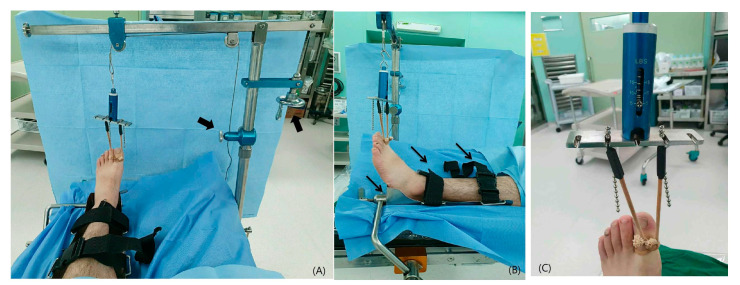 Figure 1
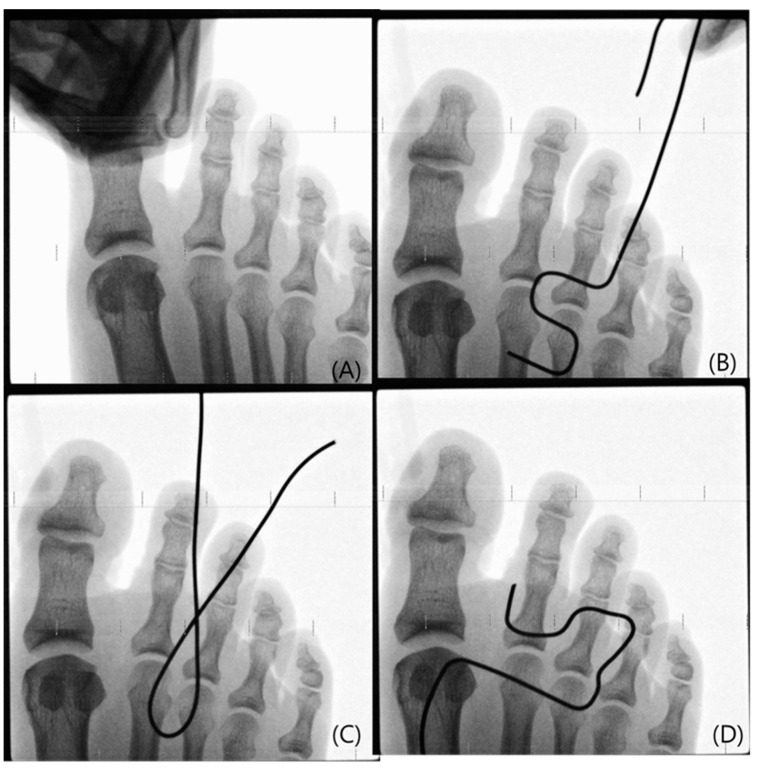 Figure 2
Peer Reviews
No public reviews on file for this paper yet. If you reviewed it on a platform where reviews are public (OpenReview, ICLR, NeurIPS, ICML), you can paste yours below so the community can read it here.
Videos
No videos yet. Explain this paper in a talk, walkthrough, or lecture? Add one.
Taxonomy
TopicsFoot and Ankle Surgery · Tendon Structure and Treatment · Lower Extremity Biomechanics and Pathologies