CPDP: Contrastive Protein–Drug Pre-Training for Novel Drug Discovery
Shihan Zhang, Xiaoqi Wang, Fei Li, Shaoliang Peng

TL;DR
CPDP is a new method that improves the prediction of drug-target interactions, especially for novel drugs, using contrastive learning and multi-dimensional representations.
Contribution
CPDP introduces a novel pre-training framework that enables zero-shot learning for drug discovery using contrastive learning and multi-dimensional representations.
Findings
CPDP achieves high accuracy in predicting drug-target interactions for novel drugs not seen in training data.
The model shows strong generalization and maintains effectiveness for traditional drug repositioning tasks.
Contrastive learning enhances the alignment of protein and drug representations, improving prediction performance.
Abstract
Novel drug discovery and repositioning remain critical challenges in biomedical research, requiring accurate prediction of drug–target interactions (DTIs). We propose the CPDP framework, which builds upon existing biomedical representation models and integrates contrastive learning with multi-dimensional representations of proteins and drugs to predict DTIs. By aligning the representation space, CPDP enables GNN-based methods to achieve zero-shot learning capabilities, allowing for accurate predictions of unseen drug data. This approach enhances DTI prediction performance, particularly for novel drugs not included in the BioHNs dataset. Experimental results demonstrate CPDP’s high accuracy and strong generalization ability in predicting novel biological entities while maintaining effectiveness for traditional drug repositioning tasks.
Genes, proteins, chemicals, diseases, species, mutations and cell lines named across the full text — each resolved to its canonical identifier and authoritative record.
Click any figure to enlarge with its caption.
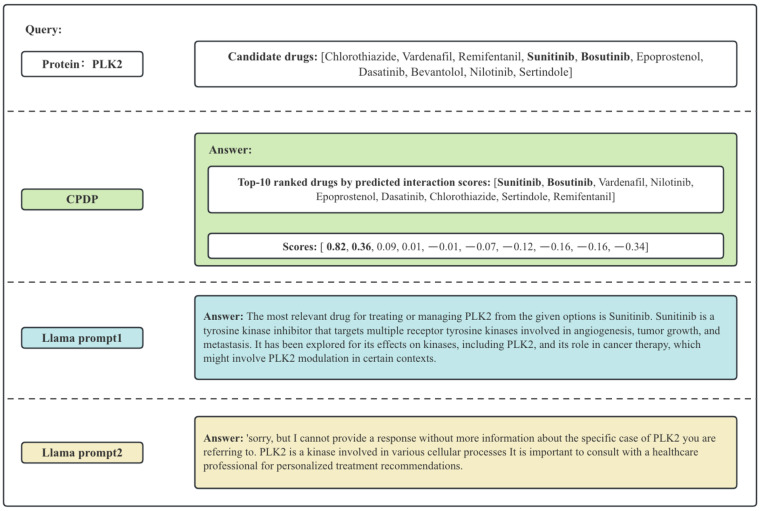 Figure 1
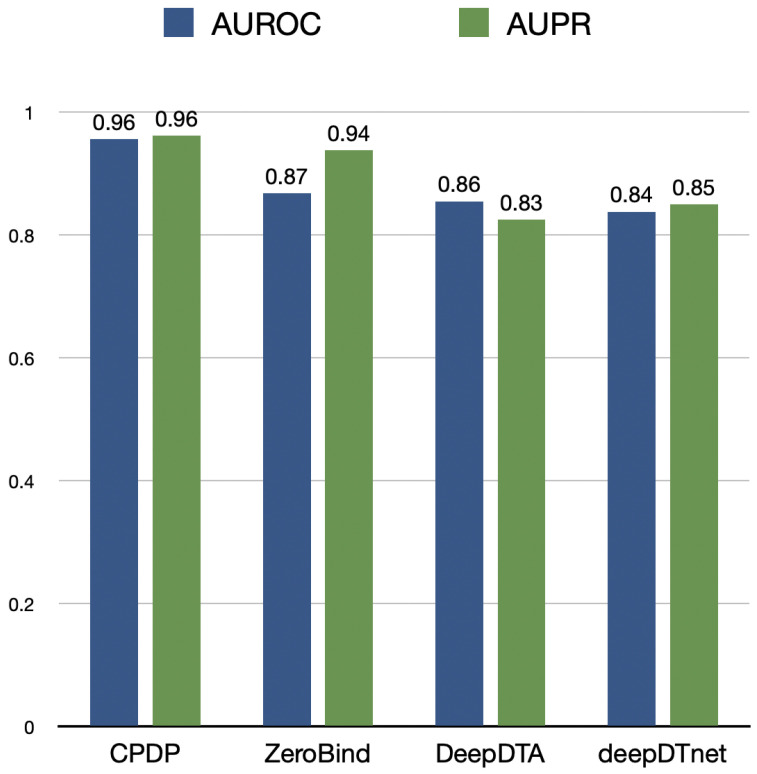 Figure 2
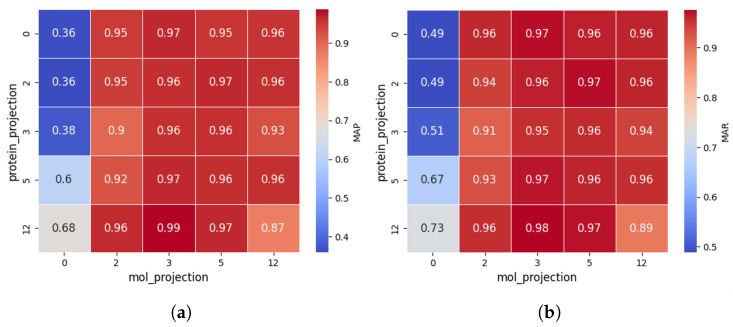 Figure 3
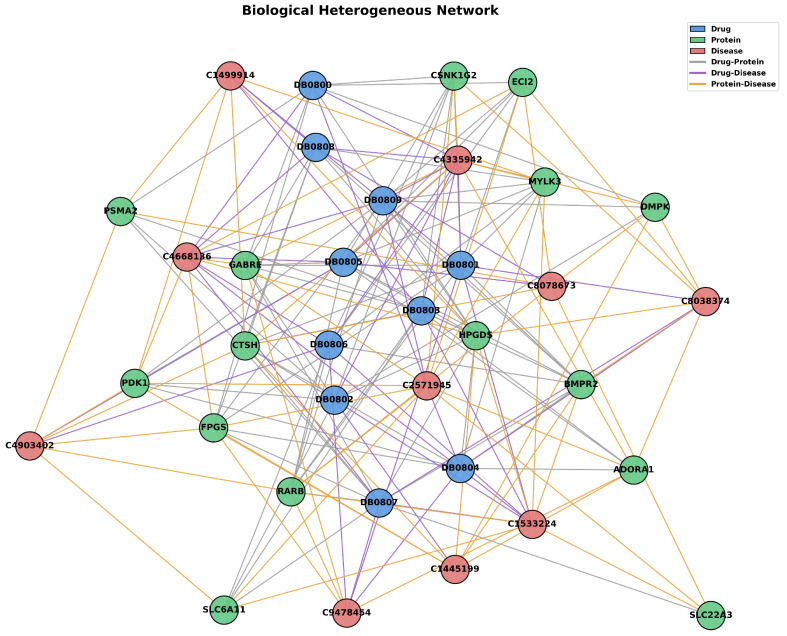 Figure 4
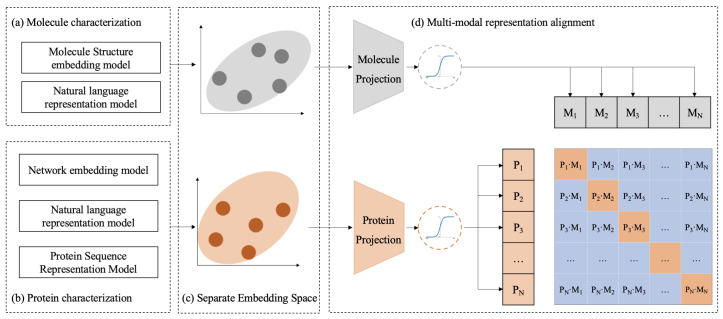 Figure 5
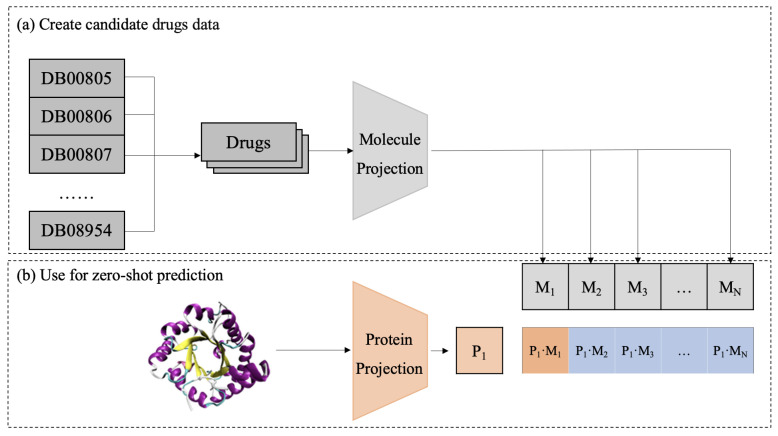 Figure 6
Peer Reviews
No public reviews on file for this paper yet. If you reviewed it on a platform where reviews are public (OpenReview, ICLR, NeurIPS, ICML), you can paste yours below so the community can read it here.
Videos
No videos yet. Explain this paper in a talk, walkthrough, or lecture? Add one.
Taxonomy
TopicsComputational Drug Discovery Methods · Genetics, Bioinformatics, and Biomedical Research · Bioinformatics and Genomic Networks