Characterization of Individuals with High-Frequency Artificial Tear Supplement Use
Wan-Lin Wu, Shu-Wen Chang

TL;DR
This study identifies factors linked to frequent use of artificial tears in dry eye patients and finds that high users have worse symptoms and more severe eye conditions.
Contribution
The study identifies specific clinical parameters and symptom scores associated with high-frequency artificial tear use in dry eye patients.
Findings
High users had significantly higher symptom scores and more severe corneal staining compared to low users.
High users were more likely to receive cyclosporine treatment during follow-up.
Environmental triggers may contribute to hyperalgesia in high users.
Abstract
Objectives: We aimed to investigate dry eye parameters as potential predisposing factors and estimate the prevalence of high-frequency topical eye drop usage. Methods: A total of 5594 dry eye patients treated between November 2015 and June 2022 were included. High users (n = 180) were those who applied at least one artificial tear drop per hour, whereas those who used artificial tears fewer than four times daily were classified as low users (n = 5414). Differences in self-reported symptoms (OSDI, SPEED questionnaires) and tear-related parameters, including severity of corneal staining (SPK), fluorescein tear-film break-up time (FTBUT), lipid layer thickness (LLT), number of expressible meibomian glands (MGE), meiboscale, and blink patterns, were assessed. Subsequent follow-up comprehensive dry eye assessments were performed at 3 months. Results: There was no difference in age or sex…
Genes, proteins, chemicals, diseases, species, mutations and cell lines named across the full text — each resolved to its canonical identifier and authoritative record.
Click any figure to enlarge with its caption.
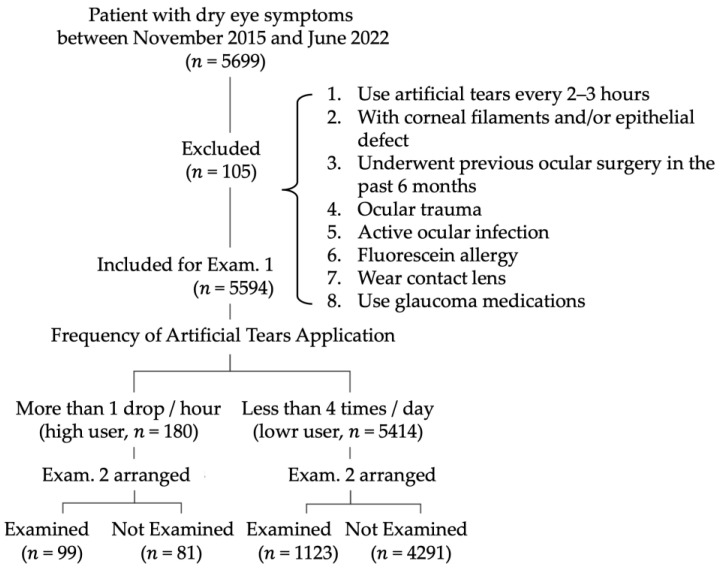 Figure 1
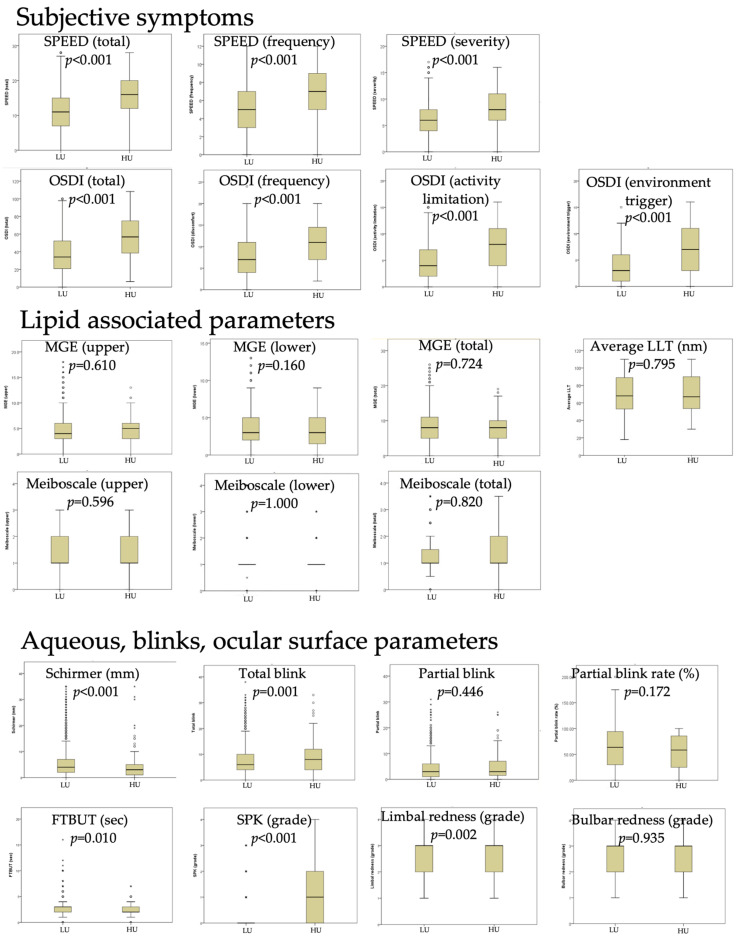 Figure 2
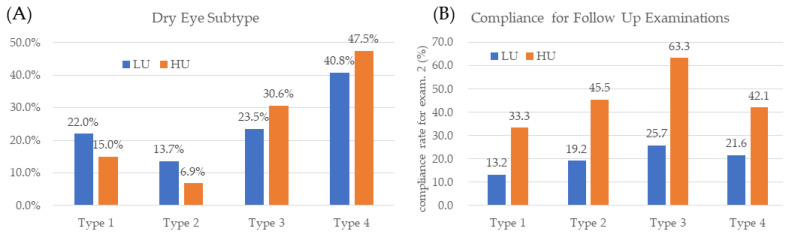 Figure 3
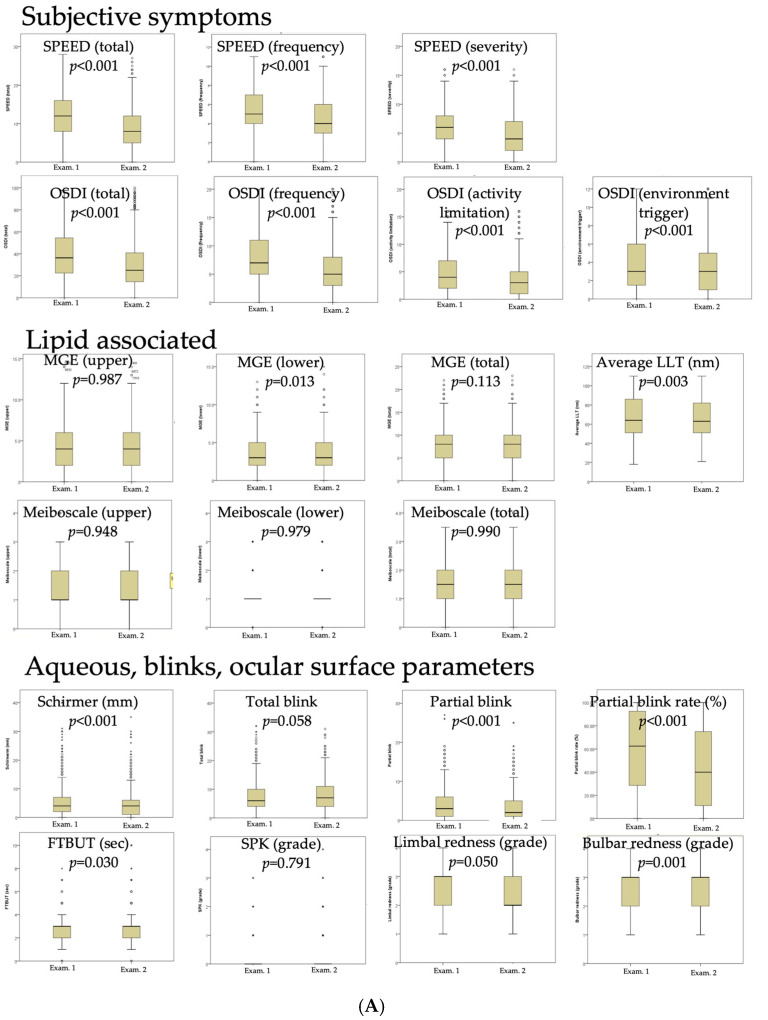 Figure 4
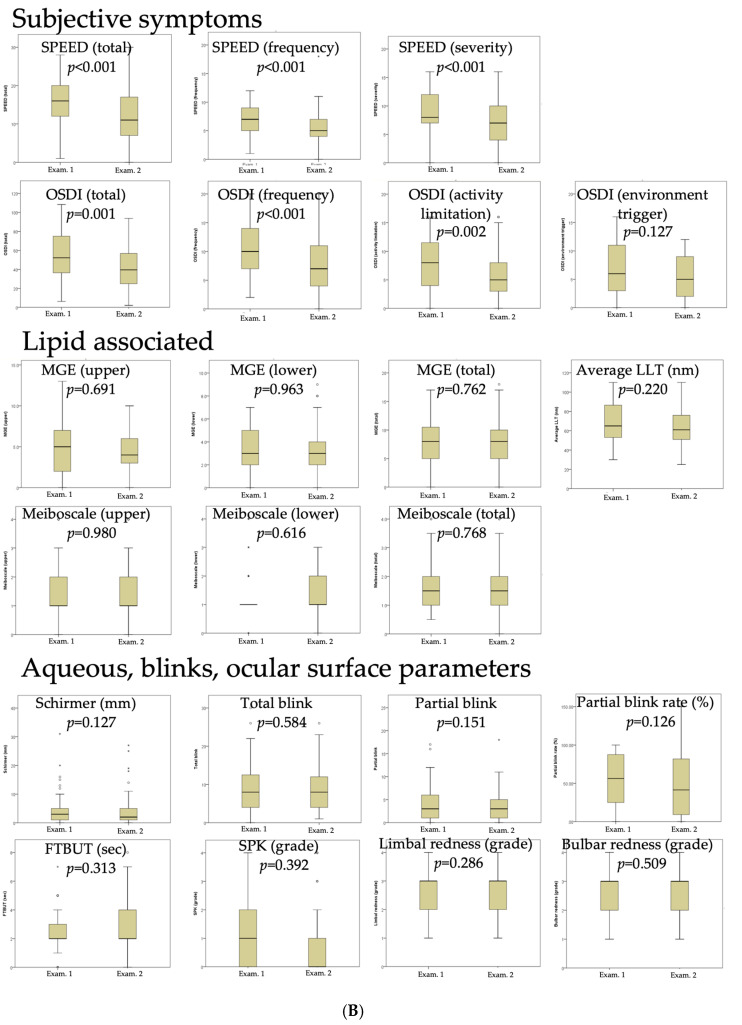 Figure 5
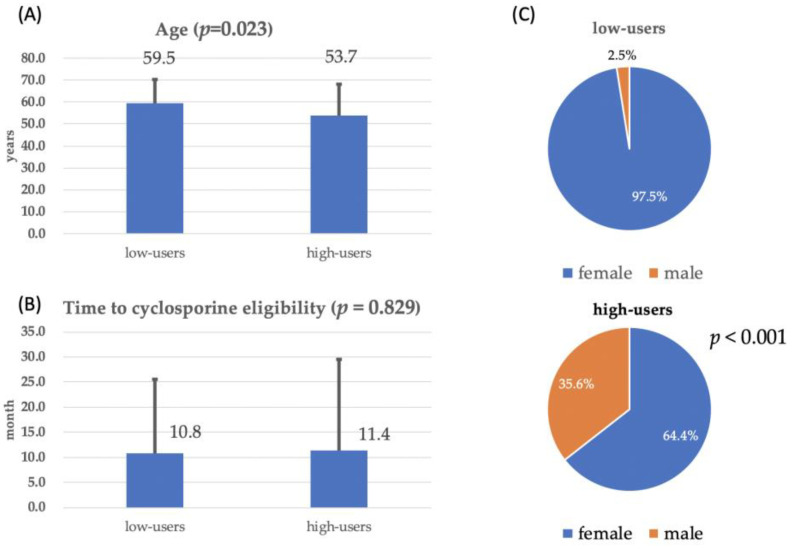 Figure 6
Peer Reviews
No public reviews on file for this paper yet. If you reviewed it on a platform where reviews are public (OpenReview, ICLR, NeurIPS, ICML), you can paste yours below so the community can read it here.
Videos
No videos yet. Explain this paper in a talk, walkthrough, or lecture? Add one.
Taxonomy
TopicsOcular Surface and Contact Lens · Advancements in Transdermal Drug Delivery · Dermatology and Skin Diseases