Utilizing Balance Assessment Tools by Physical Therapists for Patients with Balance Disorders
Abdulaziz A. Albalwi, Ahmad A. Alharbi, Hamad S. Al Amer, Samia A. Alamrani, Hani F. Albalawi, Maryam K. Alatawi, Wahaj A. Albalawi, Basmah A. Albalawi, Amani M. Qari, Waad A. Alatawi, Jamsheed Javid

TL;DR
This study explores how physical therapists in Saudi Arabia use balance assessment tools and finds that some widely validated tools are underused, suggesting a need for better training and standardization.
Contribution
The study identifies underutilized balance assessment tools and links their usage to therapist characteristics, highlighting gaps in clinical practice.
Findings
The Single-Leg Stance is the most commonly used balance assessment tool among physical therapists in Saudi Arabia.
Tools like the Performance-Oriented Mobility Assessment and Mini Balance Evaluation System are significantly underutilized.
Therapist characteristics such as experience and work environment significantly influence tool preferences.
Abstract
Background/Objectives: Physical therapists’ use of various balance assessment tools is essential for accurately identifying deficits and guiding rehabilitation plans. This study aimed to investigate clinical balance assessment practices in Saudi Arabia, examine physical therapists’ preferences for different balance assessment tools, and analyze how participant characteristics—such as age, experience, and practice setting—affect these preferences. Methods: A descriptive cross-sectional study was conducted between April and July 2024 in Saudi Arabia. A total of 194 physical therapists (62.9% male; 45.9% with 1–5 years of experience) who actively manage individuals with balance disorders were recruited using a convenience sampling technique. Data were collected through a self-structured questionnaire. Participants reported their use of balance assessment tools on a six-point Likert scale,…
Genes, proteins, chemicals, diseases, species, mutations and cell lines named across the full text — each resolved to its canonical identifier and authoritative record.
Click any figure to enlarge with its caption.
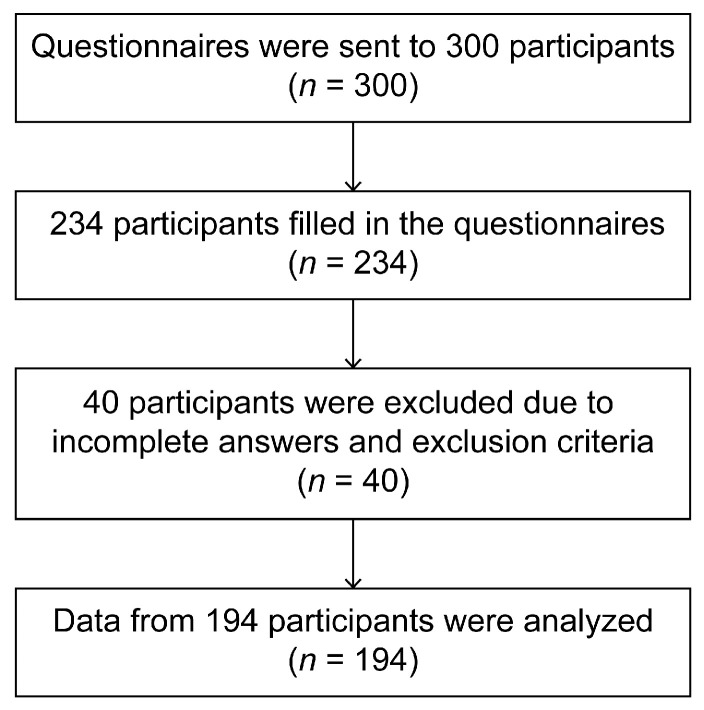 Figure 1
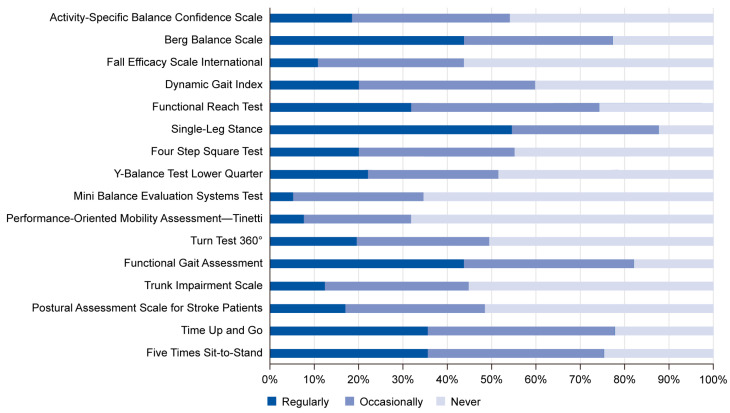 Figure 2
Peer Reviews
No public reviews on file for this paper yet. If you reviewed it on a platform where reviews are public (OpenReview, ICLR, NeurIPS, ICML), you can paste yours below so the community can read it here.
Videos
No videos yet. Explain this paper in a talk, walkthrough, or lecture? Add one.
Taxonomy
TopicsBalance, Gait, and Falls Prevention · Cerebral Palsy and Movement Disorders · Stroke Rehabilitation and Recovery