Psycholinguistic norms for the dominant and secondary names of 700 LinguaPix color photographs in Mandarin Chinese
Ya-Ning Chang, Leqi Cheng, Jie Wang, Yiu-Kei Tsang, Agnieszka Ewa Krautz, Susanna Siu-sze Yeung, Suiping Wang, Hsuan-Chih Chen

TL;DR
This study provides detailed psycholinguistic norms for both the main and secondary names of 700 color images in Mandarin Chinese, enhancing stimulus selection for language research.
Contribution
The study introduces psycholinguistic norms for both dominant and secondary names of images in Mandarin Chinese, a novel approach in picture naming research.
Findings
Psycholinguistic norms for dominant and secondary names of 700 LinguaPix images were established in Mandarin Chinese.
The dataset includes measures like name agreement, latency, and AoA for both dominant and secondary names.
The database is publicly available and allows manipulation of psycholinguistic properties for both name types.
Abstract
Norming studies on picture naming usually identify different correct names for each picture and provide more information on the dominant name (i.e., the most frequently produced name of a given picture) or weighted values based on all the names. The current study is among the first attempts to establish psycholinguistic norms for both the dominant and secondary names of pictures. The following norms in Mandarin Chinese were provided for 700 color photographs from the LinguaPix database: name agreement, naming latency, name length, image agreement, age of acquisition (AoA), and concept familiarity of the dominant and secondary names, as well as overall accuracy, number of names, H-statistic, familiarity, visual complexity, valence, and arousal of the pictures. This dataset increases the diversity of stimuli available for picture naming studies in Chinese and greatly facilitates stimuli…
Genes, proteins, chemicals, diseases, species, mutations and cell lines named across the full text — each resolved to its canonical identifier and authoritative record.
Click any figure to enlarge with its caption.
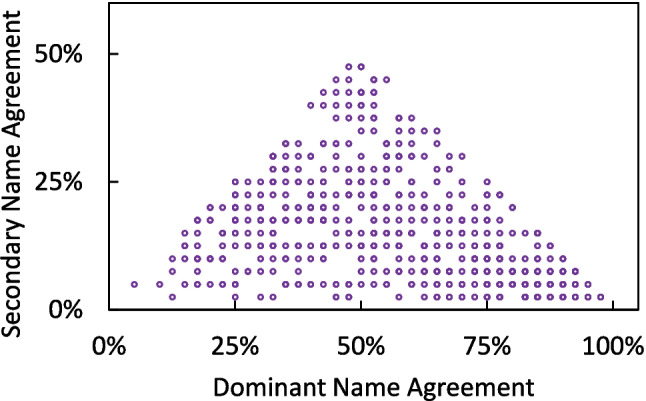 Figure 1
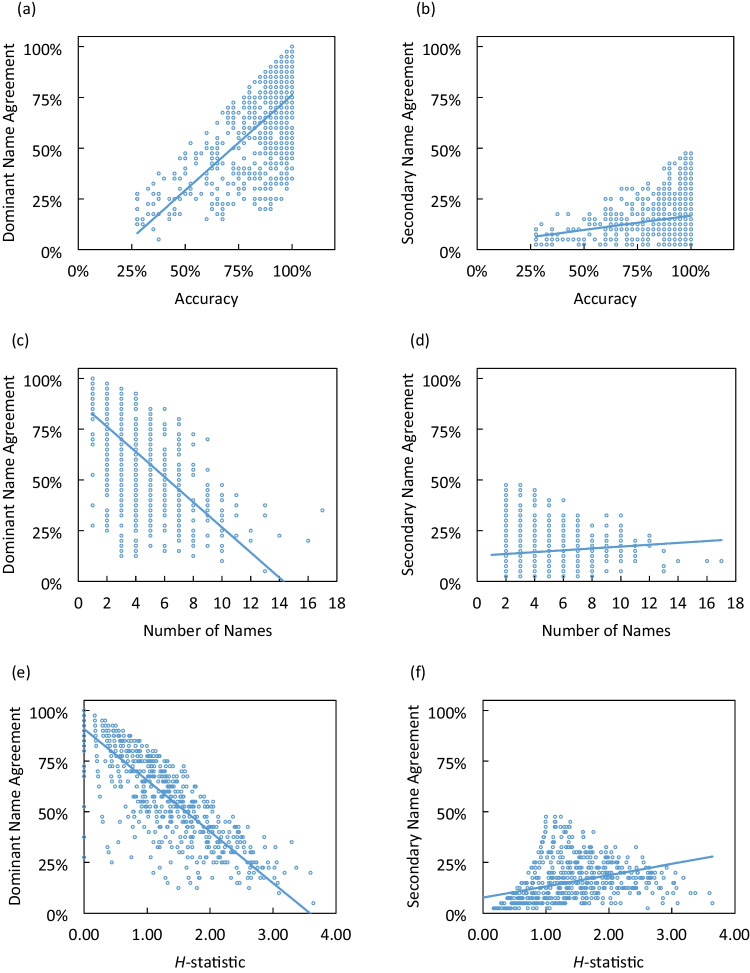 Figure 2
Peer Reviews
No public reviews on file for this paper yet. If you reviewed it on a platform where reviews are public (OpenReview, ICLR, NeurIPS, ICML), you can paste yours below so the community can read it here.
Videos
No videos yet. Explain this paper in a talk, walkthrough, or lecture? Add one.
Taxonomy
TopicsNeurobiology of Language and Bilingualism · Categorization, perception, and language · Second Language Acquisition and Learning