The effects of the DHACA method on expressive communication in children with autism spectrum disorder
Fernanda Cristina de Oliveira Luna Barbosa, Ana Cristina de Albuquerque Montenegro, Bianca Arruda Manchester de Queiroga, Fernanda Cristina de Oliveira Luna Barbosa, Ana Cristina de Albuquerque Montenegro, Bianca Arruda Manchester de Queiroga

TL;DR
This study shows that the DHACA method improves expressive communication in nonverbal or minimally verbal children with autism.
Contribution
The DHACA method is shown to promote verbal communication and complex sentence use in children with autism.
Findings
10 out of 12 children improved their expressive communication after DHACA intervention.
7 children transitioned from nonverbal to verbal communication.
8 children reached a higher communication skill level involving expanded requests.
Abstract
This study aimed to assess the contributions of the DHACA method to expressive communication development in children with autism spectrum disorder (ASD). This longitudinal case series study had a sample of 12 children with ASD, nonverbal or minimally verbal communication, and support level one or two. Data were collected by applying the ACOTEA-R Protocol by analyzing videos recorded during intervention sessions before and after using the DHACA. Participants underwent 20 individual speech-language-hearing sessions with the DHACA. After the intervention with the ACOTEA-R, 10 of the 12 children improved their overall expressive communication skills. Concerning the communicative profile, initially, 10 children were nonverbal and 2 were minimally verbal. After the intervention, 7 evolved to a verbal pattern, whereas 5 remained nonverbal. The progress of the following communication skills…
Genes, proteins, chemicals, diseases, species, mutations and cell lines named across the full text — each resolved to its canonical identifier and authoritative record.
Click any figure to enlarge with its caption.
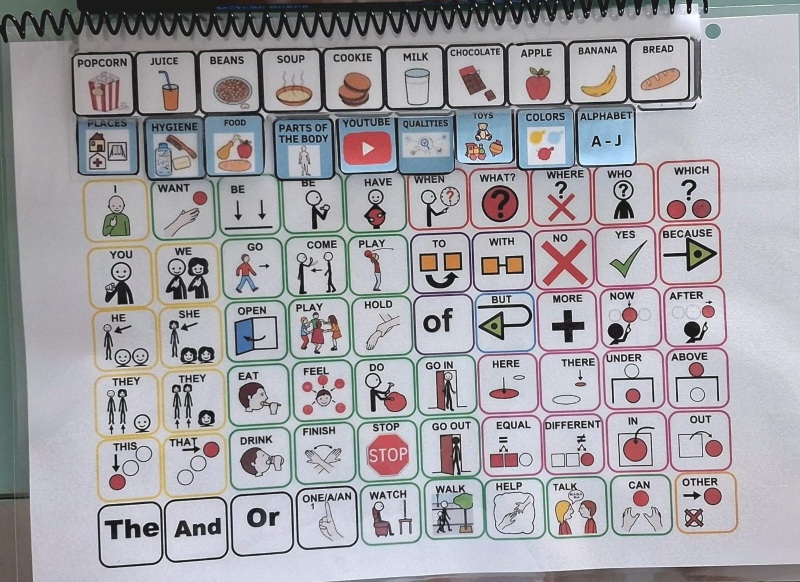 Figure 1
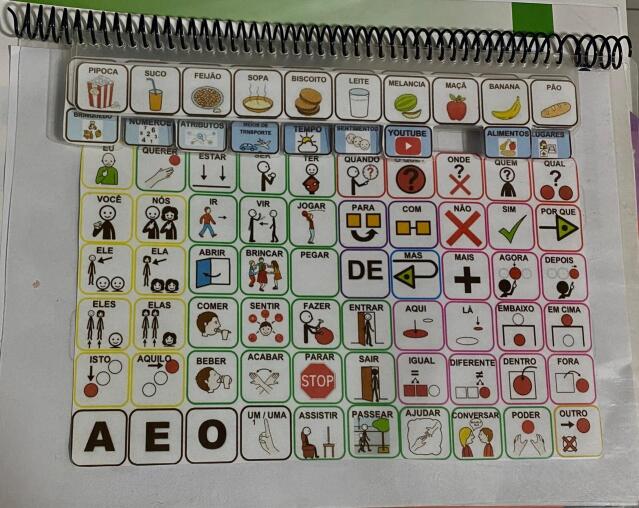 Figure 2
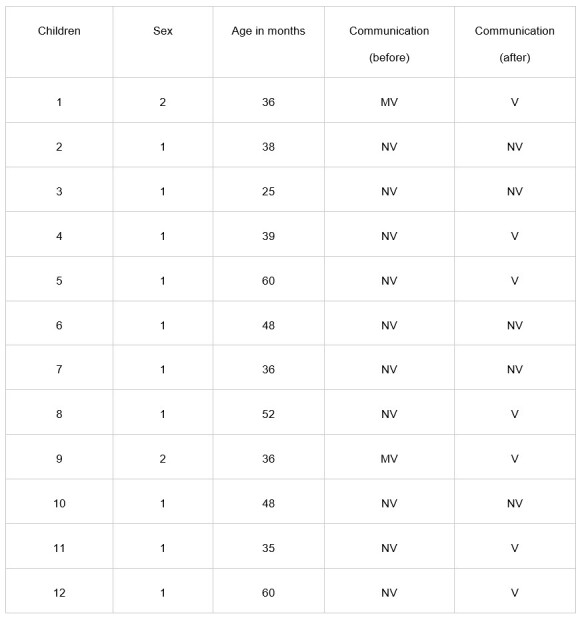 Figure 3
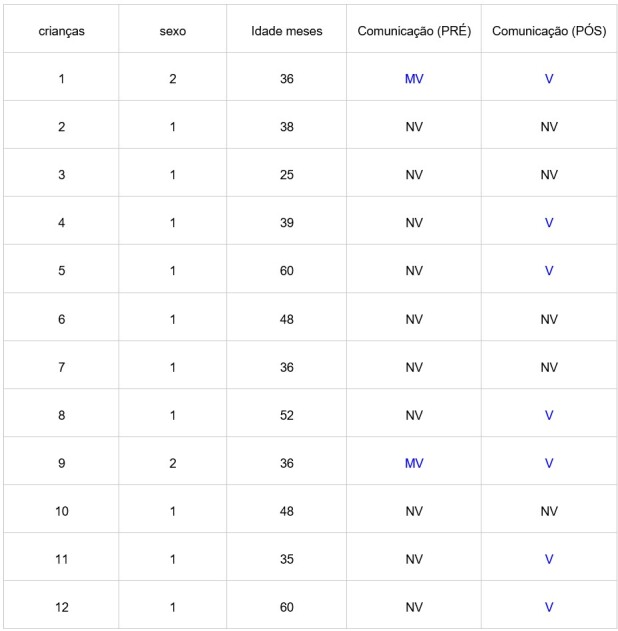 Figure 4
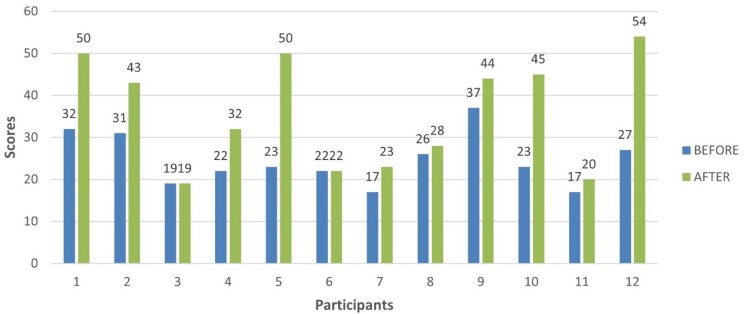 Figure 5
 Figure 6
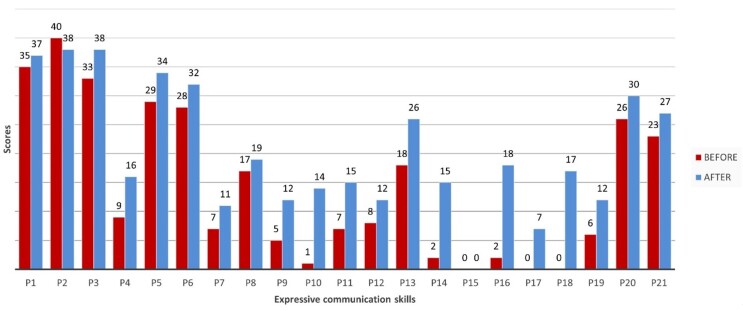 Figure 7
 Figure 8
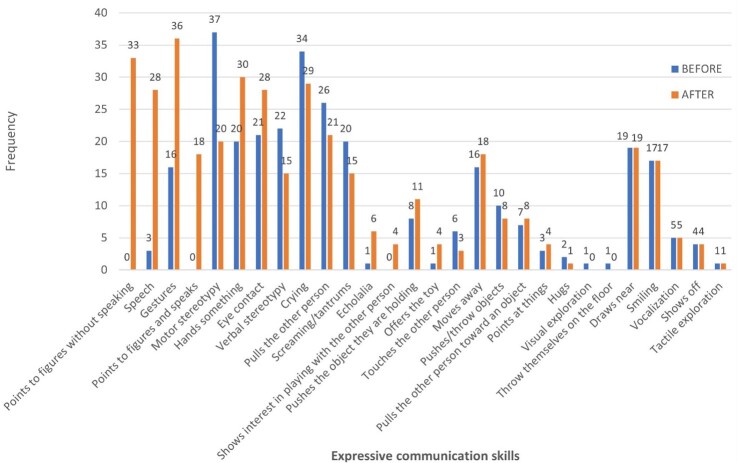 Figure 9
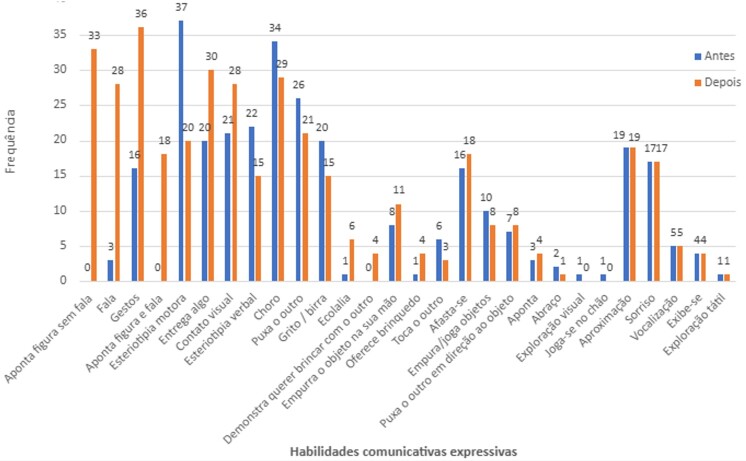 Figure 10
Peer Reviews
No public reviews on file for this paper yet. If you reviewed it on a platform where reviews are public (OpenReview, ICLR, NeurIPS, ICML), you can paste yours below so the community can read it here.
Videos
No videos yet. Explain this paper in a talk, walkthrough, or lecture? Add one.
Taxonomy
TopicsAssistive Technology in Communication and Mobility · Autism Spectrum Disorder Research · Language Development and Disorders