Safety and efficacy of a feed additive consisting of capsaicin for all animal species (XP Chemistries AB)
Roberto Edoardo Villa, Giovanna Azimonti, Eleftherios Bonos, Henrik Christensen, Mojca Durjava, Birgit Dusemund, Ronette Gehring, Boet Glandorf, Maryline Kouba, Marta López‐Alonso, Francesca Marcon, Carlo Nebbia, Alena Pechová, Miguel Prieto‐Maradona, Ilen Röhe

TL;DR
This paper evaluates the safety and effectiveness of capsaicin as a flavoring feed additive for all animal species.
Contribution
The study provides a comprehensive safety and efficacy assessment of capsaicin for use in animal feed across various species.
Findings
Capsaicin is safe at recommended levels for most animal species, including poultry, cattle, and fish.
The additive is considered safe for consumers and the environment but poses risks to users due to its irritant properties.
Capsaicin is effective as a flavoring additive in feed under the proposed conditions of use.
Abstract
Following a request from the European Commission, EFSA was asked to deliver a scientific opinion on the safety and efficacy of capsaicin as a sensory feed additive for all animal species (flavouring compounds). The additive is specified to have a purity of at least 98% with a ratio of (E)‐capsaicin (trans‐capsaicin) to (Z)‐capsaicin (cis‐capsaicin) of ≥ 6:1. The FEEDAP Panel concludes that the additive capsaicin is safe at the recommended maximum use level proposed by the applicant (6.5 mg/kg complete feed) for use in all poultry species, all porcine species, all bovines, ovines, caprines, cervids and camelids, all equids, leporids, salmonids and minor fin fish species, dogs, ornamental birds and ornamental fish. For cats and other species not considered above, 5.3 mg/kg complete feed is considered safe. The use of capsaicin as a feed additive is considered safe for consumers and the…
Genes, proteins, chemicals, diseases, species, mutations and cell lines named across the full text — each resolved to its canonical identifier and authoritative record.
Click any figure to enlarge with its caption.
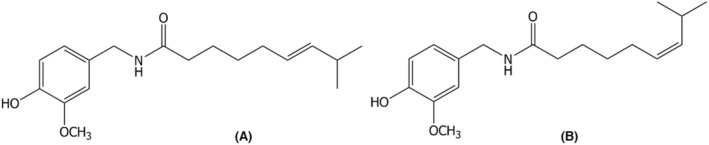 FIGURE 1
| Animal category | Daily feed intake (g DM/kg bw) | Maximum safe use level (mg/kg complete feed) |
|---|---|---|
| Chickens for fattening | 79 | 6.7 |
| Laying hens | 53 | 10.0 |
| Turkeys for fattening | 59 | 9.0 |
| Piglets | 44 | 12.0 |
| Pigs for fattening | 37 | 14.4 |
| Sows lactating | 30 | 17.5 |
| Veal calves (milk replacer) | 19 | 30.0 |
| Cattle for fattening | 20 | 26.4 |
| Dairy cows | 31 | 17.2 |
| Sheep/goat | 20 | 26.4 |
| Horses | 20 | 26.4 |
| Rabbits | 50 | 10. 6 |
| Salmons | 18 | 30.2 |
| Dogs | 17 | 31.7 |
| Cats | 20 | 5.3 |
| Ornamental fish | 5 | 117.3 |
Peer Reviews
No public reviews on file for this paper yet. If you reviewed it on a platform where reviews are public (OpenReview, ICLR, NeurIPS, ICML), you can paste yours below so the community can read it here.
Videos
No videos yet. Explain this paper in a talk, walkthrough, or lecture? Add one.
Taxonomy
TopicsAgricultural safety and regulations · Pesticide Residue Analysis and Safety · Insect and Pesticide Research
INTRODUCTION
1
Background and Terms of Reference
1.1
Regulation (EC) No 1831/20031 establishes the rules governing the Community authorisation of additives for use in animal nutrition. In particular, Article 4(1) of that Regulation lays down that any person seeking authorisation for a feed additive or for a new use of a feed additive shall submit an application in accordance with Article 7.
The European Commission received a request from XP Chemistries AB2 for the authorisation of the additive consisting of capsaicin, when used as a feed additive for all animal species (category: sensory additive; functional group: flavouring compounds).
According to Article 7(1) of Regulation (EC) No 1831/2003, the Commission forwarded the application to the European Food Safety Authority (EFSA) as an application under Article 4(1) (authorisation of a feed additive or new use of a feed additive). The dossier was received on 09 April 2024, and the general information and supporting documentation are available at https://open.efsa.europa.eu/questions/EFSA‐Q‐2024‐00214. The particulars and documents in support of the application were considered valid by EFSA as of 26 June 2024.
According to Article 8 of Regulation (EC) No 1831/2003, EFSA, after verifying the particulars and documents submitted by the applicant, shall undertake an assessment in order to determine whether the feed additive complies with the conditions laid down in Article 5. EFSA shall deliver an opinion on the safety for the target animals, consumer, user and the environment and on the efficacy of the feed additive consisting of capsaicin when used under the proposed conditions of use (see Section 3.1.5).
Additional information
1.2
Capsaicin is not authorised as a feed additive in the European Union (EU).
DATA AND METHODOLOGIES
2
Data
2.1
The present assessment is based on data submitted by the applicant in the form of a technical dossier3 in support of the authorisation request for the use of capsaicin as a feed additive.
The confidential version of the technical dossier was subject to a target consultation of the interested Member States from 02 July 2024 to 04 October 2024; the comments received were considered for the assessment.
In accordance with Article 38 of the Regulation (EC) No 178/20024 and taking into account the protection of confidential information and of personal data in accordance with Articles 39–39e of the same Regulation, and of the Decision of EFSA's Executive Director laying down practical arrangements concerning transparency and confidentiality,5 a non‐confidential version of the dossier has been published on Open.EFSA.
According to Article 32c(2) of Regulation (EC) No 178/2002 and to the Decision of EFSA's Executive Director laying down the practical arrangements on pre‐submission phase and public consultations, EFSA carried out a public consultation on the non‐confidential version of the technical dossier from 10 December to 31 December 2024, for which no comments were received.
The FEEDAP Panel used the data provided by the applicant together with data from other sources, such as previous risk assessments by EFSA or other expert bodies, peer‐reviewed scientific papers, other scientific reports and experts' knowledge, to deliver the present output.
EFSA has verified the European Union Reference Laboratory (EURL) report as it relates to the methods used for the control of the active substance in animal feed.6
Methodologies
2.2
The approach followed by the FEEDAP Panel to assess the safety and efficacy of capsaicin is in line with the principles laid down in Regulation (EC) No 429/20087 and the relevant guidance documents: Guidance on the assessment of the safety of feed additives for the consumer (EFSA FEEDAP Panel, 2017a); Guidance on the identity, characterisation and conditions of use of feed additives (EFSA FEEEDAP Panel, 2017b); Guidance on the assessment of the safety of feed additives for the target species (EFSA FEEDAP Panel, 2017c); Guidance on the assessment of the efficacy of feed additives (EFSA FEEDAP Panel, 2024); Guidance on the assessment of the safety of feed additives for the environment (EFSA FEEDAP Panel, 2019); Guidance on the assessment of the safety of feed additives for the users (EFSA FEEDAP Panel, 2023).
ASSESSMENT
3
This opinion assesses the safety and efficacy of an additive consisting of capsaicin, intended for use as a sensory additive (functional group: flavouring compounds) in feed for all animal species.
Characterisation
3.1
Characterisation of the additive
3.1.1
The additive is a white‐yellowish powder specified to contain at least 98% total capsaicin and with a ratio of *(E)‐*capsaicin (trans‐capsaicin) to *(Z)‐*capsaicin (*cis‐*capsaicin) of ≥ 6:1.
The International Union of Pure and Applied Chemistry (IUPAC) name of (E)‐capsaicin is (6E)‐N‐[(4‐hydroxy‐3‐methoxyphenyl)methyl]‐8‐methyl‐6‐nonenamide, the Chemical Abstracts Service (CAS) number is 404‐86‐4 ((E)‐capsaicin) and 25,775‐90‐0 ((Z)‐capsaicin), the European Inventory of Existing Commercial Chemical Substances (EINECS) number is 206‐969‐8 and the Flavour Extract Manufacturers Association (FEMA) number is 3404. The molecular weight is 305.41 g/mol and the structural formulas of the two stereoisomers are shown in Figure 1. Because of steric effects, the *(E)‐*form is favoured.
Structural formula of (E)‐capsaicin (A) and (Z)‐capsaicin (B).
The applicant provided an analysis of five batches of the additive to demonstrate compliance with the proposed specifications. The average content of capsaicin in these batches was 99.2% (98.9%–99.8%). The (E)/(Z) capsaicin ratio was also analysed. All batches showed compliance with the specification set by the applicant, with an average ratio of ■■■■■.8
A variable number of batches of the additive was analysed for chemical and microbial impurities. Fluorine was below the limit of detection (LOD) of the analytical method in three batches;9 cadmium and mercury were below the LOD in two batches.10 Arsenic (As) and lead (Pb) were found at average concentrations of 0.073 mg As/kg (based on two batches with one batch showing a value below the LOD of 0.05 mg/kg) and 0.056 mg Pb/kg (based on two batches with one batch showing a value below the LOD of 0.020 mg/kg).11 The dry residue varied between 99.3 % and 99.7%.12 Analysis on five batches of the additive13 demonstrated that ■■■■■, ■■■■■, is not present in the final product (all values below the limit of quantification (LOQ)).14
Polychlorinated dibenzo‐p‐dioxins (PCDDs), polychlorinated dibenzofurans (PCDFs), dioxin‐like polychlorinated biphenyls (DL‐PCBs) and non‐DL‐PCBs were analysed in three batches. All values for the individual congeners measured were below the corresponding LOQ. The calculated upper bound (UB) concentration was 0.0609 ng World Health Organization (WHO)2005‐PCDD/F‐toxic equivalent (TEQ)/kg for the sum of PCCD/F, 0.0973 ng WHO_2005_‐PCCD/F + PCB TEQ/kg for the sum of PCCD/F and DL‐PCBs and was 0.345 μg/kg for the sum of non‐DL‐PCBs (all values are expressed based on 88% dry matter).15
The analysis of aflatoxins (B1, G1, B2, G2), deoxynivalenol, fumonisin B1 and B2, HT‐2 toxin, T‐2 toxin, ochratoxin A and zearalenone showed values below the LOD of the applied methods.16 ^,^ 17
Microbiological contamination was analysed in three batches of the additive, by the determination of the aerobic plate count (average: 2.49 × 10^3^ CFU/g (1.0 × 10^1^–7.2 × 10^3^ CFU/g); numbers of filamentous fungi and yeast (all batches showed values below 10 CFU/g); Enterobacteriaceae (all batches showed values below 1 CFU/g) and Salmonella spp. (not detected in 25 g).18 The FEEDAP Panel notes that the ranging values found regarding the aerobic plate count are wide and may deserve attention/monitoring during the production process.
■■■■■ the applicant screened three batches of the additive for an extensive list of pesticide residues, which were all below the respective reporting limits.19
The FEEDAP Panel considers that the microbial contamination and the amounts of the detected impurities do not raise safety concerns.
Physical properties of the additive
3.1.2
The density of the additive was determined using a Hosokawa powder tester and was 392 kg/m^3^ (aerated bulk density) and 425 kg/m^3^ (packed bulk density).20 Capsaicin is insoluble in water.
The dusting potential of three batches of the additive was determined using the Stauber‐Heubach method and showed values on average of 1840 mg airborne dust per m^3^ of air (428–2670 mg/m^3^).21
Three batches of the additive were analysed for particle size and distribution by laser diffraction. On average, 17.7% of the additive consisted of particles < 100 μm, 8.9% < 50 μm and 1.1% < 10 μm (in one batch, the other two had no particles below this threshold). No particles were found below 5 μm.22
Manufacturing process
3.1.3
■■■■■
■■■■■
Stability
3.1.4
The shelf‐life of the additive ■■■■■ was studied when stored at 25°C–40°C ■■■■■ for 3 months. No losses were observed after this period.23
Conditions of use
3.1.5
The additive is intended for use in feedingstuffs for all animal species at a proposed maximum concentration of 6.5 mg/kg complete feed. The additive is intended to be incorporated in feed only via a premixture.
Safety
3.2
Absorption, distribution, metabolism and excretion (ADME)
3.2.1
No ADME studies with the additive under assessment were submitted, but the applicant provided several in vivo and in vitro published studies with capsaicinoids.
In experiments performed in rats (Kawada et al., 1984), capsaicin was rapidly and extensively absorbed in the upper tract of the intestine (duodenum ad jejunum), with less than 10% remaining unabsorbed 48 h after the administered dose. According to Donnerer et al. (1990), after intragastric administration, capsaicin was rapidly absorbed mainly in the intestine and apparently partially biotransformed at the enteric level. The unchanged compound was present in portal blood but was almost completely metabolised in the liver before reaching the systemic circulation. Suresh and Srinivasan (2010) studied capsaicin distribution in rats after gavage administration. Capsaicin was rapidly absorbed, distributed in tissues and rapidly cleared. The maximum concentration after dosing was reached in blood and intestine after 1 hour, in the liver after 3 hours and in the kidney after 6 h. About 94% of the administered capsaicin was absorbed, with a half‐life of 7.9 h. Capsaicin was biotransformed in rat, dog and human liver microsomes and S9‐fractions, yielding 16‐hydroxycapsaicin, 17‐hydroxycapsaicin and 16,17‐dehydrocapsaicin as the common major metabolites. Vanillin and vanillylamine were detected in rat preparations as the result of capsaicin hydrolytic cleavage. The extent of biotransformation was comparatively lower in canine preparations (Chanda et al., 2008). Capsaicin was subjected to significant glucuronidation by UGT1A and 2B in liver microsomes, with marked interspecies differences (Sun et al., 2014); capsaicin glucuronides were detected in urines from i.p. treated rats. Capsaicin metabolism was reviewed by Surh and Lee (1995), who emphasise its CYP‐mediated bioactivation to electrophilic metabolites, e.g. arene oxide, phenoxy radical and quinone derivatives capable of covalently binding critical cellular nucleophiles such as proteins, DNA, RNA and other macromolecules. Chaiyasit et al. (2009) studied capsaicin pharmacokinetics in human male volunteers (average weight 65.80 ± 6.51 kg) administered with 5‐g capsicum containing approximately 26.6 mg (~ 0.4 mg/kg). Capsaicin was detected in plasma already 10 mins after ingestion, with a C max of 2.47 ± 0.13 ng/mL, T max of 47 ± 2 min and a half‐life of 24.87 min. Evidence was provided for the presence of glucuronide derivatives of capsaicin and its hydroxylated metabolites in urines from a human volunteer after ingestion of capsules of cayenne pepper containing 16 mg of capsaicin (Kreidl et al., 2021).
In conclusion, capsaicin is rapidly and extensively absorbed and rapidly cleared after oral administration in rats and humans. An extensive first‐pass effect has been demonstrated involving both the intestine and the liver and mainly yielding hydroxylated derivatives. The generation of electrophilic metabolites has also been reported with the potential to covalently bind tissue macromolecules. Both the parent compound and the hydroxylated metabolites are subjected to glucuronidation and excreted in urine. A similar ADME profile is likely to occur in other target species.
Residue studies
3.2.2
No specific residue studies in the target species, according to the EFSA Guidance on the safety for the consumer (EFSA FEEDAP Panel, 2017a, 2017b, 2017c), were provided by the applicant. However, some deposition data on *(E)‐*capsaicin and *(Z)‐*capsaicin were generated from the 90‐day toxicity study conducted in rats (Section 3.2.3.3), exposed to capsaicin at a dose of 120 mg/kg body weight (bw) per day, which is about 200 times higher than the doses corresponding to the proposed feed concentration (6.5 mg/kg complete feed). Tissues (liver, fat, muscle and kidney) were measured (by triplicate analysis) as pool samples of five animals each (but one pool of four males only) of the same sex. In summary, four arithmetic means (2 males, 2 females) were available for each tissue.
In fat and muscle, the contents of *(E)‐*capsaicin and *(Z)‐*capsaicin were also below the respective LOD (0.05 μg/L) or LOQ (0.3 μg/L) in all the samples analysed. In liver, maximum concentrations of *(E)‐*capsaicin and *(Z)‐*capsaicin detected were 5.9 μg/kg and 10.3 μg/kg, respectively. In kidney, *(E)‐*capsaicin and *(Z)‐*capsaicin concentrations were up to 21 μg/kg and 7.6 μg/kg, respectively.24
The FEEDAP Panel considered these data as not adequate to calculate consumer exposure to capsaicin. However, this information provides supporting evidence of the limited deposition of capsaicin in tissues.
Toxicological studies
3.2.3
Genotoxicity studies, including mutagenicity
3.2.3.1
Bacterial reverse mutation test
Capsaicin was investigated for its potential to induce gene mutations in a bacterial reverse mutation assay in the Salmonella Typhimurium strains TA98, TA100, TA1535, TA1537 and in Escherichia coli strain WP2 uvrA (pKM101), with and without metabolic activation in compliance with Organisation for Economic Co‐operation and Development (OECD) Test Guideline (TG) 471 and claimed to follow the principles of good laboratory practice (GLP).25 Two separate experiments were performed, the first one according to the plate incorporation method, the second one according to the pre‐incubation method.
No precipitation of the test item was observed. Toxic effects (indicated by a reduction in the background lawn and in the number of revertant colonies) were reported in all tester strains and in both experiments. These effects were noted at lower concentration in the second experiment (pre‐incubation method); therefore, the maximum concentration tested were 5000 μg/plate in the first experiment and 2500 μg/plate in the second experiment.
No biologically relevant increase in revertant colony numbers was observed in any experimental condition.
The FEEDAP Panel concludes that the test item did not induce gene mutations in bacteria under the experimental conditions employed in this study.
In vitro mammalian cell micronucleus test
3.2.3.2
Capsaicin was investigated for its potential to induce micronuclei in human lymphocytes in a study following the OECD TG 487 and claimed to follow the principles of GLP. The following study design was used: a 4‐h treatment, followed by a recovery time of 40–42 h, with and without metabolic activation and a 44‐h treatment, without recovery time and without metabolic activation.26 Cytochalasin B was added after the short‐term treatment or 1 h after the start of the long‐term treatment, to inhibit cytokinesis and induce the formation of binucleate cells.
Based on the results of a preliminary range‐finder experiment, the test item was used up to the following maximum concentrations: 120 and 150 μg/mL in the short‐term treatment, without and with metabolic activation, respectively, and 70 μg/mL in the long‐term treatment. No precipitate of the test item was noted. The cytostasis, determined based on the cytokinesis‐block proliferation index, was 50% and 53% in the short‐term experiment, without and with metabolic activation, respectively, and 56% in the long‐term experiment.
No biologically relevant increase in the micronucleus frequency was noted after treatment with the test item in any experimental condition.
The FEEDAP Panel concludes that the test item did not induce chromosome damage in vitro in mammalian cells under the experimental conditions employed in this study.
90‐day toxicity study
3.2.3.3
Groups of 10 Rcc/Han Wistar rats of each sex were given capsaicin (10%) in monoolein with corn oil by gavage at concentrations designed to provide doses of 0, 30, 60 or 120 mg capsaicin/kg bw per day for 90 days. Two satellite groups were also included, each with 10 animals (5 males and 5 females). One satellite group received the vehicle in monoolein with corn oil, while the other received capsaicin at 120 mg/kg bw per day. The study was conducted according to OECD TG 408 and claimed to be in compliance with GLP.27
There were transient dose‐dependent clinical observations in the first 2 weeks of the study (changes in gait, posture and response to handling as well as slight diarrhoea, piloerection, reduction in spontaneous activity, salivation and moving of bedding material). There were three deaths during the study, two at the highest dose regarded as related to treatment and one at the intermediate dose attributed to misadministration.
Body weight, functional observations and ophthalmoscopy were unaffected by treatment. Differences seen in feed intake were not consistent between the sexes. Although haematology showed some differences between treated groups, they were not dose‐related and all were within the normal range for this strain of rat. Measurement of thyroid‐stimulating hormone (TSH) was conducted in control and high‐dose satellite groups and showed a reduction in males but not in females. T3 hormone significantly decreased in the high‐dose satellite group in both males and females, compared to the control. Results of serum chemistry measurements showed no treatment‐related differences.
Organ weights and relative organ weights of male rats showed some differences that were not dose‐related and were not reproduced in the female groups.
Necropsy and histopathological examination revealed no treatment‐related effects or differences in the background range of changes.
The FEEDAP Panel identified the intermediate dose as the no observed adverse effect level (NOAEL) for this study (60 mg capsaicin/kg bw per day).
Conclusions on toxicology
3.2.3.4
Capsaicin showed no genotoxicity potential in tests addressing gene mutation and numerical and structural chromosome aberrations. The results obtained in the repeated dose 90‐day oral toxicity study allowed the identification of a NOAEL of 60 mg capsaicin/kg bw per day.
Safety for the target species
3.2.4
No tolerance studies in the target species were provided by the applicant. A valid 90‐day toxicity study performed in rats was submitted (see Section 3.2.3.3), and from this study, a NOAEL of 60 mg capsaicin/kg bw per day was identified. Applying an uncertainty factor (UF) of 100 to the NOAEL, a safe daily dose for the target species was derived following the EFSA Guidance on the safety of feed additives for the target species (EFSA FEEDAP Panel, 2017b), and thus, the maximum safe feed concentration of the additive was calculated (Table 1).
Since glucuronidation of capsaicin is an important metabolic pathway in the excretion of this compound, the Panel considered that the calculation of safe concentrations in cat feed required an additional UF of 5. This is due to the unusually low capacity for glucuronidation in cats, especially for aromatic compounds (Court and Greenblatt, 1997; Lautz et al., 2021).
The maximum use level proposed by the applicant of 6.5 mg capsaicin/kg complete feed is safe for all the species listed in Table 1, except for cats. These levels are extrapolated to related species in the same physiological stage. For cats and other species not considered above, 5.3 mg/kg complete feed is considered safe.
Conclusions on safety for the target species
3.2.4.1
The FEEDAP Panel concludes that the additive capsaicin is safe at the maximum use level proposed by the applicant (6.5 mg/kg complete feed) for use in all poultry, all porcine species, all bovines, ovines, caprines, cervids and camelids, all equids, leporids, salmonids and minor fin fish species, dogs, ornamental birds and ornamental fish. For cats and other species not mentioned above, 5.3 mg/kg complete feed is considered safe.
Safety for the consumer
3.2.5
Although capsaicin as such may not be added to food,28 it is ingested as a naturally occurring component of the fruit of Capsicum spp. (e.g. chilli, cayenne pepper) which are consumed as vegetables or used for the preparation of pungent spices added to a wide range of food categories for flavouring purposes. In 2002, the Scientific Committee on Food (SCF) assessed capsaicin as a component of Capsicum preparations used as flavourings and provided a rough estimate of the human maximum daily intake in Europe of capsaicinoids (major component of this chemical family is capsaicin) from mild chillies and paprika of 1.5 mg/person per day.
The Panel expects that capsaicin will be extensively metabolised and excreted in the target species based on data in laboratory animals which indicate that capsaicin is readily absorbed and metabolised by oxidation followed by excretion and is not expected to accumulate in animal tissues under the proposed use conditions (Section 3.2.1). This is further supported by the data on the limited tissue deposition when given to rats in high doses (Section 3.2.2). Consequently, relevant residues in food products of animal origin are unlikely.
Considering the above and the reported human exposure to capsaicin due to the consumption of the fruit of Capsicum spp. and their preparations as vegetables and spices (SCF, 2002), the FEEDAP Panel considers that it is unlikely that the consumption of products from animals given capsaicin at the proposed maximum level in feed would significantly increase human background exposure.
Conclusions on safety for the consumers
3.2.5.1
The use of capsaicin in animal nutrition under the proposed conditions of use is safe for consumers of animal products.
Safety for the user
3.2.6
The highest dusting potential measured was 2670 mg/m^3^. Therefore, the FEEDAP Panel considers that the exposure through inhalation is likely.
The applicant provided some published studies that demonstrate that capsaicin is an irritant by inhalation (Petterson et al., 1989; Reilly et al., 2003; Philip et al., 1994; Chan et al., 2002).
The skin corrosion potential of capsaicin was analysed in vitro according to OECD Testing Guideline (TG) 431. The results of the study indicated that the additive is non‐corrosive.
An in vitro skin irritation study was performed according to the OECD TG 439.29 Due to some technical issues with the test system, the applicant tested a solution containing 50% capsaicin diluted in di‐propylene glycol‐methyl ether. Based on the results of this study, the test item is irritant to skin (‘UN GHS Category 2’). Since skin irritating effects were observed when the capsaicin was tested at 50% concentration, further studies with the pure additive were not considered necessary.
The dermal sensitisation potential of the additive was evaluated in studies performed according to OECD TG 442 C, D and E.30 Based on the results of these studies, capsaicin was not considered a dermal sensitiser.
Conclusions on safety for the user
3.2.7
The substance should be considered a respiratory and skin irritant and is assumed to be an eye irritant. It is not a dermal sensitiser. Any exposure is considered a risk.
Safety for the environment
3.2.8
Capsaicin is a component of the fruits of five domesticated species of Capsicum widely cultivated in the EU as a food or a source of a spice.
The available data demonstrate that capsaicin is rapidly and extensively absorbed after oral administration. It is also extensively metabolised in the intestine and in the liver. Capsaicin and the main metabolites formed, hydroxylated compounds, are glucuronidated and rapidly excreted in urine (see Section 3.2.1). In view of the fast degradation expected for capsaicin and its metabolites, no impact on the environment is foreseen from the use of this additive in animal feed.
Efficacy
3.3
Although capsaicin itself is not listed in Fenaroli's Handbook of Flavour Ingredients (Burdock, 2009), reference is made to capsicum and its extracts, referencing species known to contain high amounts of capsaicinoids. The Flavour Extract Manufacturers Association (FEMA), in addition to listing extracts of the fruits of Capsicum, also makes direct reference to capsaicin as a flavour listed under the FEMA number 3404. The consumption of the fruit of Capsicum species and the use of extracts from such fruits to modify the flavour of other foods is universal. As a result, there is a substantial body of literature, to which the applicant refers, describing the mechanism by which capsaicinoids impart flavour (heat) and the factors which govern the response of individual consumers.
Since capsaicin, as the major capsaicinoid in the fruit of Capsicum spp., is recognised to modify the flavour of food and its effect in feed would be essentially the same as that in food, no further demonstration of efficacy is considered necessary.
CONCLUSIONS
4
The FEEDAP Panel concludes that the additive capsaicin is safe at the recommended maximum use level proposed by the applicant (6.5 mg/kg complete feed) for use in all poultry, all porcine species, all bovines, ovines, caprines, cervids and camelids, all equids, leporids, salmonids and minor fin fish species, dogs, ornamental birds and ornamental fish. For cats and other species, 5.3 mg/kg complete feed is considered safe.
The use of capsaicin as a feed additive is considered safe for the consumers and the environment.
The additive is a respiratory and skin irritant and is assumed to be an eye irritant. It is not a dermal sensitiser. Any exposure is considered a risk.
Since capsaicin as the major capsaicinoid in the fruit of Capsicum spp. is recognised to modify the flavour of food and its effect in feed would be essentially the same as that in food, no further demonstration of efficacy is considered necessary.ABBREVIATIONSBWbody weightCASChemical Abstracts ServiceCFUcolony‐forming unitDMdry matterEINECSEuropean Inventory of Existing Chemical SubstancesEURLEuropean Union Reference LaboratoryFEEDAPEFSA Scientific Panel on Additives and Products or Substances used in Animal FeedFL‐noFLAVIS numberIUPACInternational Union of Pure and Applied ChemistryLODlimit of detectionLOQlimit of quantificationMWmolecular weightNOAELno observed adverse effect levelOECDOrganisation for Economic Co‐operation and DevelopmentSCFScientific Committee on FoodUFuncertainty factor
REQUESTOR
European Commission
QUESTION NUMBER
EFSA‐Q‐2024‐00214
COPYRIGHT FOR NON‐EFSA CONTENT
EFSA may include images or other content for which it does not hold copyright. In such cases, EFSA indicates the copyright holder, and users should seek permission to reproduce the content from the original source.
PANEL MEMBERS
Roberto Edoardo Villa, Giovanna Azimonti, Eleftherios Bonos, Henrik Christensen, Mojca Durjava, Birgit Dusemund, Ronette Gehring, Boet Glandorf, Maryline Kouba, Marta López‐Alonso, Francesca Marcon, Carlo Nebbia, Alena Pechová, Miguel Prieto‐Maradona, Ilen Röhe, and Katerina Theodoridou.
LEGAL NOTICE
Relevant information or parts of this scientific output have been blackened in accordance with the confidentiality requests formulated by the applicant pending a decision thereon by EFSA. The full output has been shared with the European Commission, EU Member States (if applicable) and the applicant. The blackening may be subject to review once the decision on the confidentiality requests is adopted by EFSA and in case it rejects some of the confidentiality requests.
The reference list from the paper itself. Each links out to its DOI / PubMed record.
- 1Burdock, G. A. (2010). Fenaroli's handbook of flavor ingredients, 6th edition. CRC Press, Taylor & Francis Group. 10.1201/9781439847503 · doi ↗
- 2Court, M. H. , & Greenblatt, D. J. (1997). Molecular basis for deficient acetaminophen glucuronidation in cats. An interspecies comparison of enzyme kinetics in liver microsomes. Biochemical Pharmacology, 53, 1041–1047. 10.1016/s 0006-2952(97)00072-5 9174118 · doi ↗ · pubmed ↗
- 3Chaiyasit, K. (2009). Pharmacokinetic and the effect of capsaicin in Capsicum frutescens on decreasing plasma glucose level. Journal of Medical Association of Thalandi, 92(1), 108–113.19260251 · pubmed ↗
- 4Chan, T. C. , Vilke, G. M. , Clausen, J. , Clark, R. F. , Schmidt, P. , Snowden, T. , & Neuman, T. (2002). The effect of oleoresin capsicum “pepper” spray inhalation on respiratory function. Journal of Forensic Sciences, 47(2), 299–304.11908598 · pubmed ↗
- 5Chanda, S. , Bashir, M. , Babbar, S. , Koganti, A. , & Bley, K. (2008). In vitro hepatic and skin metabolism of capsaicin. Drug Metabolism and Disposition, 36(4), 670–675.18180272 10.1124/dmd.107.019240 · doi ↗ · pubmed ↗
- 6Donnerer, J. , Amann, R. , Schuligoi, R. , & Lembeck, F. (1990). Absorption and metabolism of capsaieinoids following intragastric administration in rats. Naunyn‐Schmiedeberg's Archives of Pharmacology, 342, 357–361.2280802 10.1007/BF 00169449 · doi ↗ · pubmed ↗
- 7EFSA FEEDAP Panel (EFSA Panel on Additives and Products or Substances used in Animal Feed) , Rychen, G. , Aquilina, G. , Azimonti, G. , Bampidis, V. , Bastos, M. d. L. , Bories, G. , Chesson, A. , Cocconcelli, P. S. , Flachowsky, G. , Gropp, J. , Kolar, B. , Kouba, M. , López‐Alonso, M. , López Puente, S. , Mantovani, A. , Mayo, B. , Ramos, F. , Saarela, M. , … Innocenti, M. L. (2017 a). Guidance on the assessment of the safety of feed additives for the consumer. EFSA Journal, · doi ↗
- 8EFSA FEEDAP Panel (EFSA Panel on Additives and Products or Substances used in Animal Feed) , Rychen, G. , Aquilina, G. , Azimonti, G. , Bampidis, V. , Bastos, M. d. L. , Bories, G. , Chesson, A. , Cocconcelli, P. S. , Flachowsky, G. , Gropp, J. , Kolar, B. , Kouba, M. , López‐Alonso, M. , López Puente, S. , Mantovani, A. , Mayo, B. , Ramos, F. , Bastos, M. L. , … Innocenti, M. L. (2017 b). Guidance on the identity, characterisation and conditions of use of feed additives. EFSA · doi ↗ · pubmed ↗