Hairy vocal cords and hemoptysis
Nurdan ŞİMSEK VESKE, Sinem Nedime SÖKÜCÜ, Gülşah GÜNLÜOĞLU, Sedat ALTIN

TL;DR
An elderly patient with a history of lung tuberculosis and laryngeal cancer developed hairy vocal cords and hemoptysis, possibly due to microaspirations and bacterial infections.
Contribution
Highlights a rare clinical case linking hairy vocal cords and hemoptysis with potential bacterial involvement and microaspirations in immunocompromised patients.
Findings
Hairy vocal cords were observed in a patient with a history of laryngeal cancer and tuberculosis.
Klebsiella oxytoca and filamentous bacteria suggestive of actinomyces were detected in the bronchoalveolar lavage.
Microaspirations from vocal cord hairs may lead to lower respiratory tract infections and hemoptysis in vulnerable patients.
Abstract
ABSTRACT Hairy vocal cords and hemoptysis A 71-year-old patient with hemoptysis, history of pulmonary tuberculosis, laryngeal cancer, and smoking habit underwent fiberoptic bronchoscopy. No endobronchial lesions were detected, but hair structures were seen on the vocal cords. Klebsiella oxytoca was grown in the non-specific culture of the lavage. Filamentous bacteria suggestive of actinomyces were also seen in the cytology. These bacteria, seen in the normal flora of the oropharynx, may be responsible for lung infection in individuals with weakened immune systems and concomitant diseases. In elderly patients with a history of pulmonary tuberculosis and cancer, as in our patient, hairs developing on the vocal cords as a complication of laryngeal surgery may cause food residues and secretions to accumulate on the hair surface and increase microaspirations. We would like to remind you…
Genes, proteins, chemicals, diseases, species, mutations and cell lines named across the full text — each resolved to its canonical identifier and authoritative record.
Click any figure to enlarge with its caption.
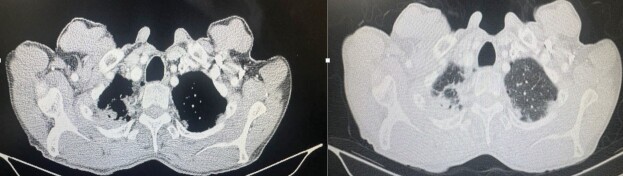 Figure 1
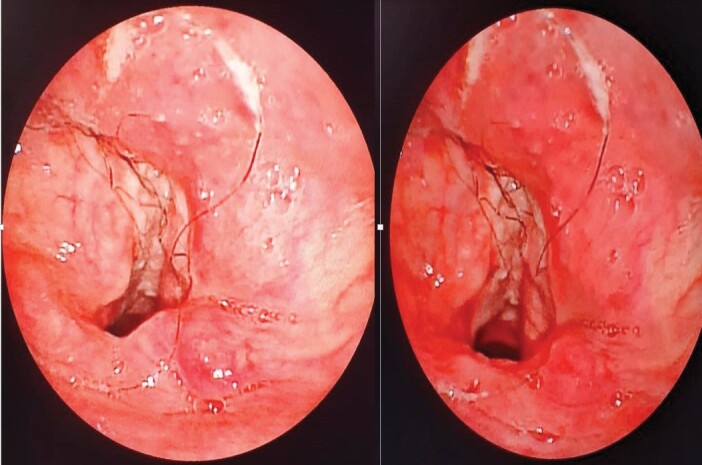 Figure 2
Peer Reviews
No public reviews on file for this paper yet. If you reviewed it on a platform where reviews are public (OpenReview, ICLR, NeurIPS, ICML), you can paste yours below so the community can read it here.
Videos
No videos yet. Explain this paper in a talk, walkthrough, or lecture? Add one.
Taxonomy
TopicsVoice and Speech Disorders