Current landscape of BRAF-V600E metastatic CRC management in Latin America: an expert Latin American panel’s recommendations
Anelisa K Coutinho, Yazmin Carolina Blanco Vazquez, Markus Andret Cavalcante Gifoni, Angela Marie Jansen, Juan Manuel O’Connor, Juan Carlos Samamé Pérez-Vargas, Mariana Rico-Restrepo, Gayatri Sanku, Guillermo Mendez

TL;DR
Latin American experts developed recommendations to improve BRAF-V600E metastatic colorectal cancer management due to current variability in testing and treatment.
Contribution
A set of expert recommendations for BRAF-V600E mCRC management in Latin America, addressing current limitations in diagnosis and treatment.
Findings
BRAF-V600E testing and treatment for metastatic CRC in Latin America remains variable.
Expert panel recommends multidisciplinary boards and tumor genotyping to improve care.
Panel provided first-line, second-line, and surgical recommendations for BRAF-V600E mCRC patients.
Abstract
Colorectal cancer is the second leading cause of cancer death in Latin America (LA) with a projected 65.4% increase by 2040. Up to 10% of metastatic CRC (mCRC) patients in LA had an activating BRAF mutation. In clinical trials, targeted therapies for BRAF-V600E mutated mCRC have improved patient outcomes. However, in LA, BRAF-V600E testing and treatment of positive patients remains variable. To address this need, the Americas Health Foundation convened a meeting of LA experts on BRAF-V600E mCRC to develop treatment recommendations. The expert panel addressed the current landscape of BRAF-V600E mCRC testing, diagnosis and treatment in the region and identified significant limitations. Local guidelines, multidisciplinary boards, and tumor genotyping are among the recommendations. The panel also made first-line, second-line and surgery recommendations for patients after diagnosis.
Genes, proteins, chemicals, diseases, species, mutations and cell lines named across the full text — each resolved to its canonical identifier and authoritative record.
Click any figure to enlarge with its caption.
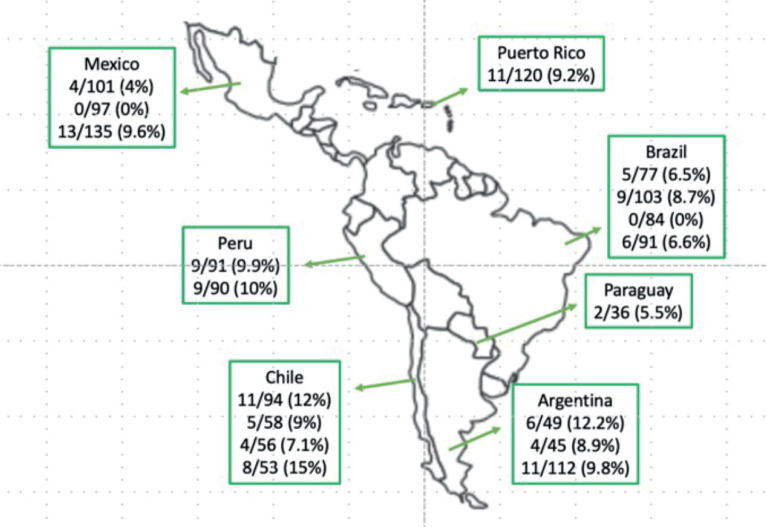 Figure 1
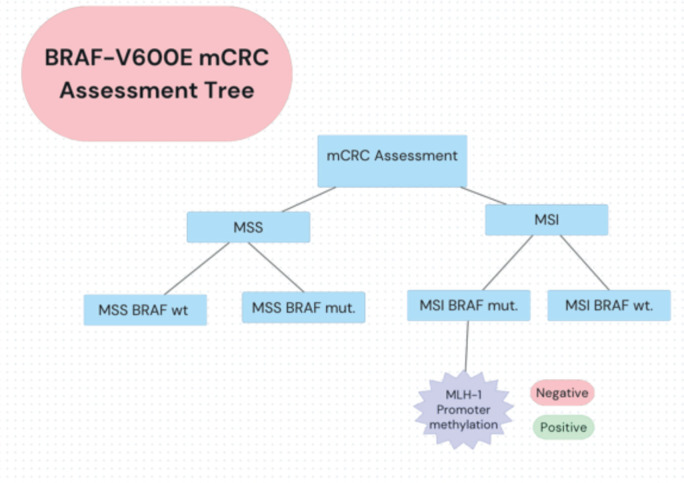 Figure 2
Peer Reviews
No public reviews on file for this paper yet. If you reviewed it on a platform where reviews are public (OpenReview, ICLR, NeurIPS, ICML), you can paste yours below so the community can read it here.
Videos
No videos yet. Explain this paper in a talk, walkthrough, or lecture? Add one.
Taxonomy
TopicsLung Cancer Treatments and Mutations · Computational Drug Discovery Methods · Biosimilars and Bioanalytical Methods