AI-Powered Noninvasive Electrocardiographic Imaging Using the Priori-to-Attention Network (P2AN) for Wearable Health Monitoring
Shijie He, Hanrui Dong, Xianbin Zhang, Richard Millham, Lin Xu, Wanqing Wu

TL;DR
This paper introduces P2AN, an AI method that improves noninvasive heart monitoring using wearable devices by accurately reconstructing cardiac electrical activity from body surface signals.
Contribution
The Priori-to-Attention Network (P2AN) is a novel AI framework that integrates physiological knowledge to stabilize and enhance electrocardiographic imaging.
Findings
P2AN improves transmembrane potential reconstruction and lesion localization for diagnosing heart conditions.
The method is robust in noisy environments, making it suitable for wearable electrocardiographic clothing.
P2AN achieves high spatiotemporal accuracy and noise resilience for real-time cardiovascular monitoring.
Abstract
The rapid development of smart wearable devices has significantly advanced noninvasive, continuous health monitoring, enabling real-time collection of vital biosignals. Electrocardiographic imaging (ECGI), a noninvasive technique that reconstructs transmembrane potential (TMP) from body surface potential, has emerged as a promising method for reflecting cardiac electrical activity. However, the ECG inverse problem’s inherent instability has hindered its practical application. To address this, we introduce a novel Priori-to-Attention Network (P2AN) that enhances the stability of ECGI solutions. By leveraging the one-dimensional nature of electrical signals and the body’s electrical propagation properties, P2AN uses small-scale convolutions for attention computation, integrating a priori physiological knowledge via cross-attention mechanisms. This approach eliminates the need for clinical…
Genes, proteins, chemicals, diseases, species, mutations and cell lines named across the full text — each resolved to its canonical identifier and authoritative record.
Click any figure to enlarge with its caption.
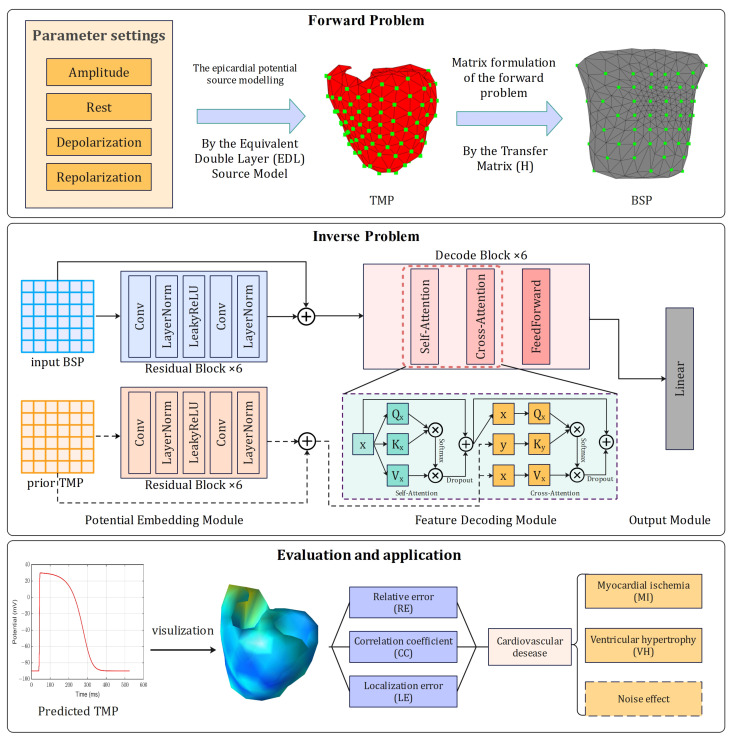 Figure 1
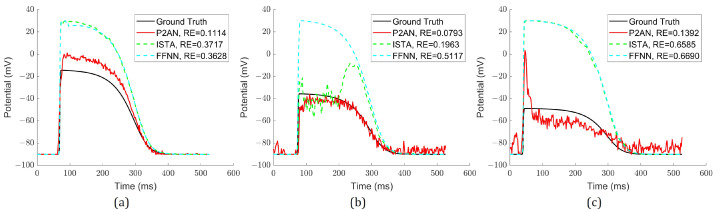 Figure 2
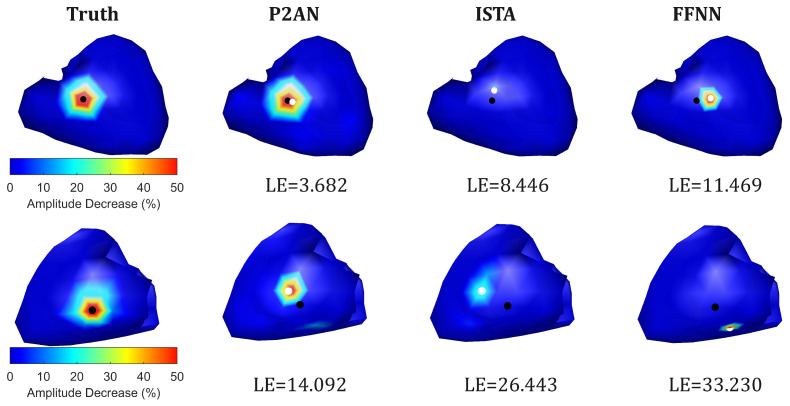 Figure 3
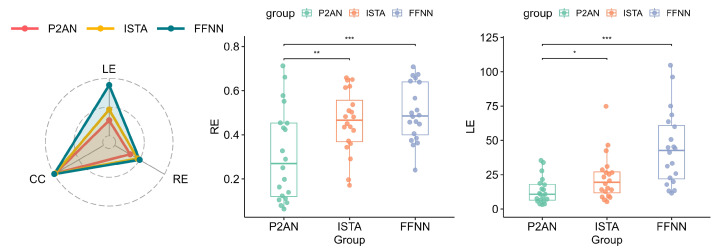 Figure 4
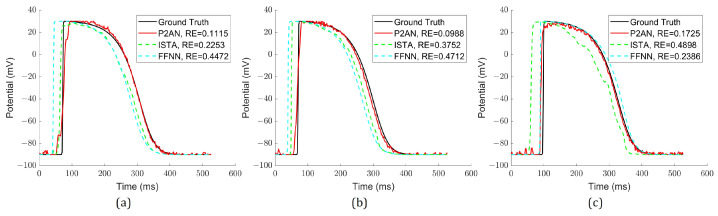 Figure 5
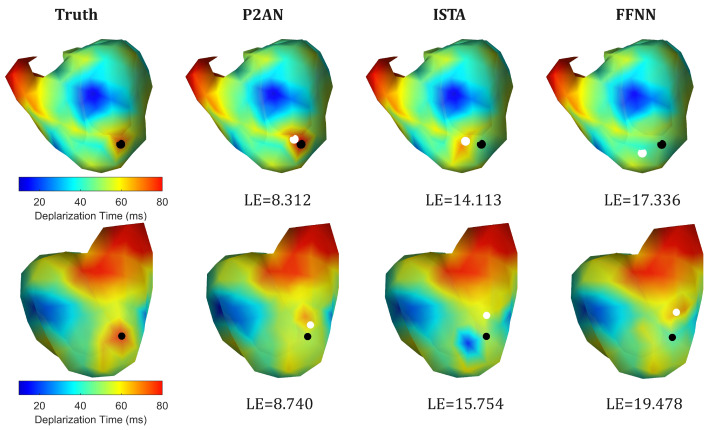 Figure 6
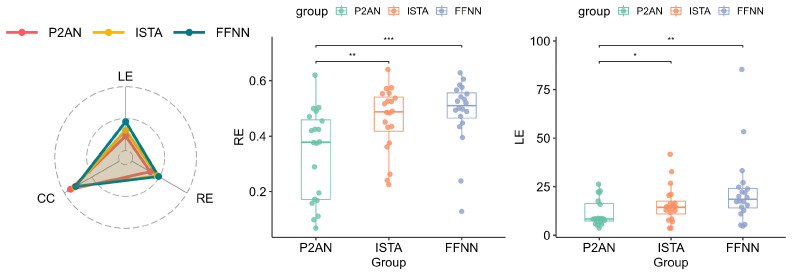 Figure 7
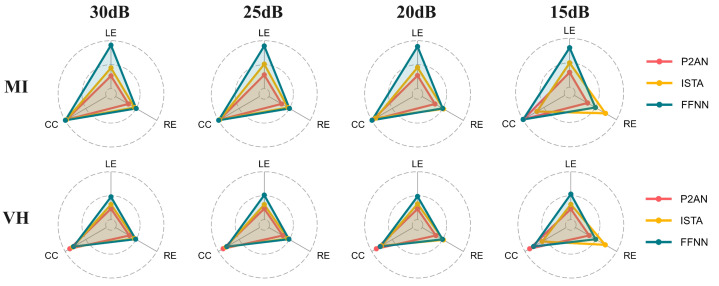 Figure 8
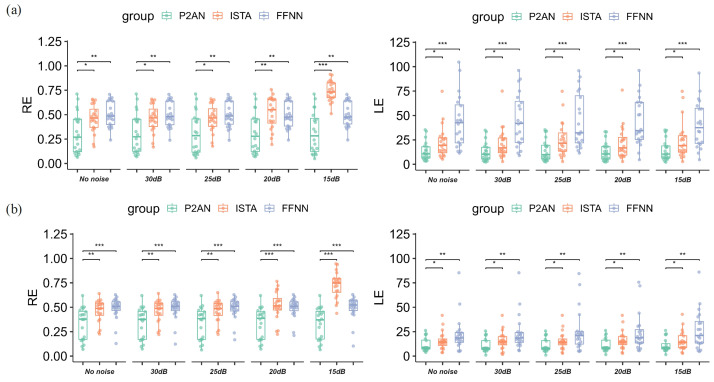 Figure 9
Peer Reviews
No public reviews on file for this paper yet. If you reviewed it on a platform where reviews are public (OpenReview, ICLR, NeurIPS, ICML), you can paste yours below so the community can read it here.
Videos
No videos yet. Explain this paper in a talk, walkthrough, or lecture? Add one.
Taxonomy
TopicsECG Monitoring and Analysis · Non-Invasive Vital Sign Monitoring · Cardiac electrophysiology and arrhythmias