Insights into Functions of Universal Stress Proteins Encoded by Genomes of Gastric Cancer Pathogen Helicobacter pylori and Related Bacteria
Raphael D. Isokpehi, Shaneka S. Simmons, Angela U. Makolo, Antoinesha L. Hollman, Solayide A. Adesida, Olabisi O. Ojo, Amos O. Abioye

TL;DR
This paper explores the functions of universal stress proteins in Helicobacter pylori and related bacteria, linking them to stress responses and virulence.
Contribution
The study identifies 25 functional site patterns in USP proteins and links USP genes to oxidative stress and virulence-related genes.
Findings
USP genes in Helicobacter and Wolinella are often adjacent to genes involved in oxidative stress and DNA uptake.
25 functional site patterns were identified in USP sequences to guide functional interaction studies.
Transcriptomic data suggest USP gene expression is regulated by oxidative stress and virulence factors.
Abstract
The genes that encode the universal stress protein (USP) family domain (pfam00582) aid the survival of bacteria in specific host or habitat-induced stress conditions. Genome sequencing revealed that the genome of Helicobacter pylori, a gastric cancer pathogen, typically contains one USP gene, while related helicobacters have one or two distinct USP genes. However, insights into the functions of Helicobacteraceae (Helicobacter and Wolinella) USP genes are still limited to inferences from large-scale genome sequencing. Thus, we have combined bioinformatics and visual analytics approaches to conduct a more comprehensive data investigation of a set of 1045 universal stress protein sequences encoded in 1014 genomes including 785 Helicobacter pylori genomes. The study generated a representative set of 183 USP sequences consisting of 180 Helicobacter sequences, two Wolinella succinogenes…
Genes, proteins, chemicals, diseases, species, mutations and cell lines named across the full text — each resolved to its canonical identifier and authoritative record.
Click any figure to enlarge with its caption.
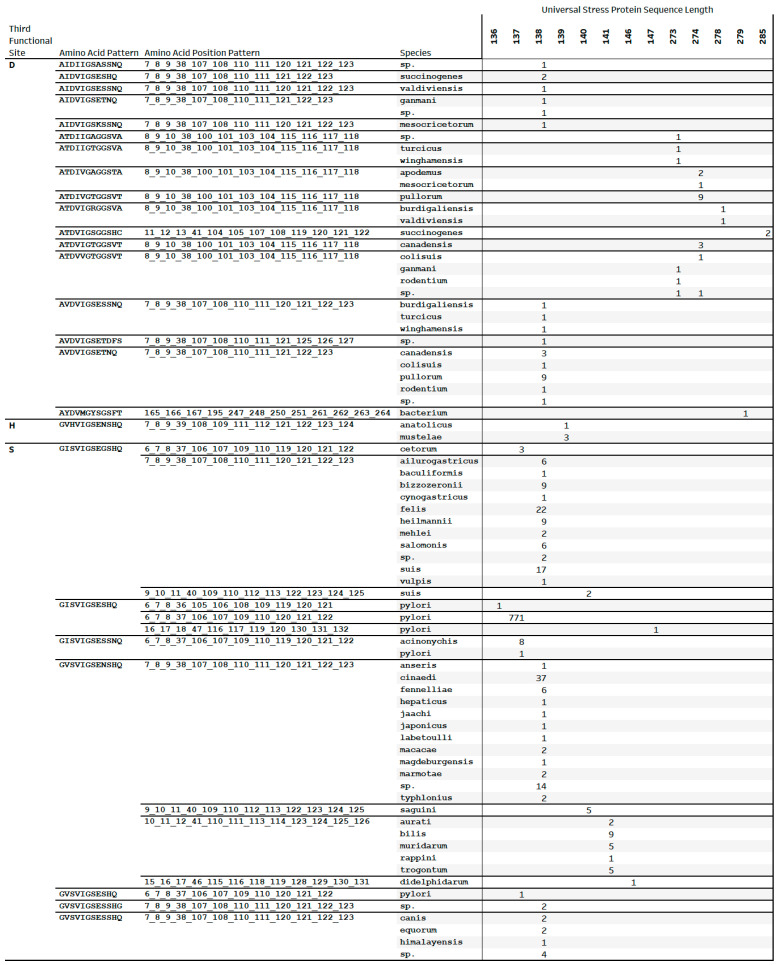 Figure 1
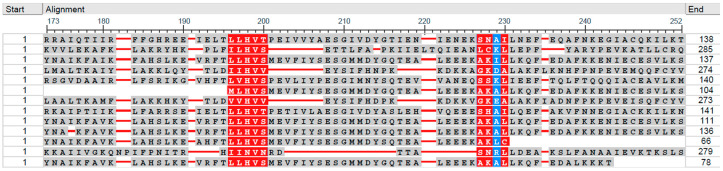 Figure 2
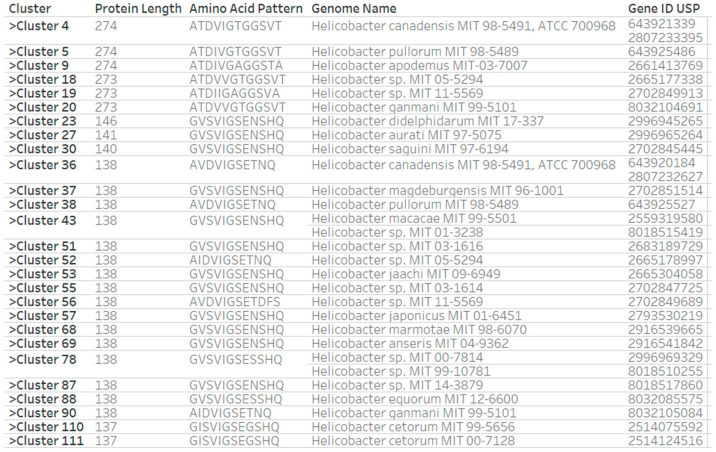 Figure 3
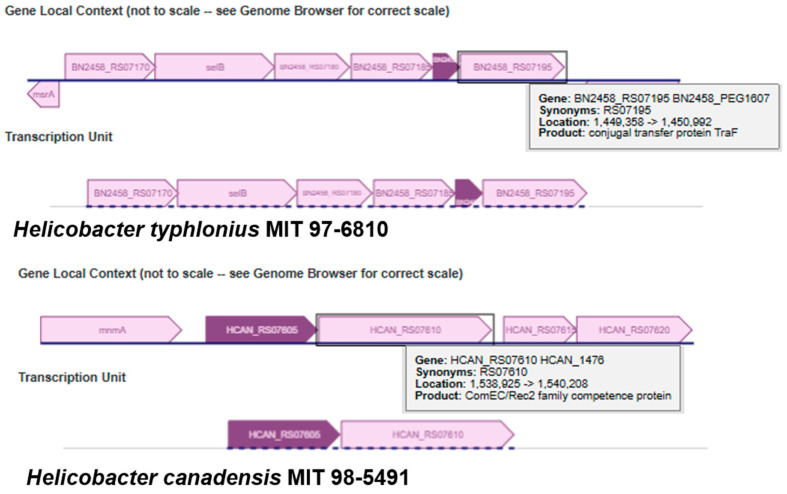 Figure 4
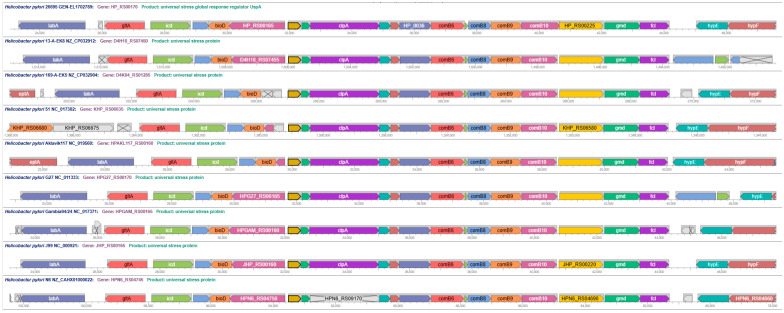 Figure 5
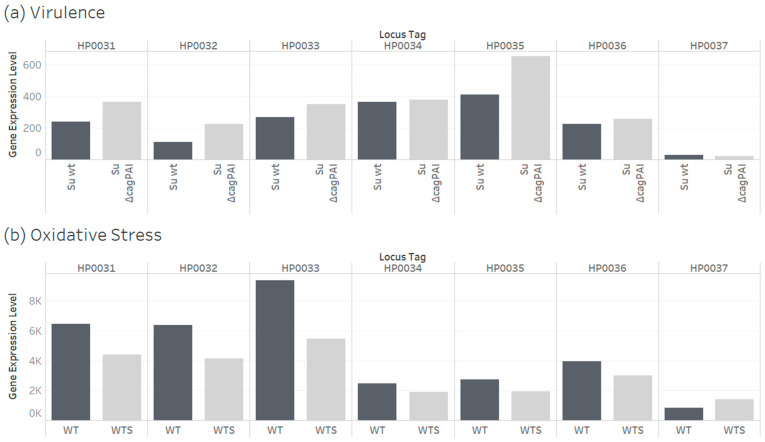 Figure 6
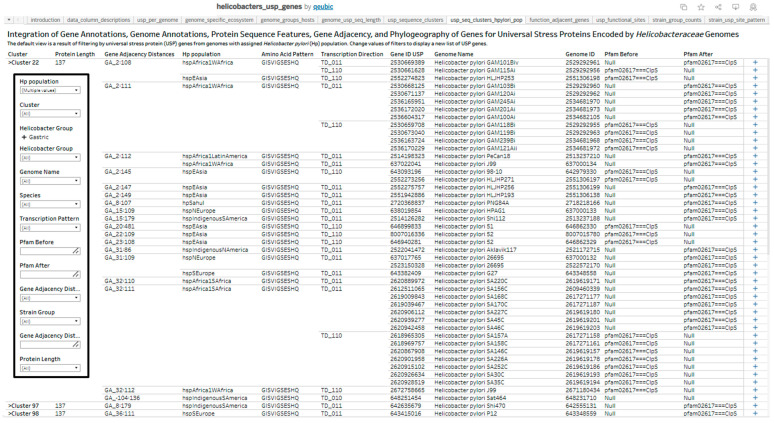 Figure 7
Peer Reviews
No public reviews on file for this paper yet. If you reviewed it on a platform where reviews are public (OpenReview, ICLR, NeurIPS, ICML), you can paste yours below so the community can read it here.
Videos
No videos yet. Explain this paper in a talk, walkthrough, or lecture? Add one.
Taxonomy
TopicsHelicobacter pylori-related gastroenterology studies · Veterinary medicine and infectious diseases · Galectins and Cancer Biology