Quorum sensing regulators and non-ribosomal peptide synthetases govern antibacterial secretions in Xenorhabdus szentirmaii
Ritisha Dey, Domonique Olivia Valle, Abhijit Chakraborty, Kimberly A. Mayer, Jagadeesh Kumar Uppala, Anish Chakraborty, Shama Mirza, Troy Skwor, Steven Forst, Madhusudan Dey

TL;DR
This paper explores how the bacterium Xenorhabdus szentirmaii uses quorum sensing and specific enzymes to produce antibiotics, offering new ways to combat antibiotic resistance.
Contribution
The study identifies quorum sensing regulators and NRPS operons in X. szentirmaii that govern antibiotic secretion.
Findings
X. szentirmaii produces high antibiotic activity during stationary phase against resistant pathogens.
The bacterium has 17 NRPS/PKS operons, including those for Pax peptide and Fabclavine.
Quorum sensing gene lsrF is highly expressed during stationary phase, linking QS to antibiotic synthesis.
Abstract
The decades-long gap in antibiotic discovery has led to a significant health crisis due to antimicrobial resistance (AMR). The bacterial genus Xenorhabdus, which forms symbiotic relationships with the soil nematode Steinernema, are known to secrete a variety of antimicrobial compounds with potential effectiveness against AMR. These antimicrobial compounds are primarily bio-synthesized by non-ribosomal peptide synthetases (NRPS) and polyketide synthase (PKS) genes. In this study, we report that X. szentirmaii produces high levels of antibiotic activity during the stationary phase against diverse bacteria including known antibiotic resistant pathogens. It possesses 17 operons to encode predicted NRPS and PKS enzymes, designated as ste1 through ste17. The ste15-ste16 and ste17 operons are predicted to produce the known antibiotics Pax peptide and Fabclavine, respectively. Additionally, the…
Genes, proteins, chemicals, diseases, species, mutations and cell lines named across the full text — each resolved to its canonical identifier and authoritative record.
Click any figure to enlarge with its caption.
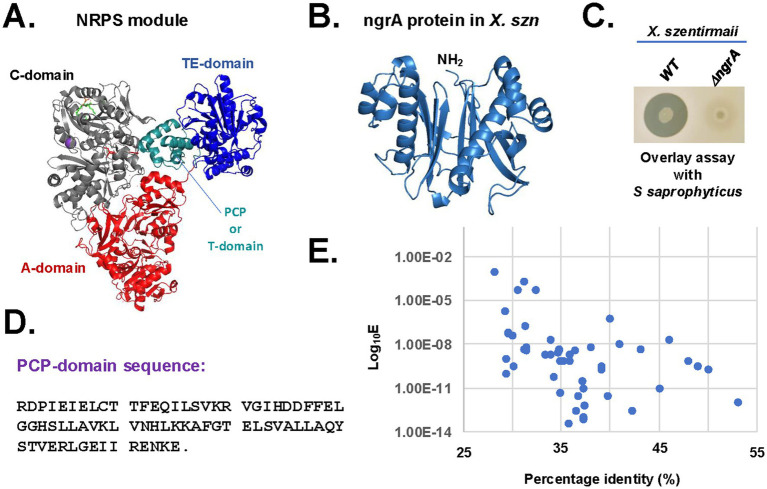 Figure 1
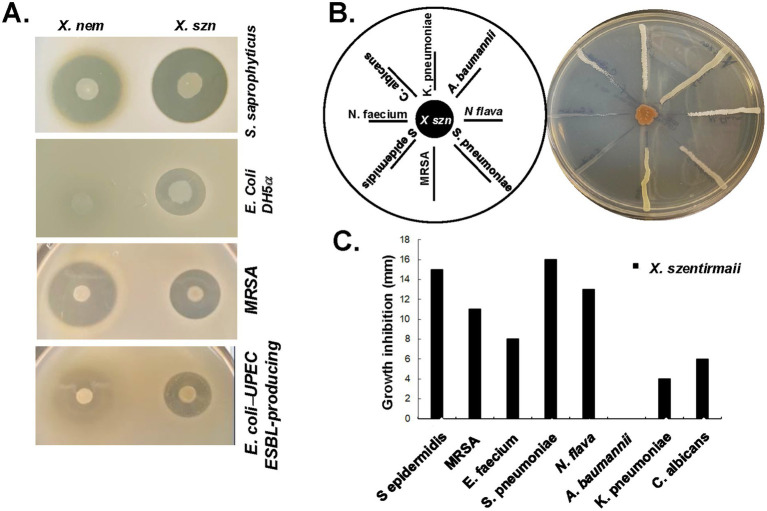 Figure 2
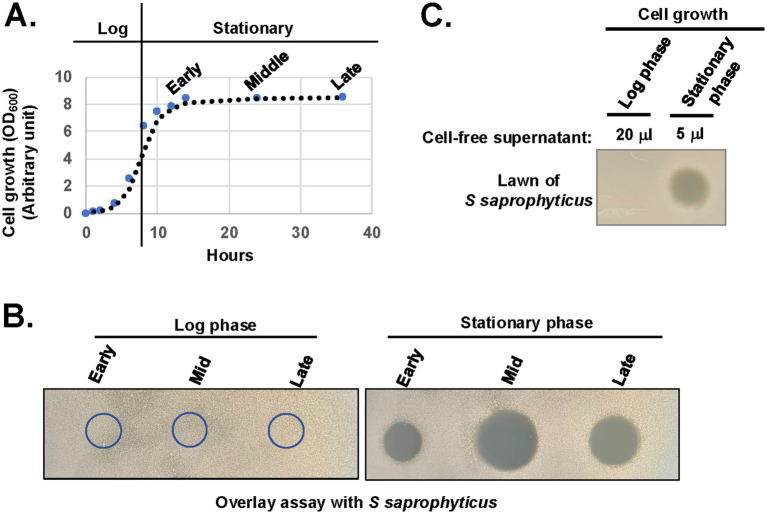 Figure 3
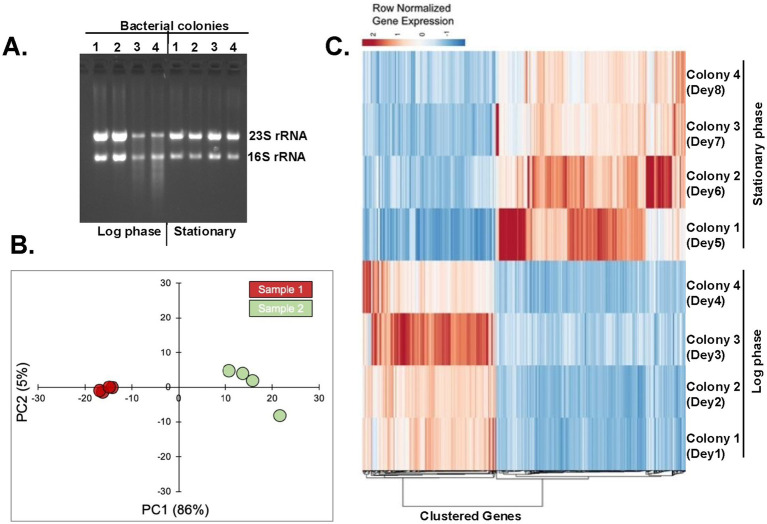 Figure 4
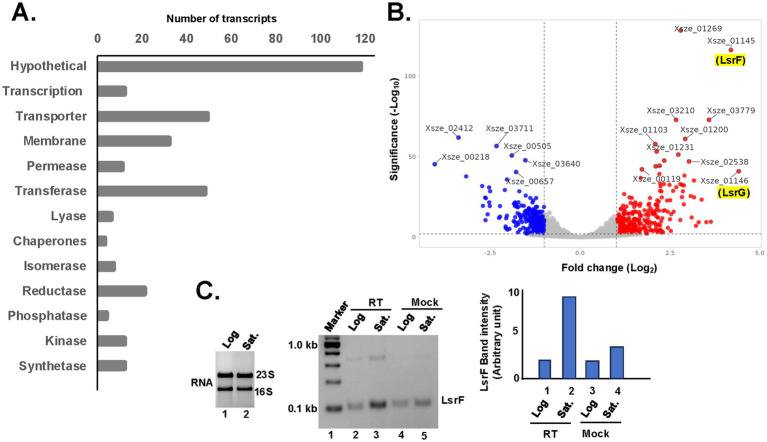 Figure 5
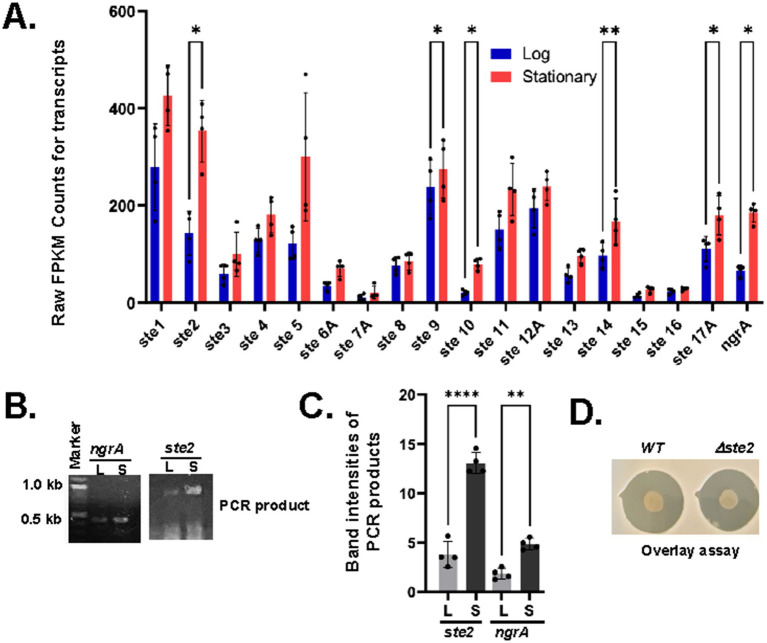 Figure 6
Peer Reviews
No public reviews on file for this paper yet. If you reviewed it on a platform where reviews are public (OpenReview, ICLR, NeurIPS, ICML), you can paste yours below so the community can read it here.
Videos
No videos yet. Explain this paper in a talk, walkthrough, or lecture? Add one.
Taxonomy
TopicsEntomopathogenic Microorganisms in Pest Control · Bacterial biofilms and quorum sensing · Insect symbiosis and bacterial influences