The impact of clot permeability on platelet fluxes toward its surface
Niksa Mohammadi Bagheri, Gabor Závodszky, Alfons G Hoekstra

TL;DR
This study explores how clot permeability affects platelet movement and adhesion, revealing that permeable clots can significantly increase platelet flux.
Contribution
The novel contribution is the systematic investigation of platelet transport and adhesion influenced by clot permeability using a finite element model.
Findings
Highly permeable clots can increase platelet flux up to four times compared to non-permeable clots.
Platelet transport is significantly influenced by clot permeability, reaction rates, and flow conditions.
Abstract
Platelet aggregation is regulated by a series of chemical reactions that control platelet adhesion on a thrombogenic surface. These reactions are influenced by the complex interaction between reaction kinetics and hemodynamics. This study systematically investigates the transport of platelets, considering the interaction between flow-mediated mass transfer mechanisms and reaction kinetics as a function of clot permeability. A two-dimensional finite element model is developed to replicate static blood flow, platelet transport, and adhesion on a semi-elliptical and semi-circular structure representing permeable clots. The platelet-clot interface interactions are extensively investigated using a hindered transport model, focusing on clot permeabilities, reaction rates, and flow conditions. In the case of clots with highly reactive surfaces, an increase in clot permeability can lead up to…
Genes, proteins, chemicals, diseases, species, mutations and cell lines named across the full text — each resolved to its canonical identifier and authoritative record.
Click any figure to enlarge with its caption.
 Figure 1
 Figure 2
 Figure 3
 Figure 4
 Figure 5
 Figure 6
 Figure 7
 Figure 8
 Figure 9
 Figure 10
 Figure 11
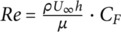 Figure 12
 Figure 13
 Figure 14
 Figure 15
 Figure 16
 Figure 17
 Figure 18
 Figure 19
 Figure 20
 Figure 21
 Figure 22
 Figure 23
 Figure 24
 Figure 25
 Figure 26
 Figure 27
 Figure 28
 Figure 29
 Figure 30
 Figure 31
 Figure 32
 Figure 33
 Figure 34
 Figure 35
 Figure 36
 Figure 37
 Figure 38
 Figure 39
 Figure 40
 Figure 41
 Figure 42
 Figure 43
 Figure 44
 Figure 45
 Figure 46
 Figure 47
 Figure 48
 Figure 49
 Figure 50
Peer Reviews
No public reviews on file for this paper yet. If you reviewed it on a platform where reviews are public (OpenReview, ICLR, NeurIPS, ICML), you can paste yours below so the community can read it here.
Videos
No videos yet. Explain this paper in a talk, walkthrough, or lecture? Add one.
Taxonomy
TopicsPlatelet Disorders and Treatments · Blood properties and coagulation · Antiplatelet Therapy and Cardiovascular Diseases