
TL;DR
This paper explores how cancer progresses during its hidden early stages, contributing to its deadly nature.
Contribution
The study reveals nonlinear progression patterns during the occult phase of cancer, offering new insights into cancer lethality.
Findings
Cancer progression during the occult phase is nonlinear and contributes to its lethality.
Systems biology approaches in mouse models help understand cancer initiation and progression.
The research highlights the importance of studying early, hidden cancer stages.
Abstract
First Person is a series of interviews with the first authors of a selection of papers published in Disease Models & Mechanisms, helping researchers promote themselves alongside their papers. Joshua Ginzel is first author on ‘ Nonlinear progression during the occult transition establishes cancer lethality’, published in DMM. Joshua is a PhD student in the lab of Joshua Snyder at Duke University, Durham, NC, USA, investigating cancer initiation and progression using systems biology approaches in mouse models.
Genes, proteins, chemicals, diseases, species, mutations and cell lines named across the full text — each resolved to its canonical identifier and authoritative record.
Click any figure to enlarge with its caption.
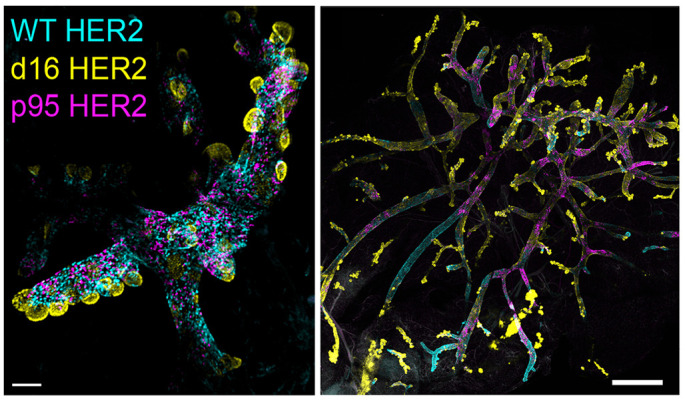 Figure 1
 Figure 2
Peer Reviews
No public reviews on file for this paper yet. If you reviewed it on a platform where reviews are public (OpenReview, ICLR, NeurIPS, ICML), you can paste yours below so the community can read it here.
Videos
No videos yet. Explain this paper in a talk, walkthrough, or lecture? Add one.
Taxonomy
TopicsMathematical Biology Tumor Growth · Gene Regulatory Network Analysis · Microtubule and mitosis dynamics