Splenic Artery Embolization as a Primary Treatment for Hereditary Spherocytosis: A Case Report
Habiba A Mahamat, Shoroq M Alamin, Amani Alrawi, Omar A Al Mohammad, Ali Alsaadi, Saud Balila

TL;DR
A patient with hereditary spherocytosis showed improvement after a minimally invasive spleen procedure instead of surgery.
Contribution
This case demonstrates partial splenic artery embolization as a safe alternative to splenectomy for hereditary spherocytosis.
Findings
Hemoglobin levels increased from 7.7 g/dL to 11.3 g/dL after the procedure.
Improvements in hematocrit and bilirubin levels were observed with no major complications.
Partial splenic embolization preserved spleen function while treating the condition.
Abstract
The primary management of hereditary spherocytosis (HS) typically involves splenectomy to prevent hemolytic crises. However, splenic artery embolization (SAE) has emerged as a promising minimally invasive alternative. We report a case of a woman in her mid-20s with severe HS who presented with chronic fatigue, anemia resistant to iron supplementation, and splenomegaly. The diagnosis was confirmed through clinical findings, osmotic fragility test, and laboratory results. A partial embolization of the lower two-thirds of the spleen was performed while preserving the function of the upper third. Post-procedure, significant improvements were observed in hemoglobin levels (rising from 7.7 g/dL to 11.3 g/dL), hematocrit, and bilirubin levels, with no major complications reported. This case highlights that partial selective splenic artery embolization (PSE) is a safe and effective non-surgical…
Genes, proteins, chemicals, diseases, species, mutations and cell lines named across the full text — each resolved to its canonical identifier and authoritative record.
Click any figure to enlarge with its caption.
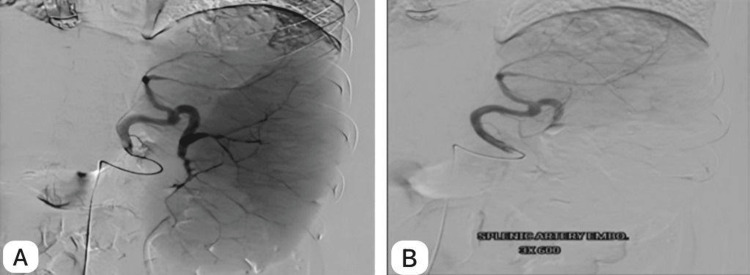 Figure 1
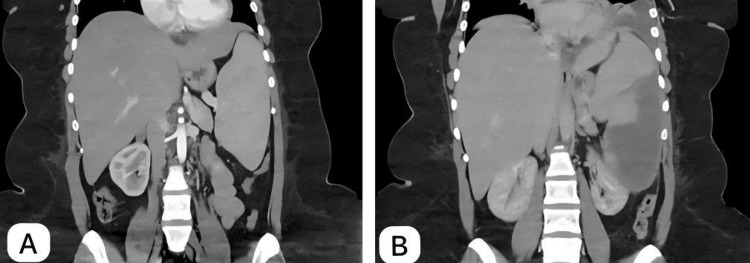 Figure 2
Peer Reviews
No public reviews on file for this paper yet. If you reviewed it on a platform where reviews are public (OpenReview, ICLR, NeurIPS, ICML), you can paste yours below so the community can read it here.
Videos
No videos yet. Explain this paper in a talk, walkthrough, or lecture? Add one.
Taxonomy
TopicsBirth, Development, and Health · Pregnancy and preeclampsia studies · Erythrocyte Function and Pathophysiology