
TL;DR
This paper presents a cover image representing a study on medulloblastoma using patient-derived xenografts and highlights the role of laboratory mice in medical research.
Contribution
The study uses single-cell transcriptomic sequencing to analyze a patient-derived xenograft model of medulloblastoma.
Findings
The research identifies subcutaneous patient-derived xenografts that recapitulate medulloblastoma.
The cover image symbolizes children's gratitude for the role of laboratory mice in disease research.
Abstract
This cover image is based on the article “Single‐cell transcriptomic sequencing identifies subcutaneous patient‐derived xenograft recapitulated medulloblastoma” (https://doi.org/10.1002/ame2.12399) reported by Jiayu Gao, Yahui Zhao, Ziwei Wang, Fei Liu, Xuan Chen, Jialin Mo, Yifei Jiang, Yongqiang Liu, Peiyi Tian, Yanong Li, Kaiwen Deng, Xueling Qi, Dongming Han, Zijia Liu, Zhengtao Yang, Yixi Chen, Yujie Tang, Chunde Li, Hailong Liu, Jiankang Li, Tao Jiang. The image mainly conveys children's gratitude for the contributions made by laboratory mice to disease research and drug screening.
Genes, proteins, chemicals, diseases, species, mutations and cell lines named across the full text — each resolved to its canonical identifier and authoritative record.
Click any figure to enlarge with its caption.
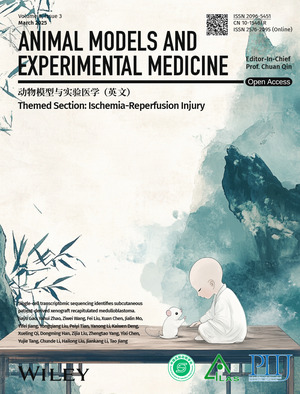 Figure 1
Peer Reviews
No public reviews on file for this paper yet. If you reviewed it on a platform where reviews are public (OpenReview, ICLR, NeurIPS, ICML), you can paste yours below so the community can read it here.
Videos
No videos yet. Explain this paper in a talk, walkthrough, or lecture? Add one.
Taxonomy
TopicsSingle-cell and spatial transcriptomics · Glioma Diagnosis and Treatment · Pluripotent Stem Cells Research