Heterogeneity in preoperative Staphylococcus aureus screening and decolonization strategies among healthcare institutions
Sarah L. Bennis, Shalini Kulasingam, Patricia Ferrieri, Susan E. Kline

TL;DR
This study examines how different healthcare institutions screen and treat Staphylococcus aureus in patients before surgery.
Contribution
The study reveals significant variability in screening and decolonization practices across institutions.
Findings
Institutions use universal, targeted, or no decolonization strategies.
Commonly used products include nasal mupirocin and chlorhexidine gluconate bathing.
Practice variability suggests a need for standardized optimal strategies.
Abstract
We surveyed 111 institutions’ practices for screening and decolonization of Staphylococcus aureus in presurgical patients. Institutions commonly utilize universal, targeted, or no decolonization strategies. Frequently reported products were nasal mupirocin, chlorhexidine gluconate bathing, and nasal povidone-iodine. Practice variability indicates opportunities to define optimal strategies.
Genes, proteins, chemicals, diseases, species, mutations and cell lines named across the full text — each resolved to its canonical identifier and authoritative record.
Click any figure to enlarge with its caption.
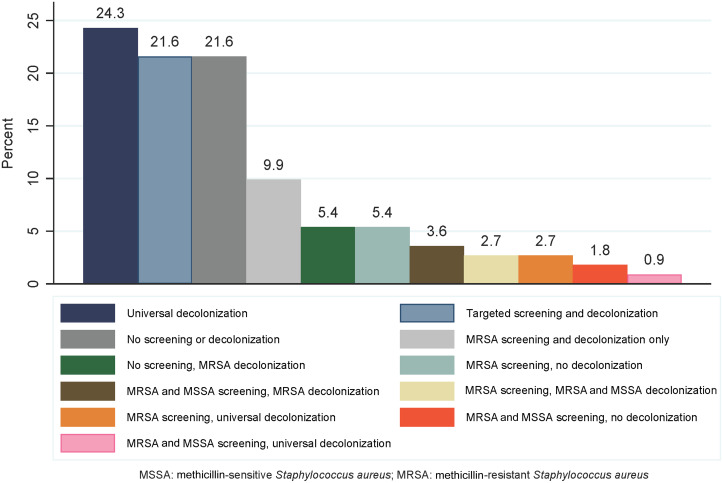 Figure 1
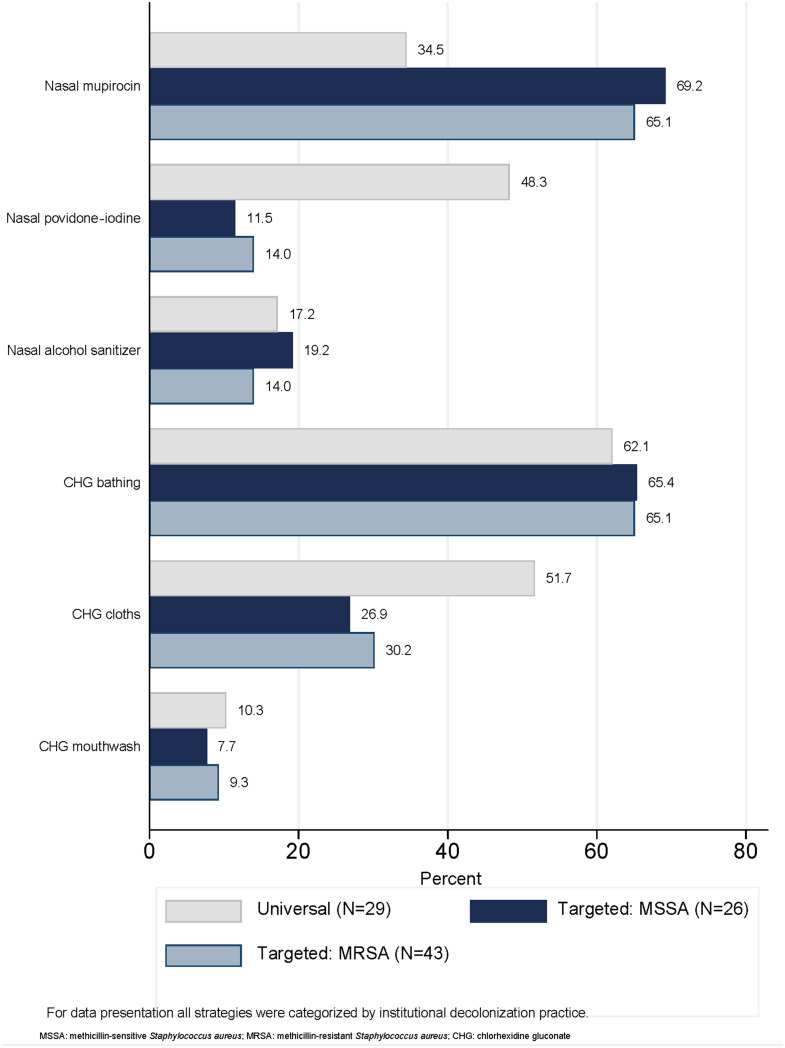 Figure 2
Peer Reviews
No public reviews on file for this paper yet. If you reviewed it on a platform where reviews are public (OpenReview, ICLR, NeurIPS, ICML), you can paste yours below so the community can read it here.
Videos
No videos yet. Explain this paper in a talk, walkthrough, or lecture? Add one.
Taxonomy
TopicsSurgical site infection prevention · Antimicrobial Resistance in Staphylococcus · Bacterial Identification and Susceptibility Testing