Psychological support by full‐time school counselors from the City of Nagoya after the 2024 Noto Earthquake: An activity report
Hiromichi Inaba, Yoshitaka Nishikawa, Hiroko Tsuboi, Yukiyo Nagai, Kei Ohashi, Rie Yamada, Masatsugu Sakata, Akane Nogimura, Toshiya Murai, Atsurou Yamada

TL;DR
This report describes how school counselors in Nagoya provided psychological support to students after the 2024 Noto Earthquake.
Contribution
The paper presents a practical account of psychological support strategies used by school counselors in a real-world disaster context.
Findings
Full-time school counselors played a key role in providing immediate psychological support post-disaster.
The counselors helped students cope with trauma through school-based interventions.
Abstract
The City of Nagoya employs full‐time school counselors in its schools. This activity report highlights the role of them in offering psychological support after the disaster.
Genes, proteins, chemicals, diseases, species, mutations and cell lines named across the full text — each resolved to its canonical identifier and authoritative record.
Click any figure to enlarge with its caption.
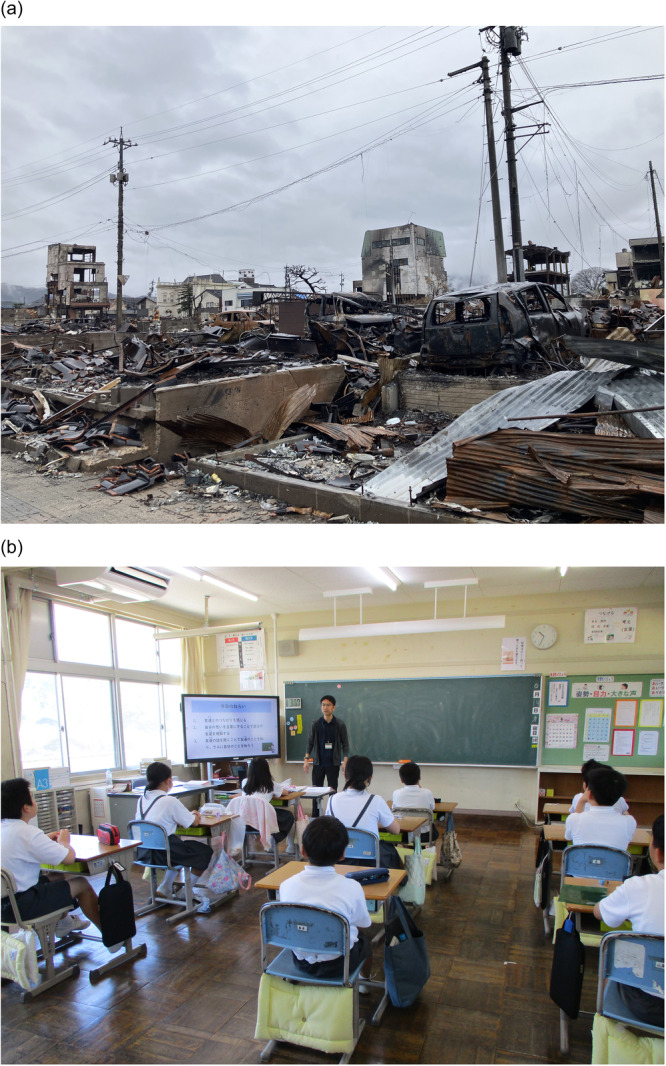 Figure 1
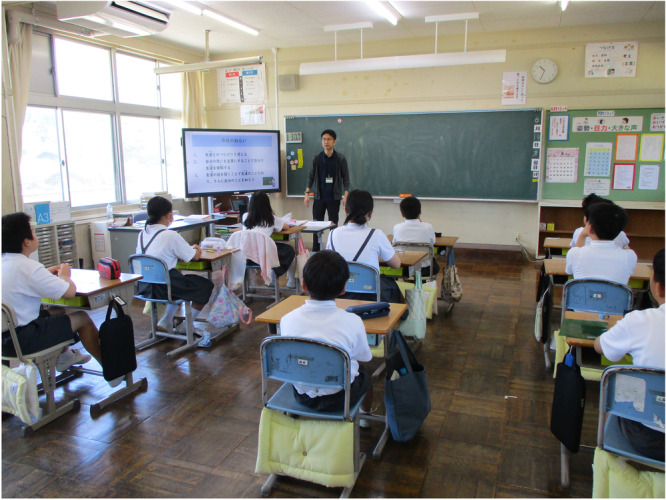 Figure 2
- —None
Peer Reviews
No public reviews on file for this paper yet. If you reviewed it on a platform where reviews are public (OpenReview, ICLR, NeurIPS, ICML), you can paste yours below so the community can read it here.
Videos
No videos yet. Explain this paper in a talk, walkthrough, or lecture? Add one.
Taxonomy
TopicsPosttraumatic Stress Disorder Research · Migration, Health and Trauma · Suicide and Self-Harm Studies
Issues related to children's mental health in Japan, such as suicide, bullying, abuse, and refusal to attend school, are becoming increasingly severe.1 Concomitantly, there is a growing interest in children's mental health worldwide, and incorporating mental health services into school settings has been considered a countermeasure.2, 3 The School Counselor (SC) program was established in Japan in 1995. However, it primarily consists of part‐time positions, with assignments limited to fewer than 10 h per week.4 Nagoya is the only city in the country that has implemented a policy since April 2014 to place full‐time SCs and other specialists, such as social workers, in schools. These professionals have formed a team called the “Nagoya Child Advocacy Committee (NCAC)” to support students. Being full‐time allows them to engage with children regularly, enabling the early detection and prevention of mental health problems and providing individual support, thereby encouraging the development of all children. Collaboration with families, communities, and organizations is enhanced. Additionally, the burden on teachers is expected to ease. This activity report highlights the role of the NCAC in offering psychological support after the 2024 Noto Earthquake.
Japan has experienced numerous natural disasters due to its geographical and climatic conditions. After disasters, “public assistance” efforts, such as rescue, lifesaving, personnel dispatch, and material and financial support, are crucial.5 On January 1, 2024, a 7.6‐magnitude earthquake struck the Noto Peninsula in Ishikawa Prefecture, resulting in over 400 deaths, destruction of more than 136,000 buildings, and other extensive damage6 (Figure 1a).
At the national government's request, in the Aichi Prefecture, where the City of Nagoya is located, local psychology associations took the lead in assembling and dispatching a team of psychologists from within the prefecture. A team of four psychologists was sent each week, with two of the four members always being SCs affiliated with the NCAC. The teams focused on Wajima City, one of the most severely affected areas. These activities commenced in February amid inadequate conditions, such as disrupted transportation networks and damaged infrastructure. They visited reopened schools and interviewed all attending students, accounting for 10% of the total student body. The purpose was to screen as well as to provide psychoeducation (e.g., providing information on how to cope with acute stress reactions). In April, they interviewed students who had not been screened and teaching staff. In addition to the previous activities, interviews with parents, psychoeducation for students and teaching staff, and classroom observations were conducted in May. From June onward, the focus shifted from individual interviews to psychoeducation, staff support, and individual consultations. Regardless of the time or interviewees, great care was taken to ensure that the process did not lead to retraumatization, and the situation was handled cautiously. Interviews were attempted for all students, but none were conducted with those who declined. For teaching staff and parents, interviews were conducted upon request. These activities can be considered as primary prevention activities for mental health problems. In particular, the full‐time SCs of the NCAC were accustomed to primary prevention activities in the school setting, allowing them to operate in the same way as usual (Figure 1b).
There were several advantages of using the full‐time system over the part‐time system previously used for school counselors in the City of Nagoya. First, it is easier to secure personnel, allowing long‐term, stable, and continuous support. Previously, part‐time counselors required permission from multiple supervisors to provide support, making long‐term staffing difficult, especially during the fiscal year transitions in April. However, with support from the NCAC, stable scheduling has been achieved even during this transition. Second, support experience was accumulated within the organization, facilitating information sharing, task handovers, and aftercare among the staff. Returning staff can share their experiences with colleagues, enabling the subsequently dispatched staff to engage in support activities more effectively. These experiences are expected to be beneficial for future disaster relief efforts. Furthermore, disaster relief workers are at an increased risk of developing mental disorders due to occupational trauma exposure.7 However, the NCAC staff could receive the necessary peer mental support from supervisors and colleagues at their workplaces even after completing their support activities. Finally, since support personnel are dispatched as employees of the City of Nagoya, the administrative work associated with temporary employment is reduced, which is beneficial for disaster‐affected areas where support acceptance systems can be challenging.8 These findings suggest that the City of Nagoya's policy of deploying full‐time specialists in schools, originally intended to strengthen support for children, also has functional advantages in providing psychological support after disasters.
AUTHOR CONTRIBUTIONS
Hiromichi Inaba, Yoshitaka Nishikawa, and Atsurou Yamada planned the study, while Hiromichi Inaba and Atsurou Yamada conducted interviews with the Nagoya City Board of Education and drafted the manuscript. All authors critically reviewed the manuscript.
CONFLICT OF INTEREST STATEMENT
Atsurou Yamada is an Editorial Board member of Psychiatry and Clinical Neurosciences Reports and a co‐author of this article. To minimize bias, he was excluded from all editorial decision‐making related to the acceptance of this article for publication. Yukiyo Nagai, Kei Ohashi, Rie Yamada, Masatsugu Sakata, Akane Nogimura, and Atsurou Yamada are employed in the Department of Neurodevelopmental Disorders, Nagoya City University Graduate School of Medical Sciences, which is an endowment department supported by the City of Nagoya. Hiroko Tsuboi is an Endowed Course Professor, supported by the City of Nagoya, in the Graduate School of Humanities and Social Sciences, Nagoya City University. Outside the submitted work, Masatsugu Sakata has received a personal fee from SONY; Yoshitaka Nishikawa has received a grant from Japan Medical Association and donations from Datack and Cancerscan; and Toshiya Murai has received speakers honoraria from Takeda Pharmaceutical, Sumitomo Pharma, Kracie Pharmaceutical, Otsuka, Meiji‐Seika Pharma, Janssen Pharmaceutical, Lundbeck, EA Pharma, Nippon Boehringer Ingelheim and Viatris, an editing fee from Meiji‐Seika Pharma, and research funding from Shionogi & Co. Ltd., The Japan Kanji Aptitude Testing Foundation, Bonbon Inc., Dai Nippon Printing, Sumitomo Pharma, Otsuka, and Eisai. The remaining author declares no conflicts of interest.
ETHICS APPROVAL STATEMENT
This study did not require ethical approval, as it focused on the psychological support after the 2024 Noto Earthquake by full‐time school counselors from the City of Nagoya and did not involve direct interaction with, or data collection from, human participants.
PATIENT CONSENT STATEMENT
Not applicable.
CLINICAL TRIAL REGISTRATION
Not applicable.
The reference list from the paper itself. Each links out to its DOI / PubMed record.
- 1Children and Families Agency, Government of Japan . White Paper on Children Policy, 2024 https://www.cfa.go.jp/assets/contents/node/basic_page/field_ref_resources/0357 b 0f 6-8b 14-47fc-83eb-2654172 c 2803/cea 03349/20241009_resources_white-paper_r 06_03.pdf. Accessed 26 November 2024.
- 2Fazel M , Hoagwood K , Stephan S , Ford T . Mental health interventions in schools in high‐income countries. Lancet Psychiatry. 2014;1:377–387.26114092 10.1016/S 2215-0366(14)70312-8PMC 4477835 · doi ↗ · pubmed ↗
- 3Fazel M , Patel V , Thomas S , Tol W . Mental health interventions in schools in low‐income and middle‐income countries. Lancet Psychiatry. 2014;1:388–398.26361001 10.1016/S 2215-0366(14)70357-8 · doi ↗ · pubmed ↗
- 4Shimoda Y , Hirata Y , Yoshimura T . Analysis of the current status of school counselor assignment and training in public junior high schools [Kouritsu chuugakkou ni okeru sukuurukaunseraa no haichijikan oyobi kenshuu ni kansuru genjou bunseki]. Bull Faculty Educ Saga Uni. 2023;7:149–161. [In Japanese].
- 5Cabinet Office, Government of Japan . White Paper on Disaster Management, 2023 https://www.bousai.go.jp/en/documentation/white_paper/2023.html. (Accessed 26 November 2024).
- 6Cabinet Office, Government of Japan . Damage situation and other information related to the 2024 Noto Peninsula Earthquake. https://www.bousai.go.jp/updates/r 60101 notojishin/r 60101 notojishin/pdf/r 60101 notojishin_52.pdf Accessed 26 November 2024. [In Japanese]
- 7Connorton E , Perry MJ , Hemenway D , Miller M . Humanitarian relief workers and trauma‐related mental illness. Epidemiol Rev. 2012;34:145–155.22180469 10.1093/epirev/mxr 026 · doi ↗ · pubmed ↗
- 8Beniya S . Achievements and challenges of governmental human resource support system in Japanese disaster response for affected local governments in the aftermath of the Great East Japan Earthquake. J Disaster Res. 2021;16:967–971.