DPOAE growth function in schoolchildren with impaired temporal ordering skills
Patricia Kimiko Kumagai, Seisse Gabriela Gandolfi Sanches, Renata Mota Mamede Carvallo, Patricia Kimiko Kumagai, Seisse Gabriela Gandolfi Sanches, Renata Mota Mamede Carvallo

TL;DR
The study found that children with impaired temporal ordering skills require higher sound intensity to reach cochlear response thresholds at 2000 Hz compared to children without such issues.
Contribution
This study introduces a novel use of DPOAE growth functions to identify cochlear differences in children with auditory temporal processing issues.
Findings
Children with impaired temporal ordering skills had a higher DPOAE threshold at 2000 Hz.
These children also showed a steeper DPOAE growth slope at 2000 Hz.
No differences were found in conventional DPOAE values between the groups.
Abstract
To investigate whether the cochlear responses of a group of children with normal temporal ordering tests would be different from those children with abnormal results in the same tests. 25 children aged 8 to 13 years participated in the study, all with normal range pure-tone audiometry thresholds, type A tympanometry and distortion product otoacoustic emissions (DPOAE) present in both ears. Of these, 13 children formed the Study Group and 12 the Control Group. The Study Group differed from the Control Group by presenting changes in temporal auditory tests. In addition to the tests to verify the inclusion criteria, the DPOAE growth function were recorded for three different f2 frequencies, respectively 2002, 3003 and 4004 Hz. The stimuli were presented at level f2 (L2) from 20 to 65 dB SPL in steps of 5 dB and the stimulus level f1 (L1) followed the formula: L1=0.4L2+39 dB. The data were…
Genes, proteins, chemicals, diseases, species, mutations and cell lines named across the full text — each resolved to its canonical identifier and authoritative record.
Click any figure to enlarge with its caption.
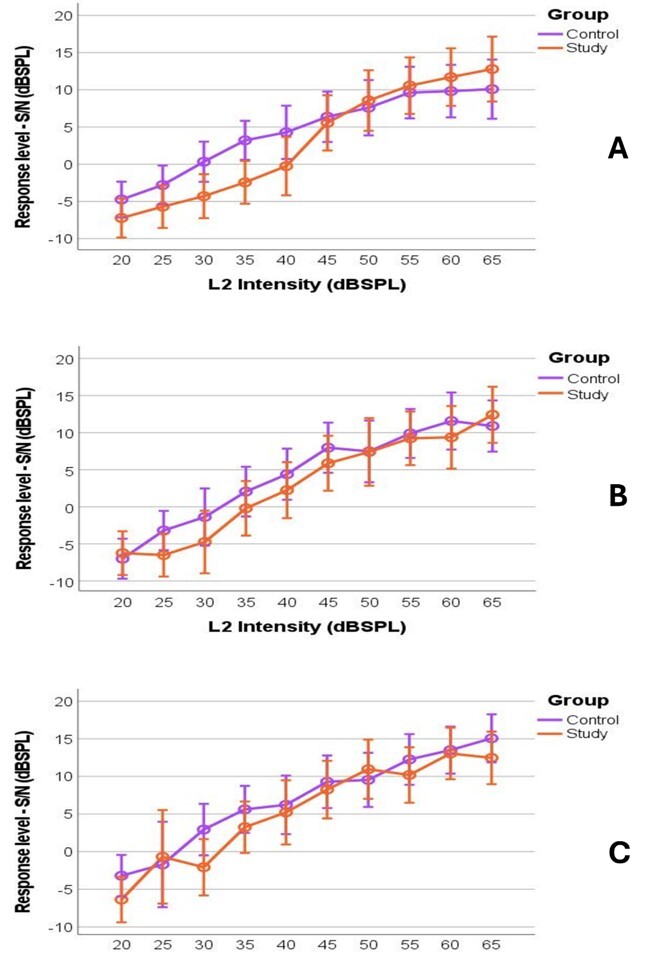 Figure 1
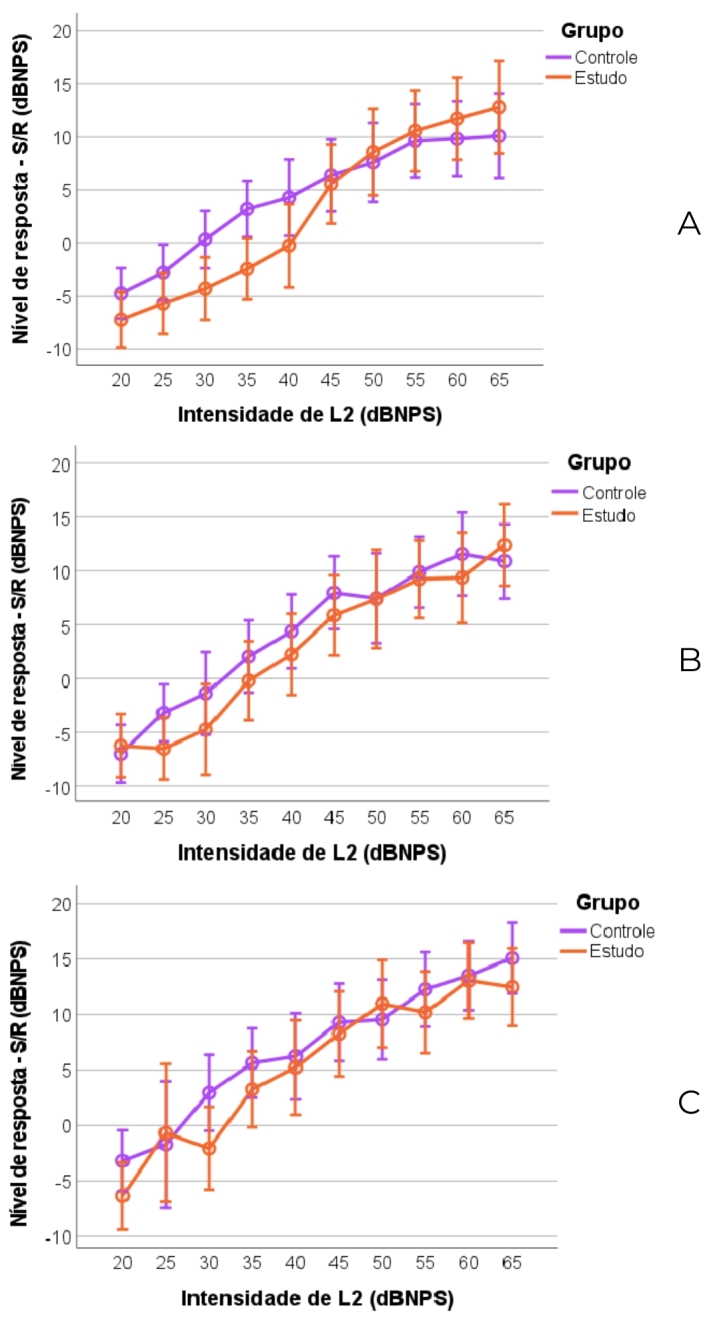 Figure 2
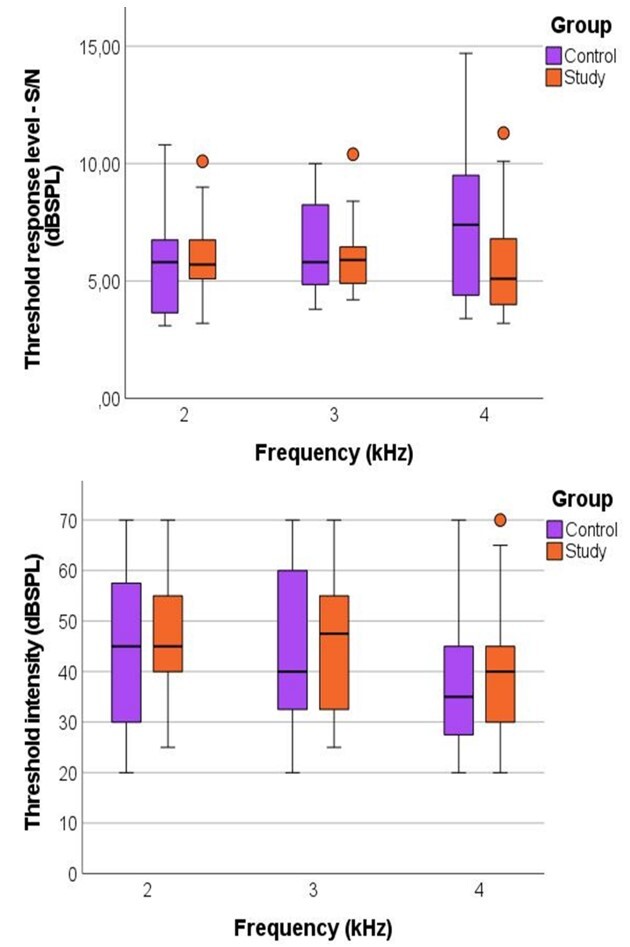 Figure 3
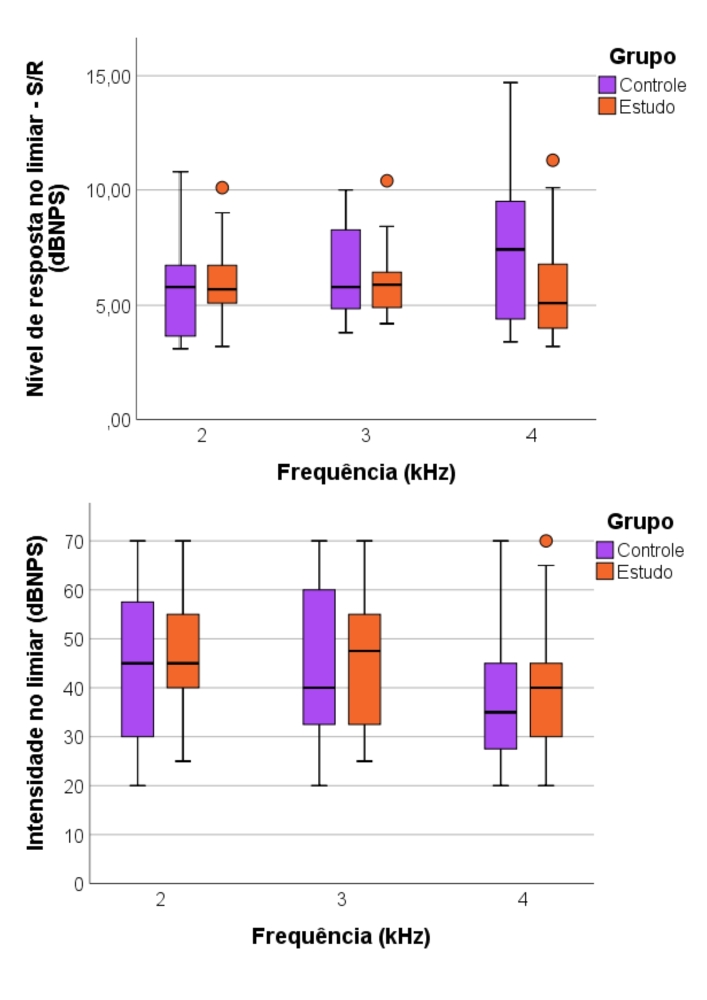 Figure 4
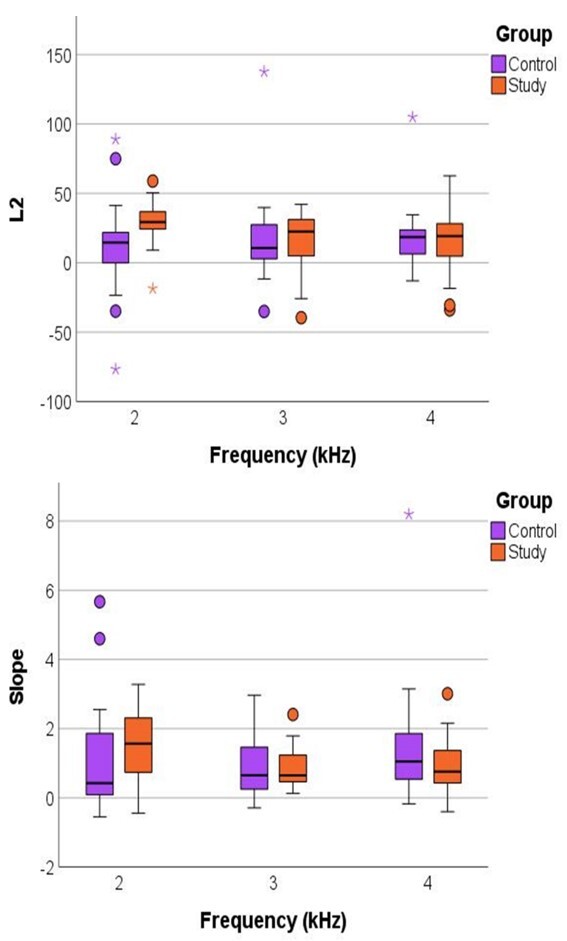 Figure 5
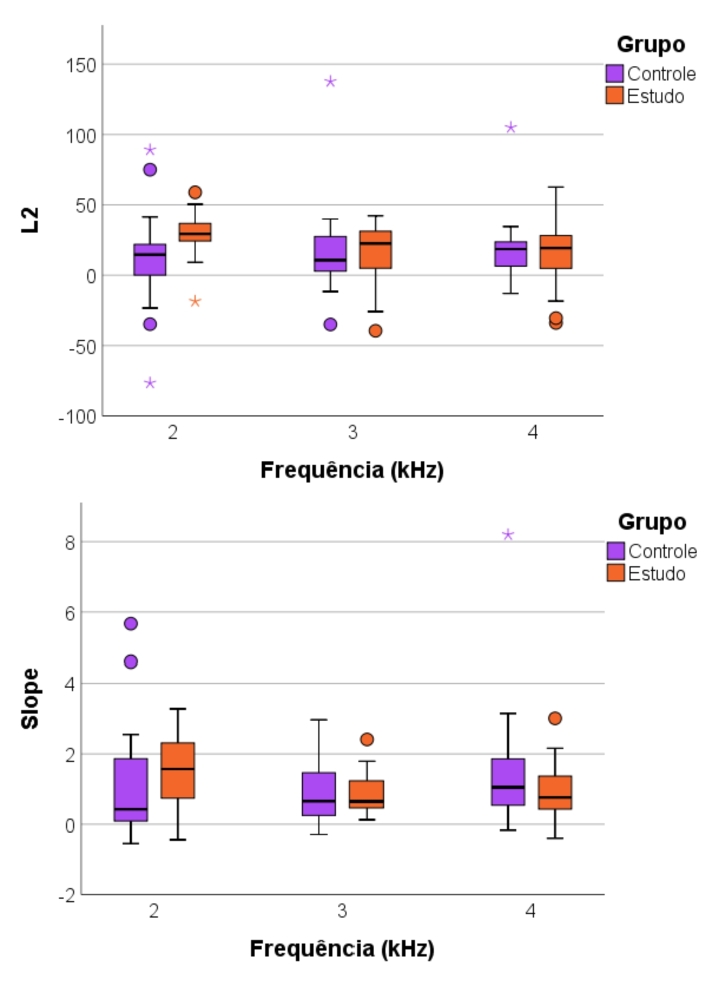 Figure 6
Peer Reviews
No public reviews on file for this paper yet. If you reviewed it on a platform where reviews are public (OpenReview, ICLR, NeurIPS, ICML), you can paste yours below so the community can read it here.
Videos
No videos yet. Explain this paper in a talk, walkthrough, or lecture? Add one.
Taxonomy
TopicsHearing, Cochlea, Tinnitus, Genetics · Hearing Loss and Rehabilitation · Infant Development and Preterm Care