Docetaxel-Induced Pneumonitis in a Patient With Metastatic Lung Adenocarcinoma
Brian Chua, Yi Hern Tan

TL;DR
A patient with lung cancer developed pneumonitis after docetaxel treatment and improved with steroids.
Contribution
This case highlights docetaxel-induced pneumonitis as a rare but important side effect in lung cancer treatment.
Findings
The patient showed a favorable response to docetaxel but developed pneumonitis.
High-dose steroids were effective in treating the pneumonitis after infections were ruled out.
Abstract
Docetaxel is a taxane anti-neoplastic agent commonly used in the treatment of solid-organ tumours. Here, we describe a case of a patient with metastatic lung adenocarcinoma who had disease progression following initial treatment with a combination of pembrolizumab, pemetrexed and carboplatin. She received three cycles of docetaxel and had a favourable oncological response but was admitted for breathlessness following the third cycle. A repeat computed tomography scan of the thorax showed predominantly right-sided ground-glass opacities and consolidation. The patient underwent high-risk bronchoscopy and bronchoalveolar lavage. Once infection was confidently ruled out, she was started on high-dose steroid therapy and responded to treatment.
Genes, proteins, chemicals, diseases, species, mutations and cell lines named across the full text — each resolved to its canonical identifier and authoritative record.
Click any figure to enlarge with its caption.
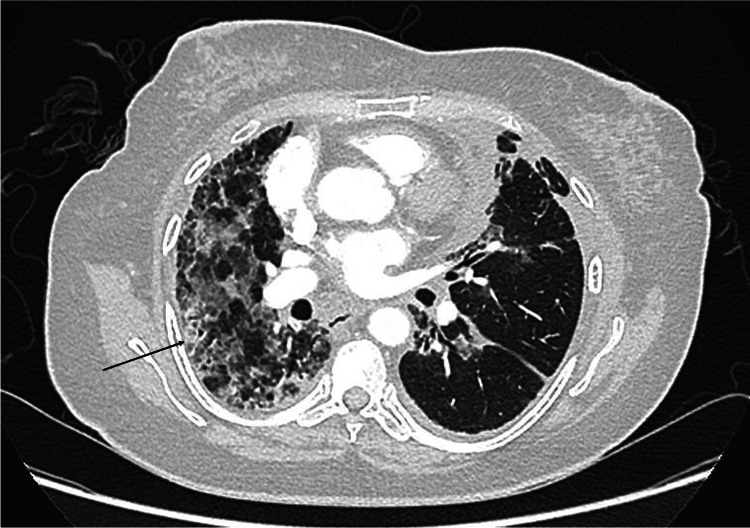 Figure 1
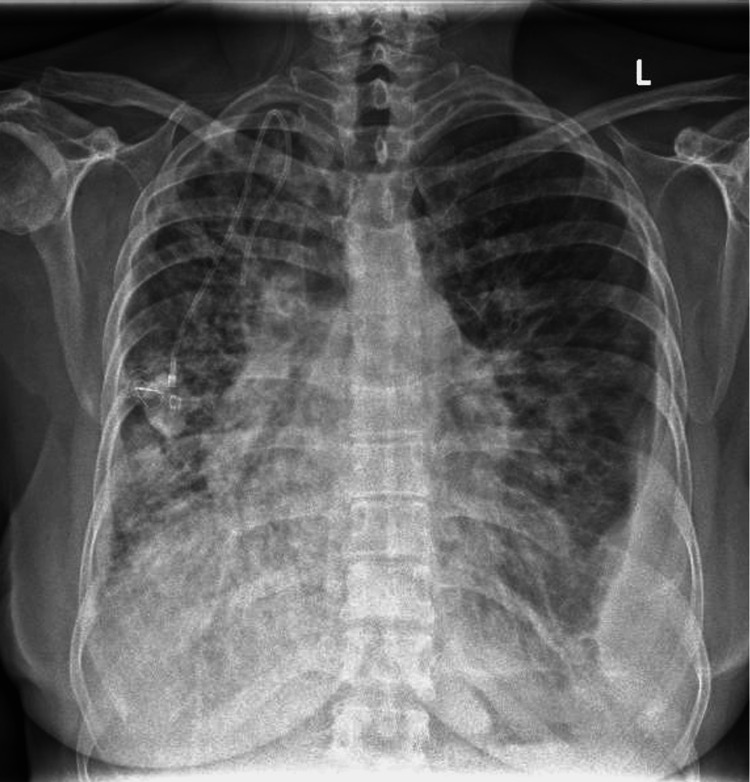 Figure 2
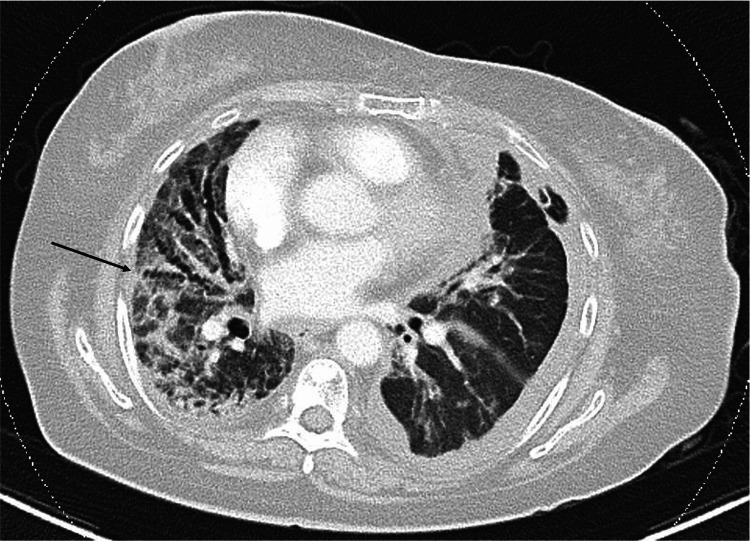 Figure 3
Peer Reviews
No public reviews on file for this paper yet. If you reviewed it on a platform where reviews are public (OpenReview, ICLR, NeurIPS, ICML), you can paste yours below so the community can read it here.
Videos
No videos yet. Explain this paper in a talk, walkthrough, or lecture? Add one.
Taxonomy
TopicsInterstitial Lung Diseases and Idiopathic Pulmonary Fibrosis · Lung Cancer Treatments and Mutations · Oral health in cancer treatment